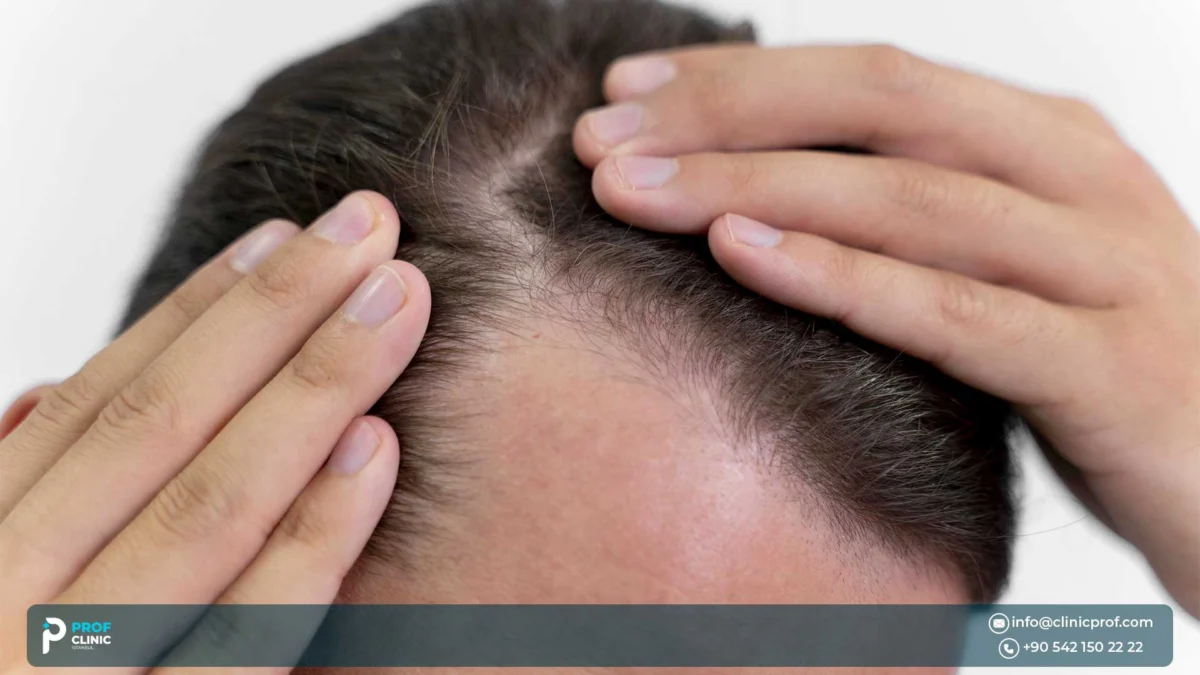
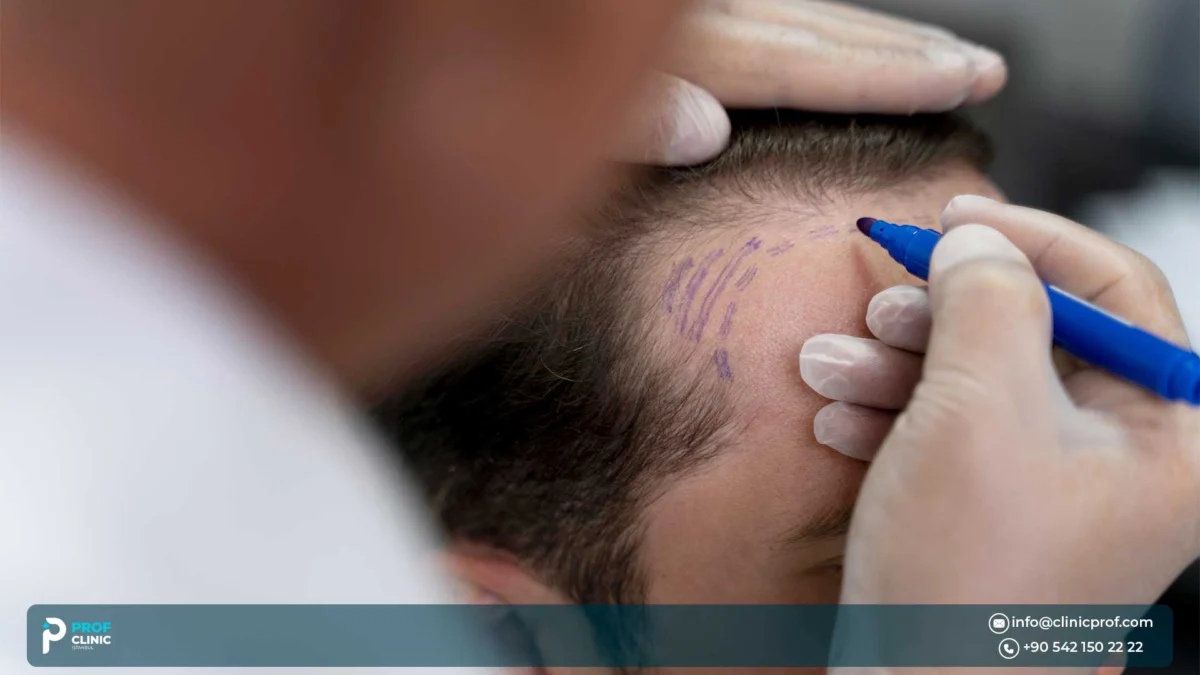
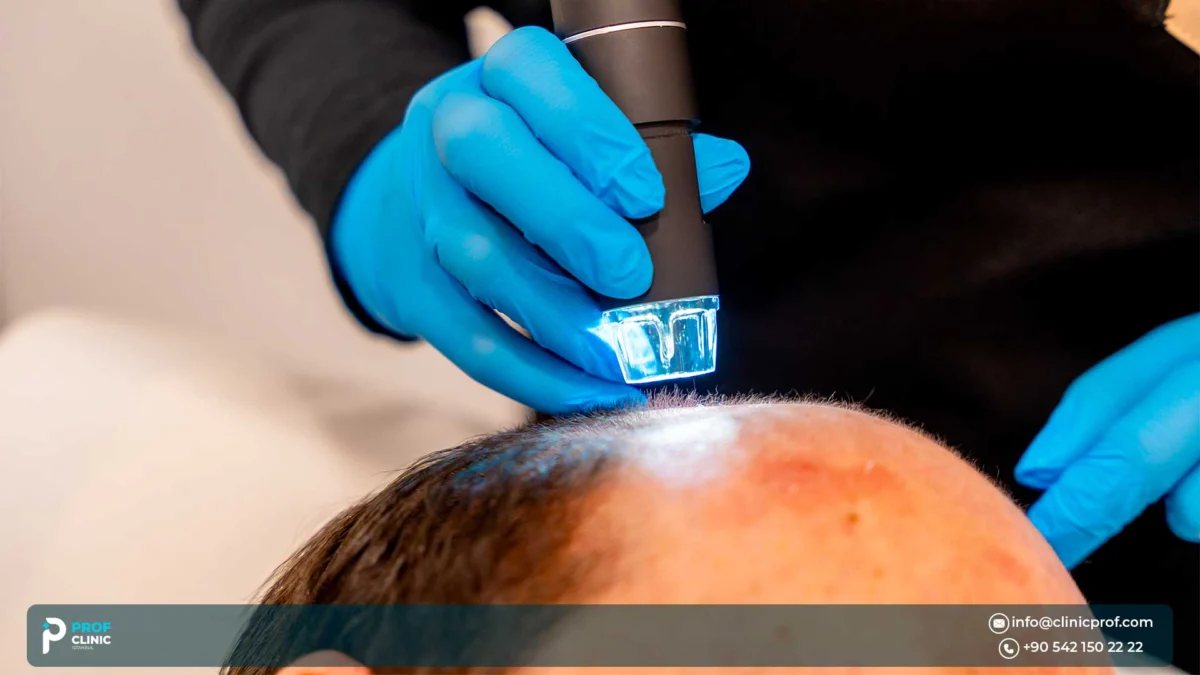
When you compare FUE vs DHI vs Sapphire FUE, is one technique really better, or are they different names for the same operation? Mostly the second. In all three, the grafts are taken from the donor area by follicular unit extraction, and what changes is the tool that opens the channels and the tool that places each graft. The right combination depends on your hair, your donor area and your goals, not on the label.
In this guide by Prof Clinic, you’ll find one comparison table, a plain explanation of what each technique changes and what it doesn’t, a short look at healing, density and price, and a decision guide by situation. By the end, you’ll know which questions to ask before you accept any quote.
FUE vs DHI vs Sapphire FUE at a Glance
The three techniques differ in only two steps: how the recipient channels are opened and how each graft is placed. FUT, the strip method, is the one that changes the harvesting itself. Here’s how the four usually compare:
| Technique | How grafts are harvested | How channels are opened | How grafts are placed | Donor scar and shaving | Usually suits |
|---|---|---|---|---|---|
| FUE (standard) | One follicular unit at a time, with a small punch | Steel blade or needle, before placement | Fine forceps, sometimes blunt implanters | Many tiny dot scars; the back of the head is usually shaved | Small to large areas when the donor area is good; short haircuts |
| Sapphire FUE | The same as FUE | Sapphire-tipped blade, before placement | The same as FUE | The same as FUE | The same cases as FUE, when the team prefers this blade |
| DHI | The same as FUE | The implanter needle itself, as the graft goes in | Implanter pen (Choi pen) | The same as FUE | Hairlines, temples and selected areas where fine control is wanted |
| FUT | A strip of scalp, divided into grafts under a microscope | Small incisions made before placement | Usually fine forceps | One linear scar; only the strip area is trimmed | Long hairstyles, very large sessions, some limited-donor cases |
These are typical differences, not fixed rules. Teams often mix tools, for example opening channels with a blade and placing grafts with blunt implanters, which the ISHRS describes as implanters used to insert grafts into pre-made incisions.
Try what we call the three-step test on any quote: how are the grafts taken, what opens the channels, and what places the grafts? If a clinic can’t answer all three, the technique name on the quote tells you very little.
Holding two quotes with different technique names? Send them to our team and ask for the three steps to be written out for your case.
Step 1: Extraction, Where FUE, Sapphire FUE and DHI Are Identical
All three start the same way. The donor area is numbed, and a small circular punch scores around each follicular unit, the natural group of hairs that grow together, so it can be lifted out one at a time from the back and sides of the scalp. Neither the blade nor the pen changes anything in this step.
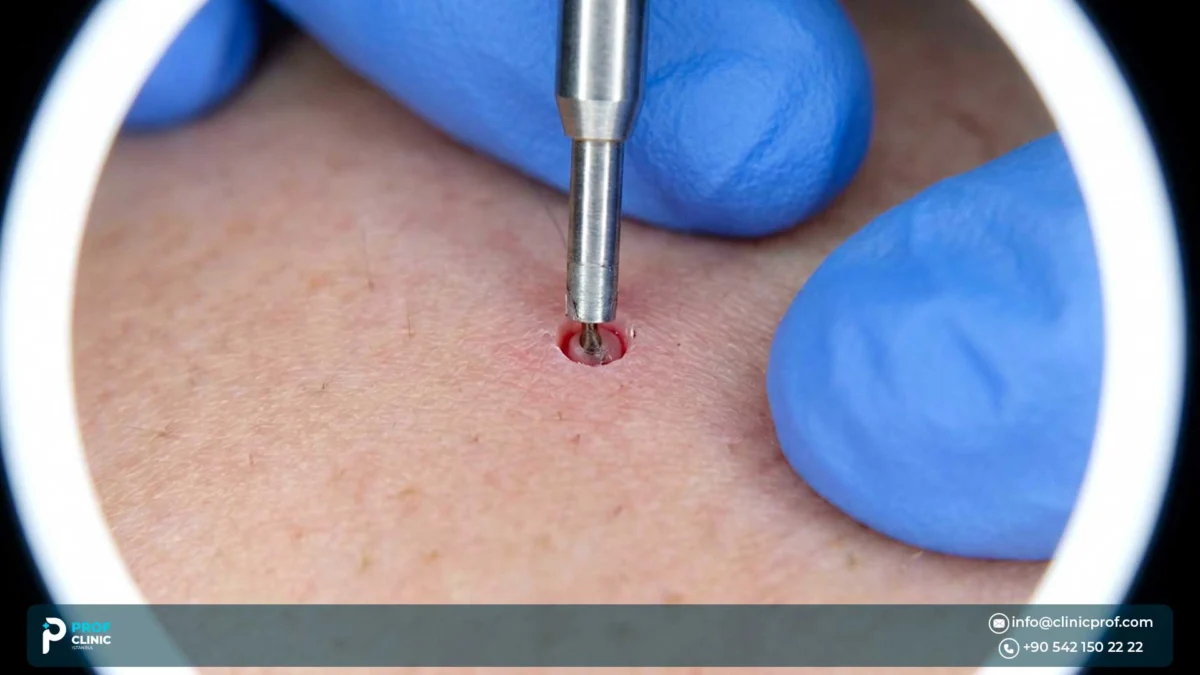
The NHS notes that FUE leaves lots of tiny scars that are not very noticeable, and that the back of the head is shaved. The ISHRS adds that donor hair generally has to be cut short for FUE, and that the donor area can start to look moth-eaten as more grafts are taken. That is why the donor area, not the technique name, sets the ceiling on what any FUE-based plan can achieve.
Also read: FUE Hair Transplant in Turkey: Procedure, Pros and Cons, and Cost
Where FUT Is Different
FUT removes a thin strip of scalp from the back of the head and divides it into grafts under a microscope, so it leaves one linear scar instead of many dots. The NHS says the scar should not be visible unless you have very short hair, and that only the strip area is trimmed rather than the whole head. The ISHRS reports that strip sessions of 2,000–3,000 grafts are very common and that FUT costs may be lower than FUE, since it takes less of the surgeon’s labour. It is less commonly chosen today, but it remains a real option for long hairstyles, very large sessions and some limited-donor cases. For the scar, recovery and cost in more detail, see our FUT hair transplant guide.
Step 2: Steel Blade or Sapphire Blade for the Channels?
Sapphire FUE changes one thing: the blade that opens the recipient channels is tipped with sapphire instead of steel. The grafts are extracted and placed exactly as in standard FUE, so it is best understood as FUE with a particular blade, not as a separate operation. The ISHRS warns that many clinics invent new names for what is essentially FUE.
Does the blade matter? The research is small and points in different directions. A recent prospective study of 1,000 patients by Saket reported graft survival of 94.7% with sapphire blades against 88.9% with steel, but it was observational, so patients were not randomly assigned, and it comes from a single author. In a 2023 split-scalp study of 12 men, Balik used a sapphire blade on one side of the recipient area and a handmade razor-blade slit on the other, and found that the handmade blades caused significantly less tissue damage. Neither study settles the question.
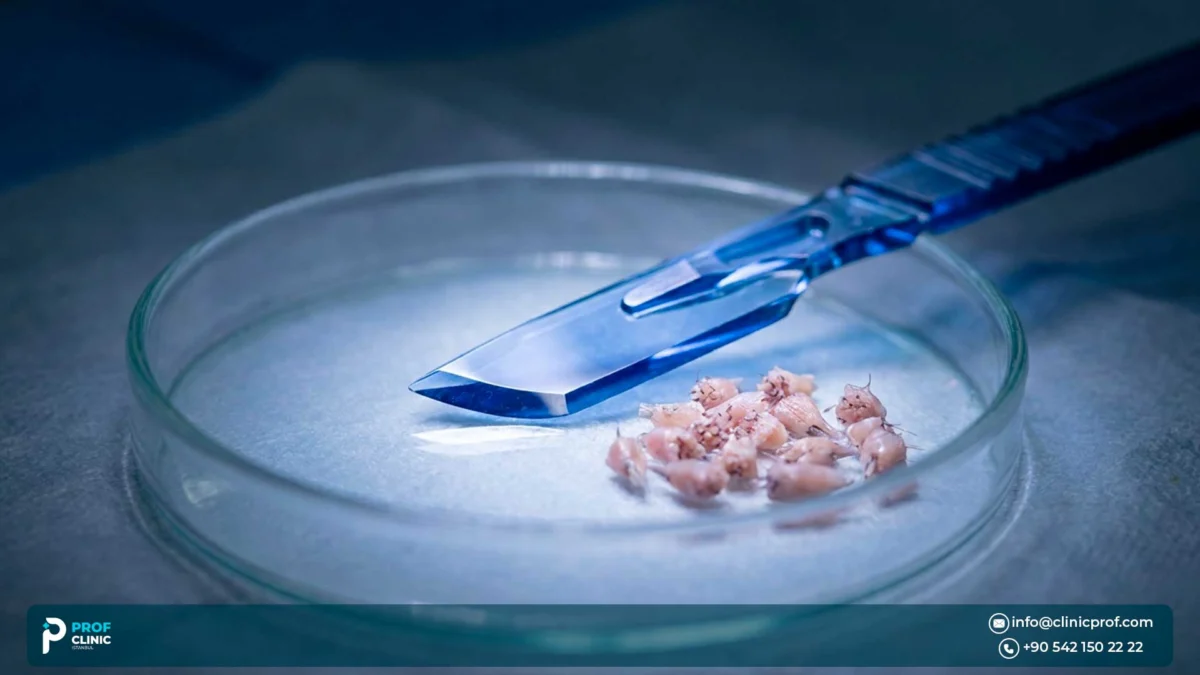
What it means in real life: donor supply, hairline design and how gently each graft is handled all sit outside the blade’s control, and they usually shape the result more. A sapphire blade can be a reasonable preference, but it shouldn’t be the reason you choose a clinic. The evidence is laid out in full here: Sapphire FUE Hair Transplant in Turkey: Benefits, Evidence and Cost.
Step 3: Forceps or Implanter Pen (DHI) for Placing the Grafts?
DHI (Direct Hair Implantation) is a way of placing grafts, not a different kind of transplant. The ISHRS calls it another name for the implantation technique using sharp implanters, says the grafts are still harvested by FUE, and states that DHI should not be marketed as a hair transplant method of its own.
In standard FUE, the channels are opened first and each graft is then set in with forceps. With a sharp implanter, often called a Choi pen after the doctor who introduced it in 1992, the graft is loaded into a hollow needle that makes the incision and releases the graft in one movement. According to a 2024 review by Speranzini and Souza in Facial Plastic Surgery, implanters first became popular in East Asia, where hair is typically straight and thick, and spread in the West because FUE grafts are uniform in size but more fragile. The ISHRS notes that implanters may subject grafts to less trauma than forceps, and a 2023 practical guide to sharp implanters adds that the angle can be adjusted to the curl and thickness of the hair. The same guide lists the drawbacks: the method can be hard to use in people who bleed easily, it is labour-intensive, and repeated graft popping in inexperienced hands may lower survival. The 2024 review also points out that forceps allow safe placement in well-trained teams.
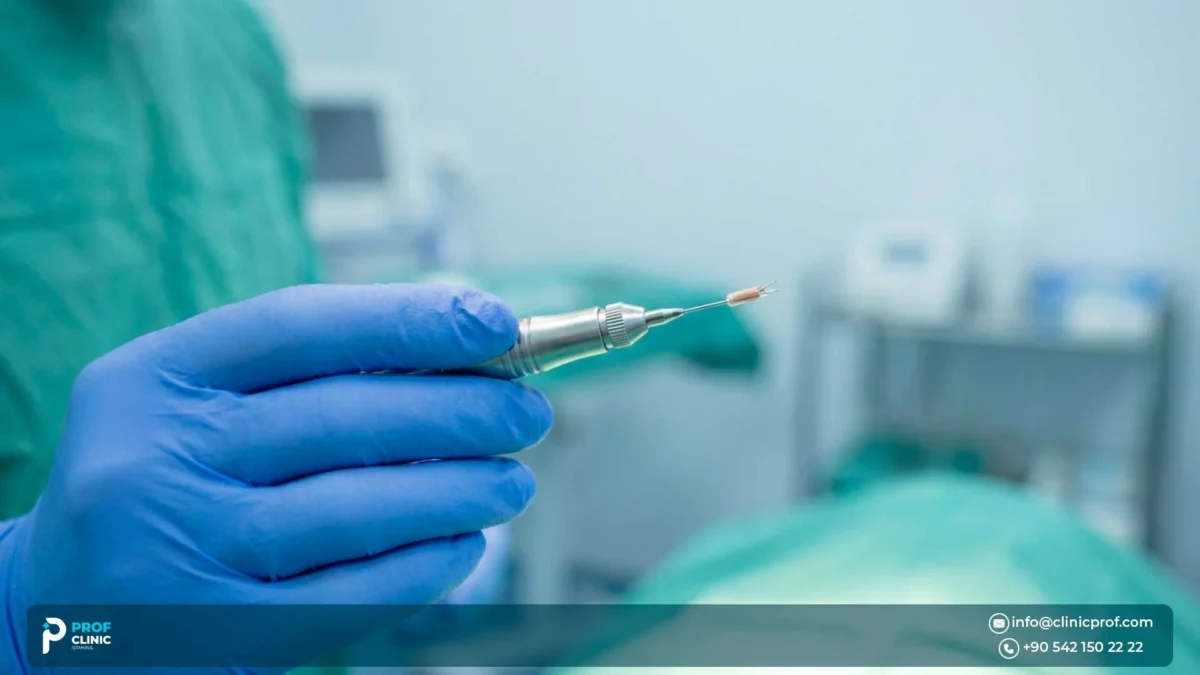
That sounds like a clear win for DHI, but it isn’t quite. The sources we reviewed include no head-to-head trial showing that implanters give higher final density or survival than forceps in comparable teams. The same 2024 review concludes that the choice of placement tool depends on the individual case and on the advantages and disadvantages of each instrument.
Also read: DHI Hair Transplant in Turkey: Choi Pen Method, Cost & Results
Not sure whether pens or forceps would suit your hairline? Send clear photos to our team on WhatsApp and ask what each option would mean in your case.
Healing, Density and Price: What Does the Technique Really Change?
Less than the names suggest. Healing, final density and price are shaped mostly by your donor area, the number of grafts and the team, and the three FUE-based techniques share the same recovery timeline.
Healing and Recovery
The NHS gives one recovery picture for hair transplants: whatever the technique, the new hairs often shed within a few weeks, regrowth usually begins at around 4 months, and the final result shows between 10 and 18 months. It adds that you should be very careful with the grafts for about the first 2 weeks and that you may need 1 to 2 weeks off work. We found no source that shows a different timeline for Sapphire FUE or DHI. On FUE versus strip, the ISHRS says surgeons who prefer FUE report shorter recovery, but little data supports that view.
Density and the Final Result
No technique creates donor hair that isn’t there. The AAD says you need enough healthy scalp hair to move to the thinning areas, and the thinning area must be able to grow hair. Hair loss can also continue after surgery, which is why some patients are advised to take medicine to slow it. Within those limits, density depends on how many grafts are placed, how carefully they are handled and how many survive. The ISHRS notes that FUE carries a greater chance of transection, meaning hairs cut during harvesting, than strip harvesting, and that the rates vary widely, which is one reason harvesting skill matters.
To see how results look in real cases, browse the Prof Clinic before-and-after gallery and check the time since surgery for each case.
Price and What Goes Into a Quote
The NHS says the cost of a hair transplant depends on how much hair loss you have, the type of procedure and the quality of the clinic. In Istanbul, a scalp hair transplant package (FUE, DHI or Sapphire FUE) typically costs about €1,800–€3,500, and FUT about €1,500–€3,000. These are approximate 2026 ranges, not final prices: the final figure depends on your case after assessment and is confirmed in a written quote. Packages usually include the procedure, pre-op blood tests, medication and an aftercare kit, a hotel stay and VIP airport and hotel transfers.
As mentioned above, strip harvesting often works out cheaper per graft than FUE. Whether a sapphire blade or implanter pens appear as a separate line is a question for each clinic, so ask for the technique and any extras to be itemised.
Which Technique Fits You? A Decision Guide by Situation
The technique that fits you is the one your donor area, hair type and goals point to, and your doctor confirms it after examining you. This table shows what is usually discussed in common situations. It is a starting point for your consultation, not a diagnosis.
| Your situation | Often discussed | What usually decides it |
|---|---|---|
| A small area, or refining the hairline and temples | FUE with forceps or implanters (DHI) | How much fine control over angle and depth you need, and the team’s experience with each tool |
| A large area or advanced hair loss | FUE in one or more sessions, or FUT | Donor supply. The NHS notes a large area may need 2 or more sessions on different days, and the ISHRS says FUT is used when the usable donor area is narrow, as in advanced loss |
| You want to keep your hair long and avoid shaving | FUT, or a selected no-shave option | The ISHRS says patients who wear their hair longer than an inch are strong FUT candidates; no-shave FUE options depend on the case |
| You wear very short hair and want to avoid a linear scar | An FUE-based technique | The AAD says removing individual hairs avoids a long, narrow scar, which may suit very short haircuts |
| Curly or afro-textured hair | An FUE-based technique planned around the curl | The ISHRS notes curly hair can be hard to treat with FUE, so extraction skill matters more than the label |
| Body hair as a donor source, or camouflaging an old strip scar | An FUE-based technique | The ISHRS suggests FUE for both situations |
If your hair is coily or curly, our guide on the topic goes further: Afro Hair Transplant Techniques: FUE vs DHI for Coily and Curly Hair.
Five Questions to Ask Any Clinic About Technique
Put these to every clinic you compare, and keep the answers in writing:
- Harvesting: will you take my grafts with an FUE punch or as a strip, and why for my case?
- Channels and placement: what opens the channels, steel or sapphire, and what places the grafts, forceps or implanters?
- Who does what: who will make the incisions and who will place the grafts? The ISHRS notes that sharp implanters make skin incisions, so it is fair to ask.
- Donor capacity: how many grafts can my donor area safely give, and will that take one session or more?
- The quote: does it name the technique and list extras as separate lines, and what exactly is included?
When a Technique Name Is Mostly Marketing
The ISHRS warns that many clinics come up with new names for exactly what FUE is, and some try to convince patients that their FUE is not FUE at all. A simple rule helps: if a name can’t be explained in terms of the three steps, ask for that explanation before you pay a deposit.
Want a technique plan for your own scalp? Book a free online consultation and ask for the three steps in writing after the team has reviewed your photos.
Prof Clinic in Istanbul: Technique Chosen After an Assessment
Prof Clinic is a hair and dental clinic in Istanbul. Its hair transplant in Turkey service names FUE, DHI and Sapphire FUE. Which one is proposed depends on your assessment, not on a fixed package. Before you fly, these are the points worth confirming:
- Medical lead: Spc. Dr. Lütfi Öztürk, an internal-medicine specialist, leads hair restoration, carries out the medical assessment and treatment planning, and coordinates follow-up.
- Pre-op tests: whichever technique is chosen, surgery is preceded by a blood count, ECG, kidney and liver function tests, electrolytes, blood sugar, and screening for hepatitis and HIV.
- Technique by case: ask which technique is proposed for you and why. The page on male hair transplant in Turkey explains the options for men.
- Honest expectations: no technique comes with a promised density; what you can expect is discussed with you individually. A no-shave option is offered especially for women.
- A written quote: sent after the team evaluates your photos. The technique does not change what the package includes: the procedure, your accommodation, airport and hotel transfers, and post-op care, usually over a 2–4 day stay in Istanbul.
- Follow-up: once you are home, the coordination team keeps checking on you and answers questions over WhatsApp.
FAQs About FUE, DHI and Sapphire FUE
Which is better, FUE, DHI or Sapphire FUE?
None is better for everyone. All three use FUE extraction and differ only in how the channels are opened and the grafts placed, and the sources we reviewed show no proven winner for final density. Donor supply, hair type and the team’s skill usually matter more, and your doctor will recommend one after examining you.
Is Sapphire FUE better than normal FUE?
Not proven. Sapphire FUE only swaps the blade that opens the recipient channels. One recent observational study reported higher graft survival with sapphire blades, while a 2023 split-scalp study found handmade razor-blade slits caused less tissue damage. The evidence is small and mixed, so treat it as a preference, not a promise of better growth.
Does DHI give higher density than FUE?
Not on the evidence we reviewed. DHI places grafts with an implanter pen, which may handle them more gently, but we found no head-to-head trial showing higher final density. Density depends mainly on your donor area, the number of grafts placed and how many survive.
Which hair transplant technique leaves the least scarring?
FUE, DHI and Sapphire FUE leave many tiny dot scars that are usually hard to notice, while FUT leaves one linear scar that, according to the NHS, should not show unless your hair is very short. If you wear your hair very short, discuss the FUE-based options. If you keep it long, FUT may be worth discussing.
Do I have to shave my head for DHI or Sapphire FUE?
Usually the back of the head is shaved for FUE-based techniques, and the ISHRS says donor hair generally has to be cut short. FUT trims only the strip area, according to the NHS. Some no-shave options exist for selected cases, so ask what applies to you and whether it limits the number of grafts.
Does the technique change the price of a hair transplant?
Sometimes. The number of grafts and what the package includes usually matter more, and some clinics may quote sapphire blades or implanter pens as extras. The ISHRS notes that FUT often costs less per graft than FUE. Ask for a written quote that names the technique and lists everything included.
Choosing Between FUE, DHI and Sapphire FUE
When you weigh FUE vs DHI vs Sapphire FUE, the name matters less than the three steps behind it: how the grafts are taken, what opens the channels and what places them. Choose the plan your donor area and hair type support, ask for it in writing, and keep FUT in the conversation if you have a large area, limited donor hair or want to keep your hair long.
If you’re considering a hair transplant in Istanbul and want the technique explained for your own scalp, contact Prof Clinic and ask for a written plan after your photo assessment.
Sources
- NHS — Hair transplant
- American Academy of Dermatology — A hair transplant can give you permanent, natural-looking results
- ISHRS — Why FUE Is So Confusing
- ISHRS — Comparison Between Strip Harvesting and Follicular Unit Extraction: A Fair and Balanced View
- ISHRS — Guide to FUT Hair Transplant: Benefits, Procedure & Recovery
- Facial Plastic Surgery — Advancements in Graft Placement Techniques (Speranzini & Souza, 2024)
- Clinical, Cosmetic and Investigational Dermatology — A Practical Guide to Hair Graft Placement Using the Sharp Implanter Method (Park et al., 2023)
- Journal of Maxillofacial and Oral Surgery — Accuracy in Hair Repair: Assessing Sapphire FUE, Forceps Methods, and Treatment Times in Contemporary Hair Transplantation (Saket, 2026)
- Journal of Craniofacial Surgery — Determination of Scalp Vascular Topography by Laser Doppler Flowmetry and Comparison of Vascular Damage by Different Blades in Hair Transplantation (Balik, 2023)