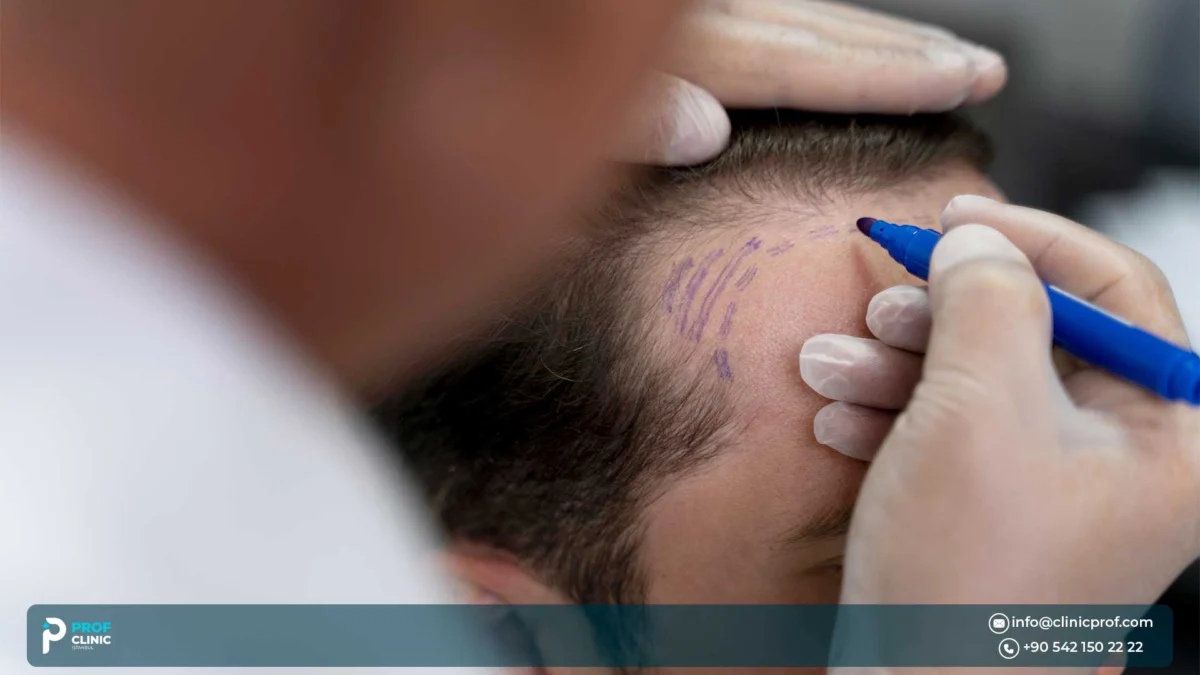
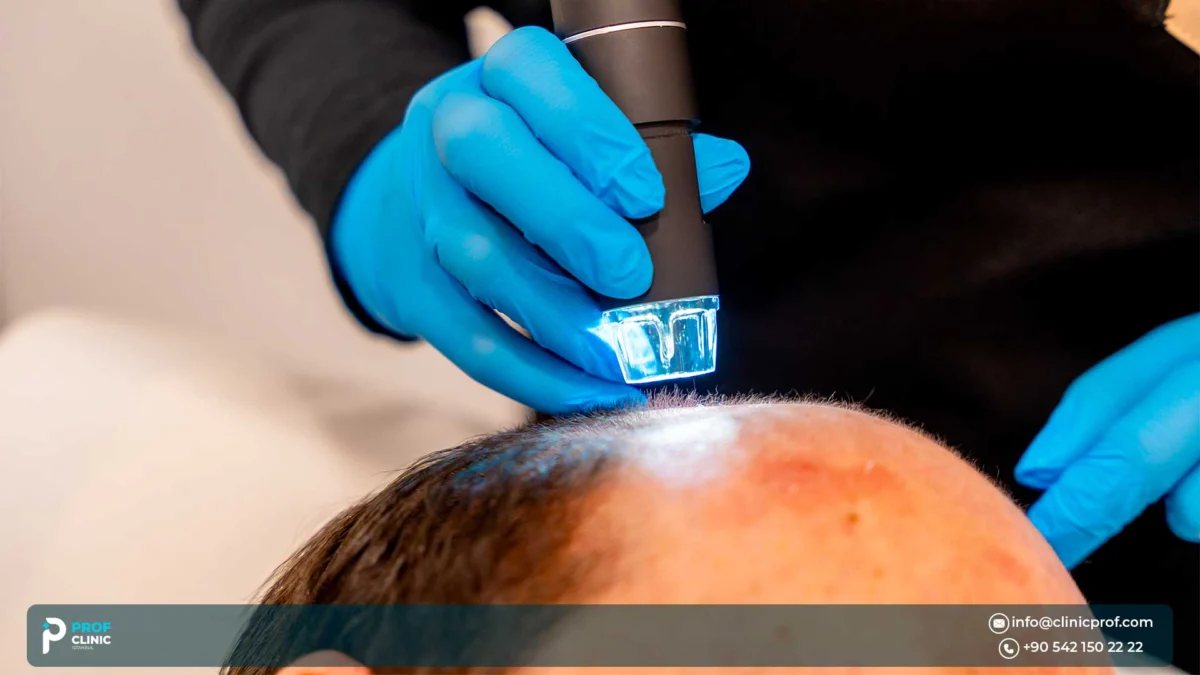
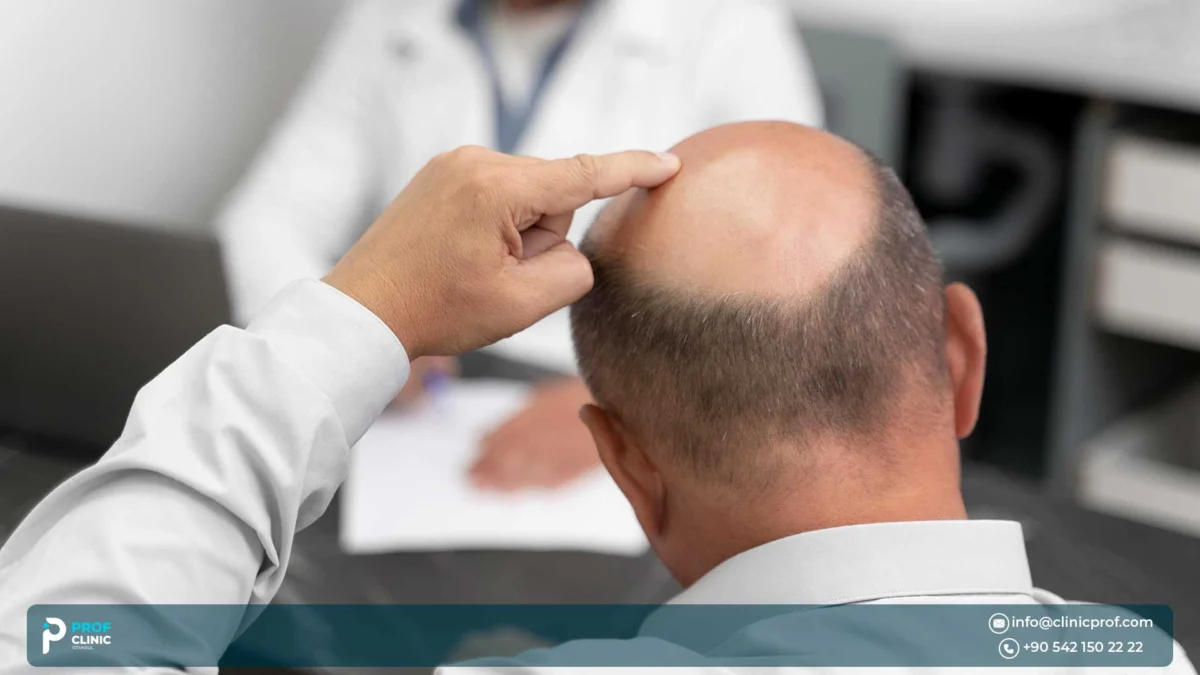
What does the Norwood scale actually tell you about your hair loss, and what does it mean for a hair transplant? It is the seven-stage chart doctors use to describe male pattern baldness, from a normal hairline at stage 1 to a narrow horseshoe of hair at stage 7, and the stage you sit at gives a first, rough idea of how many grafts you might need. It is a starting point rather than a verdict, because two men at the same stage can need quite different numbers.
In this guide by Prof Clinic, you’ll find each of the seven stages explained in plain terms, a compact table of rough graft ranges, how the Norwood scale differs from the Hamilton scale, what the chart can’t tell you, and which stages usually suit surgery. By the end, you’ll know how to place yourself on the chart and what to ask a doctor next.
What Is the Norwood Scale, and How Do Doctors Use It?
The Norwood scale is a seven-stage classification of male pattern hair loss, and doctors use it as a shared language: a stage tells another doctor, or a surgeon abroad, roughly how far the hairline has receded and whether the crown is thinning. The ISHRS describes it as a tool for describing hair loss in men from Norwood 1, no hair loss, to Norwood 7, the most advanced loss, which resembles a horseshoe. It follows the way thinning usually begins at the temples and the crown and slowly spreads across the top of the scalp.
If you recognise yourself somewhere on the chart, you are in large company. The ISHRS says pattern hair loss can affect up to 50% of men by age 50 and up to 80% by age 80, and the Cleveland Clinic notes that the early stages usually start in a man’s 30s, although some men see signs in their late teens.
Norwood vs Hamilton: Is It the Same Scale?
In everyday use, yes: “Norwood scale” and “Hamilton-Norwood scale” name the same chart. The history explains the double name. According to a review in the Journal of Cutaneous and Aesthetic Surgery, Hamilton, an anatomist, proposed a detailed classification in 1951 after studying more than 300 men. Norwood, a dermatologist and hair transplant surgeon, revised it in 1975 after studying 1,000 men, and his seven stages (I to VII) are the version used today.
The numbering doesn’t map one to one, which matters if you read older material. In Hamilton’s system the first type counted as baldness was type IV, while in Norwood’s it is stage III. So a “Hamilton IV” in an old text roughly matches Norwood 3, not Norwood 4.
The Type A Variant: When the Hairline Recedes Without a Bridge
Norwood also described a Type A variant (stages IIA, IIIA, IVA and VA) for men whose hairline recedes steadily backwards without leaving an island of hair at the front and without a separate bald spot at the crown. In this pattern the horseshoe of hair at the sides and back tends to be wider and to sit higher, and sparse hairs often remain in the bald area. If a doctor says “Norwood 3A”, that is the pattern they mean.
The same review points out a limit worth knowing: the scale doesn’t list some unusual patterns, such as a bald patch on the vertex with the front hairline intact. A chart describes most patterns, not every scalp.
The 7 Norwood Stages at a Glance, With Rough Graft Ranges
Each step up the chart adds more loss at the front, the crown or both, and the rough graft range climbs from none at stage 1 to 5,000 or more at stage 7. A graft is the small natural group of hairs that is moved as one unit. Use the table as a quick calculator: find the row that matches your photos, then read the range across.
| Norwood stage | What it usually looks like | Rough graft range |
|---|---|---|
| Stage 1 | Little or no recession of the hairline | None needed |
| Stage 2 | Slight, triangular recession at the temples | About 800–1,500 |
| Stage 3 | Deeper, symmetrical temple recession, often an M or U shape | About 1,500–2,500 |
| Stage 3 vertex | Stage 3 recession plus thinning at the crown | About 2,000–3,000 |
| Stage 4 | Deep recession and a thin or bare crown, with a band of hair between them | About 2,500–3,500 |
| Stage 5 | The band between front and crown is narrower and sparser | About 3,500–4,500 |
| Stage 6 | The band has gone; front and crown form one bald area | About 4,500–6,000+ |
| Stage 7 | Only a narrow horseshoe of hair at the sides and back | About 5,000–7,000+ |
These are planning estimates for a man with average donor density, not figures from a single study, and a doctor may give you a different number after examining your scalp. They also assume your hair loss has settled; if it keeps progressing, the figure grows. The longer breakdown by scalp area, donor limits and price sits in a dedicated guide.
Also read: How Many Grafts Do I Need? Graft Count by Norwood Stage
Norwood Stages 1 to 3: Early Recession at the Temples
Stages 1 to 3 cover the move from a normal hairline to a clear M- or U-shaped recession, and the question here is usually “is it time to treat this?” rather than “how many grafts?”.
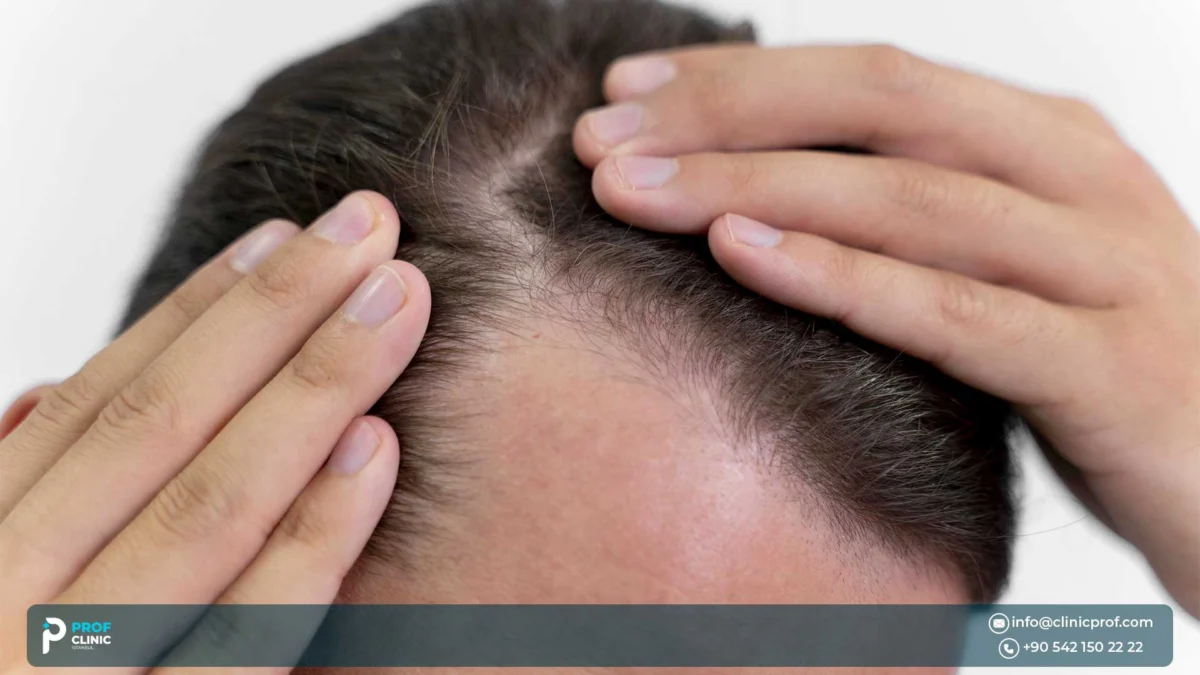
Stage 1: No Real Recession
Stage 1 means minimal or no recession of the hairline, so there is no pattern baldness yet and nothing to transplant. If you are worried about thinning at this point, a doctor can look for other causes of hair loss before you assume it is male pattern baldness.
Stage 2: Slight Recession at the Temples
At stage 2, triangular areas of recession appear at the temples, usually on both sides. Surgery is rarely the first step here. The ISHRS says medical therapy works best in early hair loss, before full baldness sets in, and warns that transplanting younger men without medical therapy can be dangerous.
The Cleveland Clinic lists minoxidil, applied to the scalp, as usually the first treatment, with oral finasteride as another option. Whether either suits you is a doctor’s decision; our guide to Finasteride and Minoxidil: Hair Loss Treatment and After a Hair Transplant explains how they are used.
Stage 3 and Stage 3 Vertex: Where Surgery Becomes a Real Option
Norwood treated stage 3 as the minimal hair loss that counts as baldness. The temples are deeply and symmetrically receded, bare or only sparsely covered, and the hairline often forms an M or U shape, as the Cleveland Clinic describes it. In “stage 3 vertex”, the main loss is at the crown while the front recedes no further than stage 3.
This is usually the stage at which a transplant becomes a realistic conversation, most often for the hairline and temples. A rough planning range is 1,500–2,500 grafts, or 2,000–3,000 for stage 3 vertex because the crown adds area. Our guide to Temples and Receding Hairline: Hair Transplant for Temple Recession goes deeper on the front of the scalp.
Not sure whether your temples are stage 2 or stage 3? Ask our team to look at your photos before you decide anything.
Norwood Stages 4 and 5: When the Front and the Crown Start to Meet
At stages 4 and 5 the temple recession and the crown thinning become two bald areas divided by a band of hair, and the planning question is how to cover the front without spending the whole donor supply.
Stage 4: Two Bald Areas and a Band Between Them
At stage 4 the temple recession is deeper than at stage 3, the crown is sparse or bare, and a band of moderately dense hair runs across the top and joins the hair at the sides, as the Journal of Cutaneous and Aesthetic Surgery review describes. A rough range is 2,500–3,500 grafts, and one large session is common when the donor area allows it. Plans at this stage commonly put the front first and treat the crown at lower density or later.
Stage 5: The Band Is Thinning
By stage 5 the band across the top is narrower and sparser, and both bald areas are bigger. Rough estimates rise to about 3,500–4,500 grafts. The NHS notes that if a large area is being treated, you may need two or more sessions on different days, which is why bigger plans are often split.
The band is still your own hair and may keep thinning, so a good plan allows for that. The crown also deserves its own discussion: it is a wide, curved area that often takes more grafts than its size suggests. Our guide to Crown Hair Transplant: Grafts, Growth Time and Results covers it in detail.
Norwood Stages 6 and 7: Advanced Hair Loss and What Is Realistic
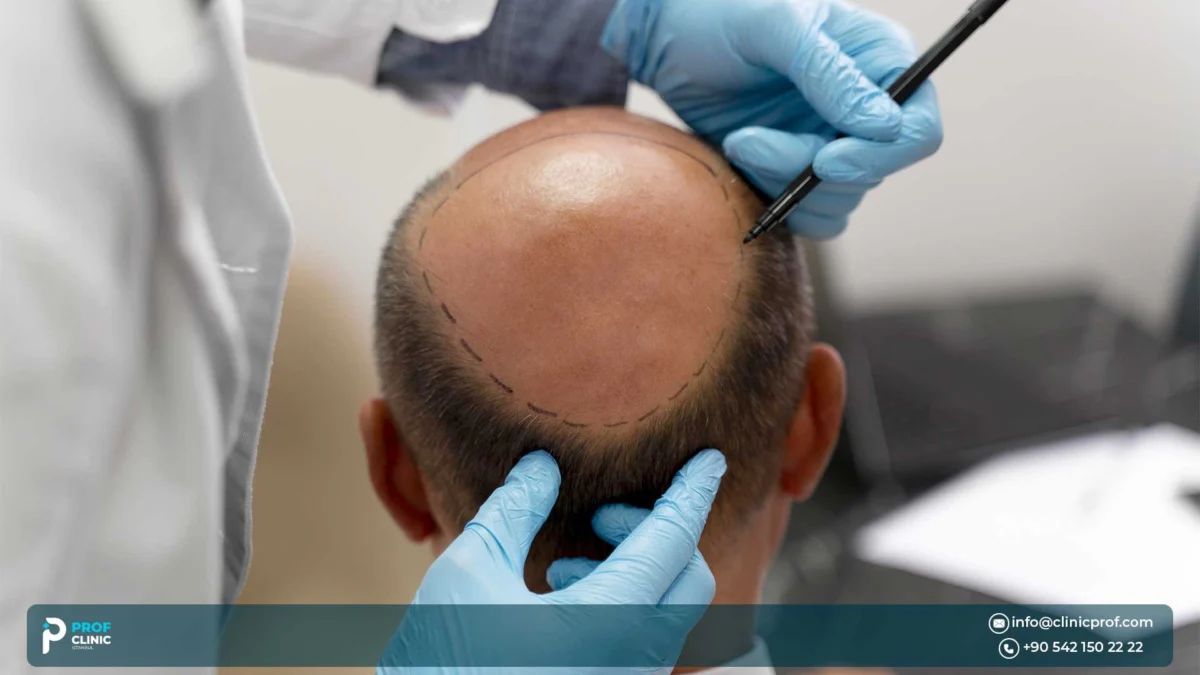
At stages 6 and 7 the bridge of hair has gone, and the planning question shifts from “how many grafts would cover everything?” to “how much can the donor area safely supply?”. At stage 6 the front and the crown join into one large bald area. At stage 7 only a narrow horseshoe-shaped band remains at the sides and back, and the review notes that this hair is usually not dense and may be quite fine.
Why the Donor Area Sets the Limit
The supply of permanent hair is finite. In a survey of 34 experienced surgeons published in Dermatologic Surgery, Unger and colleagues estimated that a man with average hair density who is heading for Norwood 5 has about 6,400 follicular units of likely permanent hair, and about 5,400 if he is heading for Norwood 6. That is a lifetime budget for every session, not just the first. The ISHRS warns that running out of donor hair leaves an unnatural result that can’t be fixed.
What a Realistic Plan Looks Like
Good planning at these stages is about priorities. The authors of the PRECISE scale describe adapting the strategy to the donor supply, for example with a higher hairline, no temple restoration and lower density at the crown. In the most advanced pattern they discuss, marking a high hairline alone could save 3,000 grafts or more, and they note that complete restoration may be beyond what some men can supply, even with body hair.
So a transplant at stage 6 or 7 can still help, but the aim is usually a framed face and modest density rather than full coverage. A doctor may advise a limited plan, or no surgery, if the donor supply can’t support what you hope for.
Want to see how planned coverage looks in real cases? Browse consented patient photos in the Prof Clinic before-and-after gallery, and check the stage and the time since surgery on each one.
Why Your Stage Is Only the Starting Point
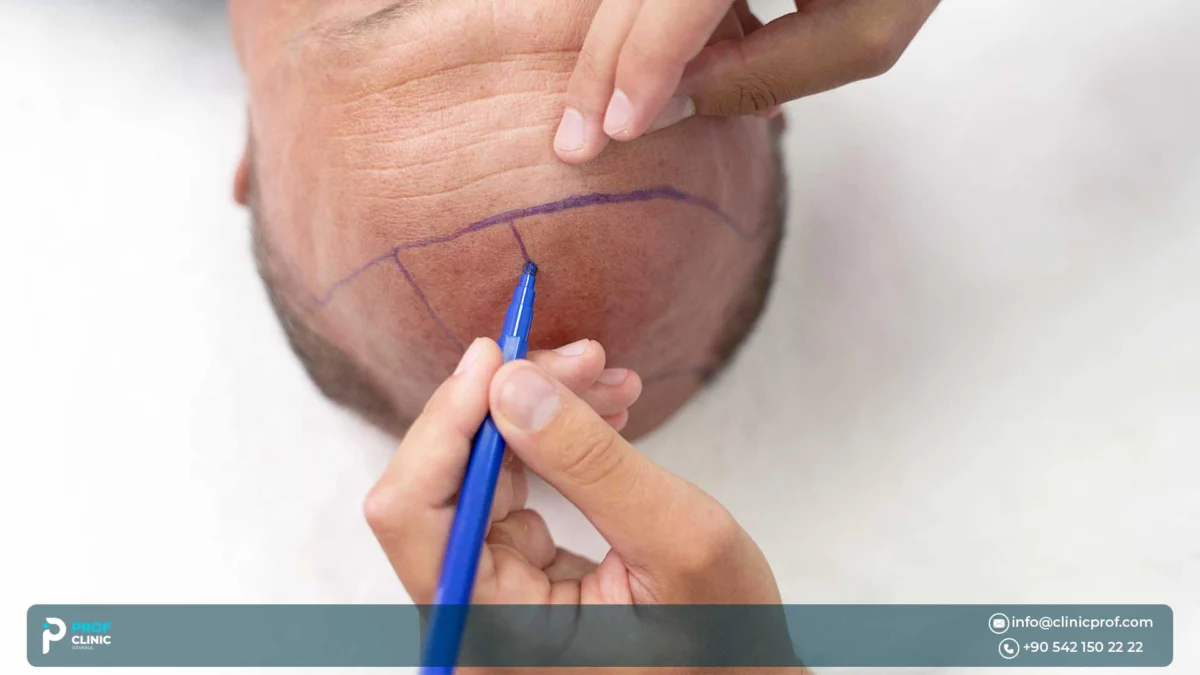
A Norwood stage describes a pattern, not an amount, and that is why two men at the same stage can need very different graft numbers. The PRECISE authors, writing in Aesthetic Plastic Surgery, explain that traditional scales are qualitative: they say nothing about the size of the area to be restored.
Their simulations show the effect. Two men with the same stage 3 vertex pattern but different head sizes scored 2.6 and 4.1 on their scale, which their formula turns into about 3,900 and 6,150 recommended grafts. That formula aims at full coverage, so it gives higher counts than the rough ranges above; the point is the gap between two men with the same label. In another example, a stage 5 man with a large head and a stage 6 man with a smaller head came out with a similar recommendation. The authors also write that one patient can be placed in different classes by different professionals using the same scale.
What Else Shapes the Graft Number
Besides your stage, a doctor weighs several things together:
- Size of the area: the same stage covers more scalp on a larger head.
- Donor supply: how many permanent grafts the back and sides can give over your lifetime.
- Hair qualities: thickness, curl and how much your hair colour contrasts with your skin affect how full a graft looks.
- Planned density: a lower density across a wider area makes the same donor supply go further.
- Future loss: the hairline is designed for the stage you may reach, not only the one you are at.
Can You Work Out Your Own Stage at Home?
You can make a good first guess, and it helps you ask better questions. Here’s a simple way to do it:
- Take photos in daylight, with dry hair styled the way you normally wear it.
- Photograph the front, each temple, the top looking down, and the crown (a second mirror or a helper makes this easier).
- Compare each photo with the descriptions in the table, not just one view in the bathroom mirror.
- Note where the hair is sparsest and whether a band of hair still runs across the top.
- Take the matching range from the table, and move towards the lower or upper end only after a doctor has examined you.
Treat the result as a first guess: a doctor confirms the stage, because different examiners can score the same scalp differently.
Have your photos ready? Send them to our team on WhatsApp and ask which stage the doctor sees.
Which Norwood Stages Suit a Hair Transplant?
A hair transplant usually becomes a realistic option from stage 3 onwards, but the stage alone doesn’t decide it. The NHS says a hair transplant is suitable for permanent baldness, the type that runs in families, and not usually for other types such as the bald patches of alopecia areata. Within pattern baldness, the doctor looks at the whole picture.
You may be a good candidate for a male hair transplant in Turkey if you:
- have permanent pattern baldness, rather than a temporary or patchy cause of hair loss.
- have enough healthy hair at the back and sides to use as a donor, confirmed in person.
- have discussed medical treatment with a doctor, especially if you are young.
- understand that more hair loss may come and want a plan that allows for it.
- expect a natural, realistic density rather than your teenage hairline.
Planning for the Stage You Haven’t Reached Yet
Pattern hair loss tends to progress. The ISHRS describes it as progressive in nature, with the demand for coverage growing while the donor supply shrinks. A hairline that looks right for a man at stage 3 can look out of place if he reaches stage 5, so ask your surgeon to design for where your hair may be in 10 to 20 years. This is also why age matters, which we cover in the guide below.
Also read: Best Age for a Hair Transplant: Is 20–25 Too Young?
8 Questions to Ask After You Know Your Stage
Take this list to your consultation, in Istanbul or anywhere else:
- Your stage: which stage and variant does the doctor see, and why?
- Timing: is surgery advised now, or should medical treatment come first?
- The range: how many grafts do you estimate, as a range, and for which areas?
- The donor area: what can my donor area give over my lifetime?
- Progression: how does the plan cope if my hair loss continues?
- The crown: will it be covered now, later or not at all?
- Sessions: will it take one session or more, and over how many days?
- Who decides: who will examine me in person and confirm the final number in writing?
Know your stage and want a staged plan? Book a free online consultation and ask for the graft range, the session plan and the donor assessment in writing.
Having Your Norwood Stage Assessed at Prof Clinic in Istanbul
At Prof Clinic, your Norwood stage is where the conversation starts, not the verdict. Our hair transplant for men in Turkey begins with photos, and the team sends a written price offer after evaluating them. Hair restoration is led by Spc. Dr. Lütfi Öztürk, an internal-medicine specialist, who turns your stage into a medical assessment and treatment plan and coordinates follow-up.
If you are planning the trip, a few things are worth checking first:
- Pre-op tests: whatever your Norwood stage, surgery is preceded by a blood count, ECG, kidney and liver function, electrolytes, blood sugar, and hepatitis and HIV screening.
- Techniques: the choice between FUE, DHI, Sapphire FUE and Micro FUE depends on your hair and donor area.
- Honest expectations: the density your stage can realistically reach is discussed for your case alone, with no specific figure promised in advance.
- A written quote: one package price covering the procedure, accommodation, airport and hotel transfers, and post-op care.
- Follow-up after you fly home: the coordination team follows up and gives advice over WhatsApp.
As a general guide, a scalp hair transplant package in Istanbul costs about €1,800–€3,500 (approximate 2026 range). This is not a final price: it depends on your case after assessment and is confirmed in the written quote. A stay in Istanbul is typically 2–4 days.
Comparing quotes with different graft numbers? Ask for a written quote that names the graft range, the technique and what is included.
FAQs About the Norwood Scale and Hair Transplants
Which Norwood stage is suitable for a hair transplant?
A transplant is most often discussed from Norwood 3 onwards, once there is permanent loss and a donor area to draw from. At stage 2, doctors usually look at medical treatment first, and at stages 6 and 7 surgery can help but won’t cover everything. Your doctor decides after examining your scalp and donor hair.
How many grafts do I need for Norwood 3, 4 and 5?
As rough planning estimates only, about 1,500–2,500 grafts for Norwood 3, 2,500–3,500 for Norwood 4 and 3,500–4,500 for Norwood 5, for a man with average donor density. The real figure depends on the size of the area, the density planned and your donor supply, so ask for a range confirmed by a doctor after examination.
Can you have a hair transplant at Norwood 7?
Sometimes, but with limited aims. At Norwood 7 only a narrow band of hair is left at the sides and back, so the donor supply is usually smaller than the area to cover. A doctor may plan to rebuild the front and mid-scalp at lower density, and may advise against surgery if the donor supply is too limited.
Does the Norwood scale work for women?
No, it describes the male pattern, which starts at the temples and crown. A review of classification systems names the Ludwig system as the one most commonly used for female pattern hair loss. Women who are worried about thinning should ask a doctor to assess the cause, as it can differ from male baldness.
Will my Norwood stage get worse after a transplant?
It can, because a transplant moves hair but doesn’t stop pattern hair loss in the hair that stays in place. The ISHRS describes the condition as progressive, which is why doctors plan the hairline and the use of donor hair with future loss in mind, and may discuss medical treatment alongside surgery.
Reading Your Place on the Norwood Scale, Then Planning From It
The Norwood scale tells you the pattern and gives a rough sense of scale; your donor area, hair type and how far the loss may progress decide the real plan. Use the table to place yourself, treat the graft range as an opening estimate, and ask a doctor to confirm your stage and the range in writing.
If you are weighing up a hair transplant in Istanbul, the safest first step is an assessment of your photos, not a booking. Contact Prof Clinic to start there.
Sources
- Journal of Cutaneous and Aesthetic Surgery — Classifications of Patterned Hair Loss: A Review (Gupta & Mysore, 2016)
- Aesthetic Plastic Surgery — PRECISE Scale: A Quantitative Classification for Androgenetic Alopecia and Its Application to Hair Transplantation (Pittella et al., 2024)
- Dermatologic Surgery — Estimating the Number of Lifetime Follicular Units: A Survey and Comments of Experienced Hair Transplant Surgeons (Unger et al., 2013)
- ISHRS — Androgenetic Alopecia: A Guide to Pattern Hair Loss
- Cleveland Clinic — Male Pattern Baldness (Androgenic Alopecia): Stages, Treatment
- NHS — Hair transplant