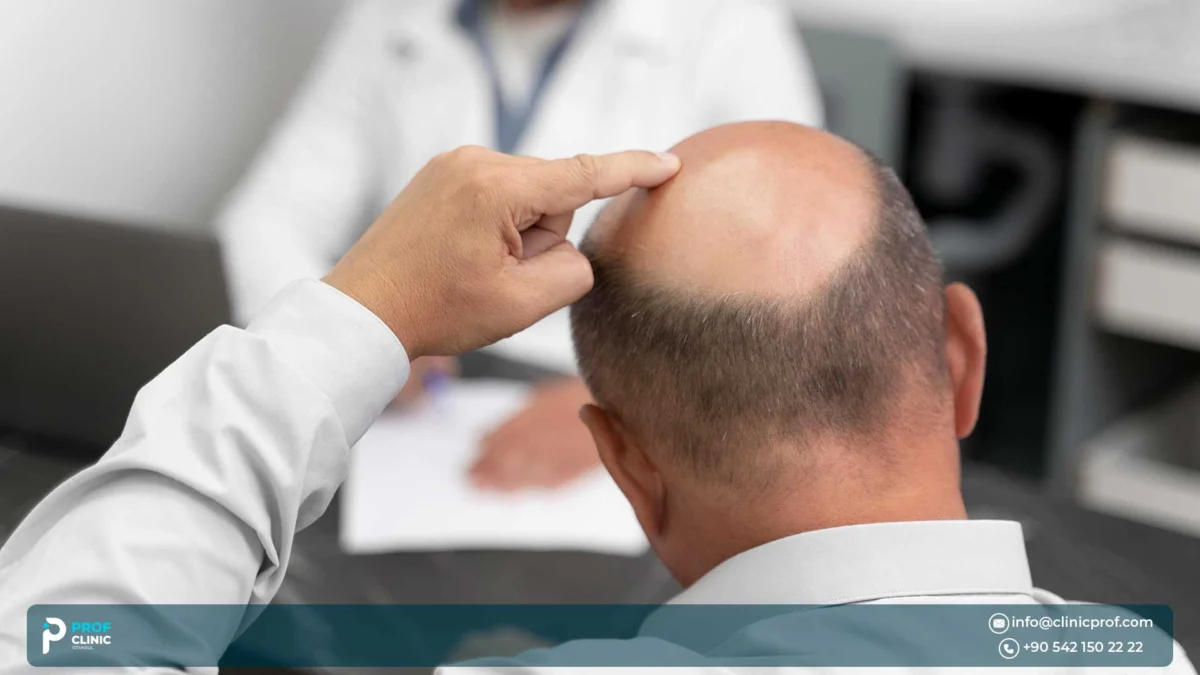
Can you have a second hair transplant, and how soon is too soon? In most cases yes, but not until the first one has finished growing, which usually means waiting about 12 months. A second hair transplant makes sense when the first left less density than planned, when your own hair has kept thinning around the grafts, or when an area such as the crown was deliberately left for later. Whether it is worthwhile depends mostly on how much donor hair you have left.
In this guide from Prof Clinic, you’ll learn the reasons people go back for another session, how long to wait, how to tell whether your donor area can give more, how density is added without overcrowding the scalp, and how a top-up differs from a repair. By the end, you’ll know which questions to take to your surgeon.
When a Second Hair Transplant Makes Sense
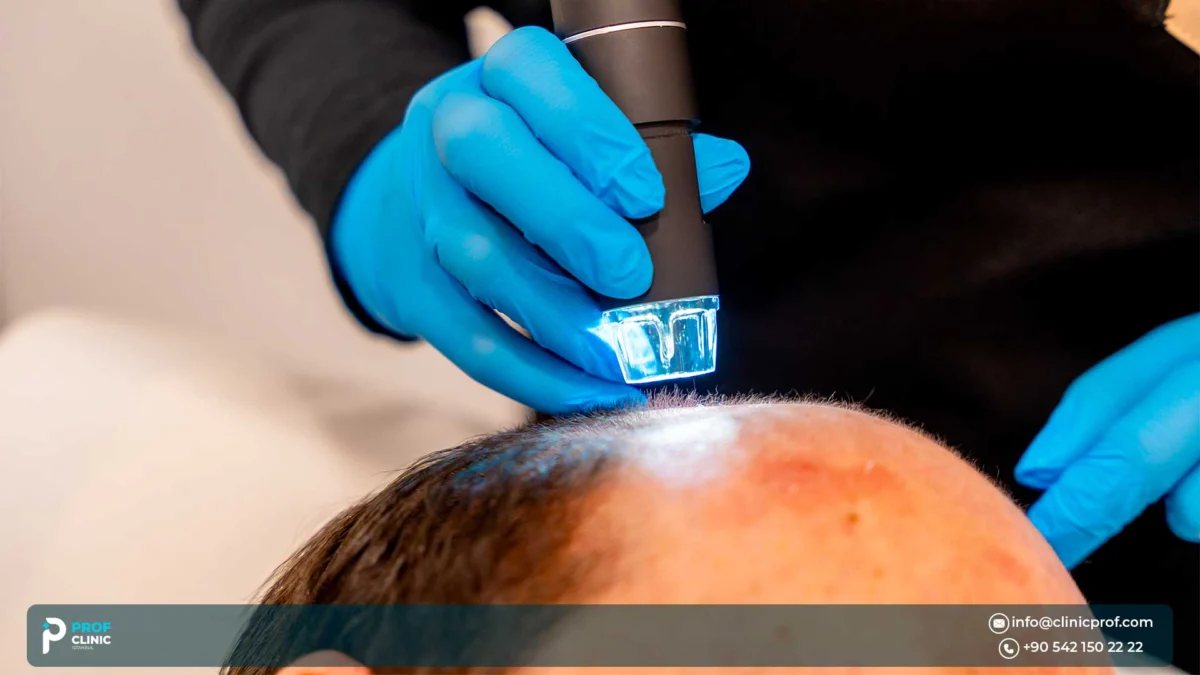
A second session makes sense when there is still a clear gap between your scalp and your plan, and enough healthy donor hair to close it. The International Society of Hair Restoration Surgery (ISHRS) lists four common reasons for follow-up procedures:
- Ongoing hair loss: male and female pattern hair loss is an inherited, progressive condition, so hair around the grafted area can keep thinning.
- More density: some patients want a fuller result where the first operation was done.
- Hairline adjustment: the line may need refining once the first result has settled.
- Revision of older work: transplants done many years ago did not use today’s refined techniques.
These are different decisions, and mixing them up is where most confusion starts. A planned second stage belongs to the original strategy: the NHS notes that if a large area is being treated, you may need two or more sessions. Adding density where the first result is thin is a top-up. A review in the Indian Journal of Plastic Surgery observes that transplanted density is thinner in areas that were completely bald, and that a second sitting can be undertaken to increase it. Revising a badly designed or damaged result is a repair, which has its own section below.
If the line itself is what bothers you, the correction options are covered in a separate guide. Also read: Unnatural Hairline: How It Is Corrected
How Long Should You Wait for a Second Hair Transplant?
Wait until the first transplant has finished growing, which for most people means about 12 months. A recent review in Frontiers in Medicine advises that secondary procedures or touch-up sessions should only be considered once final growth is achieved, typically around 12 months after surgery. That matches the published growth timeline: the NHS says full results should be seen after 10 to 18 months, and the American Academy of Dermatology (AAD) says most patients see results between six and nine months, while for some it takes 12.
The practical risk of going early is that you can’t yet see what you have. A thin-looking patch at month 5 may fill in by month 12, and grafts added too soon can end up spending donor hair on an area that would have caught up by itself. The table shows how timing usually differs by situation.
| Situation | Typical timing | Why |
|---|---|---|
| Adding density to an area already transplanted | About 12 months or more after the first session | Final growth has to be visible before density can be judged |
| Planned second stage in a different zone, such as the crown after the front | Set by your surgeon in the original plan; an older review puts a planned second sitting at least 3–6 months after the first | The new zone doesn’t depend on judging the old one |
| Correcting a problem result | After a repair assessment, usually not before about 12 months | Growth, scarring and donor condition all need to be clear first |
| Young patient whose loss is still unfolding | Often medication first, surgery once the pattern is clearer | Early surgery may not address future needs |
These are typical ranges, not fixed rules, and your surgeon sets the actual date after examining you. What it means in real life: if you’re planning another trip to Istanbul, build it around your 12-month photos rather than around a date on the calendar. For what each month usually looks like on the way there, see Hair Transplant Timeline Month by Month: Growth and Shock Loss.
Not sure your photos show final growth? Ask the Prof Clinic team on WhatsApp which pictures to send for a first look.
Can Your Donor Area Give a Second Session?
Only if enough healthy donor hair is left, and that is what decides most second sessions. Donor hair at the back and sides of the scalp is a finite supply. The ISHRS warns that at some point there might not be enough donor hair available for transplantation, especially if hair loss outpaces restoration.
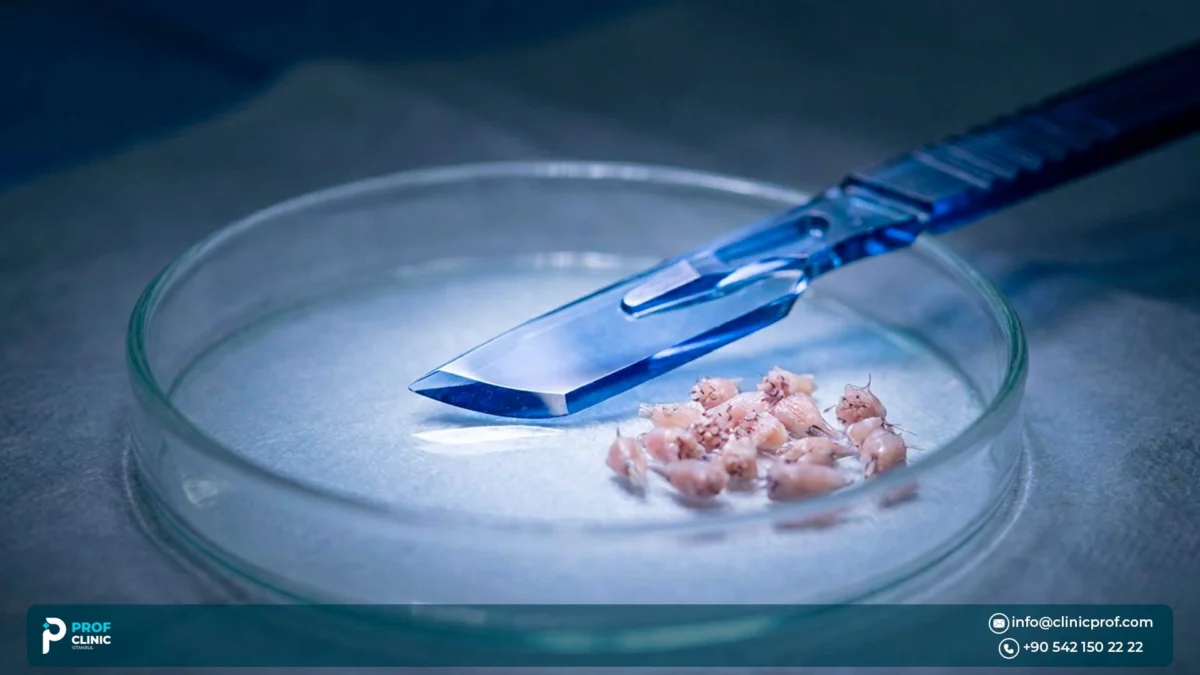
Surgeons also limit how much they take each time. The recent Frontiers review lists keeping extraction density to 10–20% per session as a way to prevent overharvesting, and names repeated sessions in the same area, low baseline donor density and high graft demands among the risk factors. A case series in the Journal of Cutaneous and Aesthetic Surgery puts numbers on the budget: it estimates a safe donor zone of about 12,500 grafts, of which around 6,000 can be harvested safely. That is one team’s working estimate, not a rule for every scalp.
What the Donor Check Looks At
Before a second session is planned, expect your surgeon to review:
- Current donor density: how much hair is left in the safe zone, and whether it is measured or only judged by eye.
- Donor thinning: whether the donor hair itself shows signs of miniaturisation.
- First-session record: how many grafts were taken, from where, and by which technique.
- Scars: dot scars or a linear scar from earlier work, which can distort the direction of hair in the donor area.
- Likely future loss: how much of your remaining hair is expected to thin, and how many grafts that would ask for later.
The full picture of donor healing, thinning and limits is in Hair Transplant Donor Area: Healing, Thinning and Limits.
When the Scalp Donor Is Not Enough
If the scalp can’t supply what the plan needs, some surgeons add beard or chest hair. The same case series used body hair alongside scalp grafts in advanced baldness and reported that it enhanced visual density, with beard hair being thicker and curlier. Body hair has its own limits and doesn’t suit everyone, so this is a decision for your surgeon after an examination, not a shortcut.
How a Second Session Adds Density
A second session adds density by placing more grafts in thin zones, either between existing hairs or in areas the first plan didn’t reach, and the limit is what your skin and donor can handle rather than the number of grafts you would like. A good plan therefore starts from your scalp, not from a package size.
Filling Between Hairs or Extending Outward
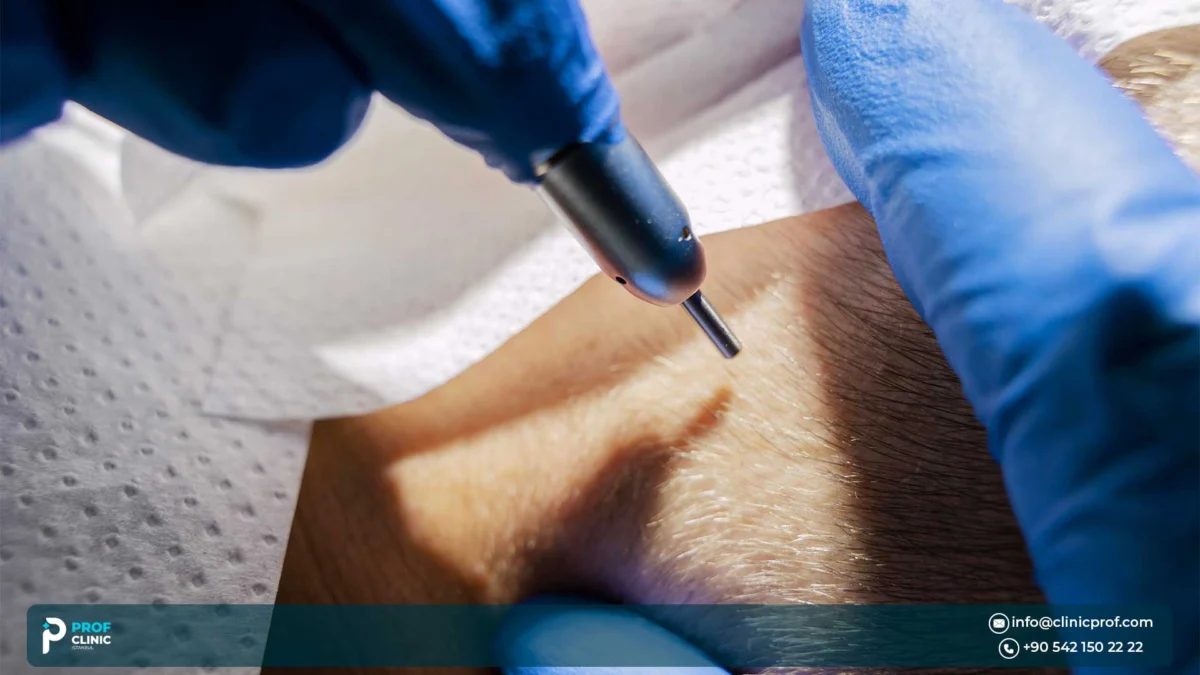
There are two basic moves. One is to fill gaps within a treated area, and the other is to extend into zones that were left untreated, such as the crown or the temples. The Indian Journal of Plastic Surgery review notes that slits can be used to increase density where hairs already exist. It also warns that secondary procedures tend to involve more bleeding in the recipient area, and that making gaps is harder because of fibrosis from earlier work. That is one reason a second session in the same spot is more technical than the first. If your open area is the crown, see Crown Hair Transplant: Grafts, Growth Time and Results.
Why More Grafts per Square Centimetre Isn’t Always Better
Packing more grafts into the same skin can backfire. The ISHRS notes that added density is not always suitable: a fair-skinned person with dark, coarse hair may be told it could look bushy. The Frontiers complications review lists dense packing, very large sessions and prior surgery among the risk factors for recipient-site necrosis, a rare complication, and high implantation density among the risk factors for shock loss of the native hairs beside the grafts. For orientation, the same case series worked with about 30–40 grafts per square centimetre to give the visual effect of reasonable density, though your own figure depends on your hair and skin.
Your surgeon may therefore suggest staging the work over two sessions instead of forcing everything into one. For typical graft numbers by pattern of loss, see How Many Grafts Do I Need? Graft Count by Norwood Stage. How male pattern loss is planned is explained on the male hair transplant in Turkey page.
Want to see density at 12 months in real cases? Browse consented photos in the Prof Clinic before-and-after gallery and check the time since surgery in each one.
Protecting the Hair You Still Have: Medication and Future Loss
A second transplant doesn’t stop hair loss, so any sensible plan includes a way to slow it. The AAD says medicine helps because hair loss and thinning can continue even after a hair transplant, and that it can prevent or slow new loss. The NHS also notes that your hair might continue to thin around the transplant.
The ISHRS adds two cautions. Response to medication varies, and poor compliance can significantly alter the benefit. And in a very young man whose pattern hasn’t declared itself, transplantation done too early may not address future needs. Which medicine suits you, and whether it is safe for you, is a prescriber’s decision, so don’t start or stop anything on your own. For the long view, see Is a Hair Transplant Permanent? What Happens After 10 and 20 Years.
Second Session or Repair? How to Tell Them Apart
A top-up adds hair to a result that is natural but thin, while a repair corrects something that was designed or done wrongly. The two get different plans, so it matters which one you need.
| What you notice | It usually points to | Likely next step |
|---|---|---|
| A natural hairline with even but thin coverage | A density top-up | Second session once about 12 months have passed, if the donor allows |
| Your own hair thinning between or behind the grafts | Ongoing pattern hair loss | Medical review first, then a plan for where grafts matter most |
| A hairline that looks too low, straight or tufted | A design problem | Correction planning rather than simply adding grafts |
| Little growth at 12 months, visible scarring or a thin donor area | A failed or overharvested result | A full repair assessment |
Your photos will not settle this on their own, and neither will a short message. Adding grafts to a result that was badly designed can make the underlying problem more obvious. Also read: Failed Hair Transplant: Signs, Causes and How to Repair It
What to Expect From a Second Session: Recovery, Growth and Cost
Healing and growth follow the same pattern as the first time, only with existing grafts and scars to work around. Expect scabs in the first days, shedding of the new hairs in the following weeks, and new growth from about 4 months, with full results at 10 to 18 months according to the NHS.
Shedding Around Existing Grafts
The Frontiers review describes shock loss as diffuse or patchy shedding of native hairs next to grafts, usually 2–8 weeks after surgery, with regrowth around 3 months. Ask your surgeon what to expect around your existing grafts and your own hair, so a thinner-looking phase at month 2 or 3 doesn’t come as a surprise.
Cost of a Second Hair Transplant
As approximate 2026 ranges, a scalp hair transplant in Turkey package in Istanbul (FUE, DHI or Sapphire) typically falls between about €1,800 and €3,500. These figures are not final prices. A second session is priced on its own plan and graft number, and the final amount comes in a written quote after your photos are assessed. Packages usually include the procedure, pre-op blood tests, medication and an aftercare kit, plus hotel and VIP airport and hotel transfers, as described on the service pages.
Checklist: What to Ask Before Booking a Second Session
Take this list to any consultation, including one for a transplant you had elsewhere:
- Maturity: has it been at least 12 months, and do my photos show final growth?
- Donor density: what is it now, and how was it measured?
- Reserve: how many grafts will be left for later sessions after this one?
- Graft number: how many, in which zones, and why?
- Density target: what density per square centimetre is planned, and is it safe for my skin?
- Existing hairs: how will the grafts I already have be protected?
- Technique: FUE, DHI or Sapphire, and why for this case?
- Scars: how will previous donor scars be handled?
- Future loss: which areas are likely to keep thinning, and what is the plan?
- Medication: should I use it, and who will monitor it?
- Follow-up: who checks the result after I fly home, and how?
A clinic that answers these clearly is planning for your hair in ten years, not just your photos at twelve months. It is also sensible to check that any clinic you consider is licensed by the Turkish Ministry of Health.
Planning a Second Hair Transplant at Prof Clinic in Istanbul
Prof Clinic offers hair transplant in Istanbul for men and women, using the FUE, DHI, Sapphire FUE and Micro FUE techniques named on its service pages. Medical assessment and treatment planning are led by Spc. Dr. Lütfi Öztürk, an internal-medicine specialist, and the coordination team follows up after the procedure and gives advice over WhatsApp.
For a second session, the practical steps are the same as for a first. You send photos, the team assesses them, and you receive a written price offer. Before any surgery the clinic runs pre-op tests, including blood count, ECG, kidney and liver function, electrolytes, blood sugar, and hepatitis and HIV screening. Density is discussed individually and can’t be promised in advance, which is the honest answer to expect when you’re asking for more of it.
If your first transplant was done elsewhere, send photos of the front, top, crown and back of the head in daylight, plus the date, the technique and the graft number if you know them. Ready for an honest assessment? Book a free online consultation and ask for a written plan that states the graft number and the donor reserve.
Second Hair Transplant FAQs
How long should I wait before a second hair transplant?
Most surgeons advise waiting about 12 months, until the first transplant has fully grown. A recent review suggests considering touch-up sessions only once final growth is achieved, typically around 12 months after surgery, and the NHS puts full results at 10 to 18 months. A planned second stage in a new zone can follow a different schedule.
How many hair transplants can you have in a lifetime?
There is no fixed number, because the limit is your donor supply. Each session uses part of a finite supply of hair from the back and sides, and the ISHRS warns that at some point there might not be enough donor hair left. Your surgeon estimates how many grafts you can spare after examining your donor area and likely future loss.
Will a second hair transplant make my hair thicker?
It can add density in the treated zones when your donor hair and skin allow it, but the amount can’t be promised in advance. A review in the Indian Journal of Plastic Surgery notes that a second sitting can increase density in thin transplanted areas, while the ISHRS cautions that more density is not always suitable.
Is a second hair transplant riskier than the first?
It is usually more technical rather than clearly riskier. The Indian Journal of Plastic Surgery review notes more bleeding and harder gap-making because of fibrosis in secondary procedures, and a Frontiers review lists prior surgery among the risk factors for rare recipient-site necrosis. Careful patient selection and avoiding dense packing are the listed ways to lower that risk.
How much does a second hair transplant cost in Turkey?
As an approximate 2026 range, a scalp hair transplant package in Istanbul costs about €1,800–€3,500, and a second session is quoted on its own graft number and plan. The final price is confirmed in writing after your photos are assessed. Ask what the quote includes, such as pre-op tests, medication, hotel and transfers.
Before You Book a Second Hair Transplant
A second hair transplant works best when you wait for the first one to mature, confirm that the donor can spare more, and keep your own hair as stable as possible. If those three points check out, a second session can add density where the first left a gap. If they don’t, the better answer may be medication, a staged plan or a repair first. Your surgeon makes that call after seeing your scalp. Contact Prof Clinic to start with a review of your photos and your first-session details.
Sources
- ISHRS — Followup Hair Restoration Procedures
- ISHRS — Combined Surgical and Medical Hair Restoration Therapy: A Comprehensive Approach
- NHS — Hair transplant
- American Academy of Dermatology — A hair transplant can give you permanent, natural-looking results
- Frontiers in Medicine — Complications in follicular unit excision hair transplantation: current evidence and practical approaches (Romera de Blas et al.)
- Indian Journal of Plastic Surgery — Hair Transplantation Surgery (Khanna, 2008)
- Journal of Cutaneous and Aesthetic Surgery — “Combination Grafting” of Scalp and Body Hair to Enhance the Visual Density of Hair Transplant and Coverage of Higher Grade of Baldness (Garg & Garg, 2020)