Is shock loss after hair transplant normal, and will the hair come back? In most cases, yes to both: shedding in the first two months is a common stage of recovery, it is usually temporary, and it does not mean the grafts have failed. Two things can fall out: the transplanted hairs themselves, while their follicles stay in the skin, and some of your own nearby hairs, which is what doctors call shock loss.
In this guide by Prof Clinic, you’ll learn the three kinds of shedding that can follow surgery, why shock loss happens and who is more likely to get it, how to tell it from a problem that needs a call to your clinic, and what may help while you wait. By the end, you’ll know what is normal in weeks 2–8 and what to ask your surgeon.
Is Shedding Normal After a Hair Transplant? The Three Kinds
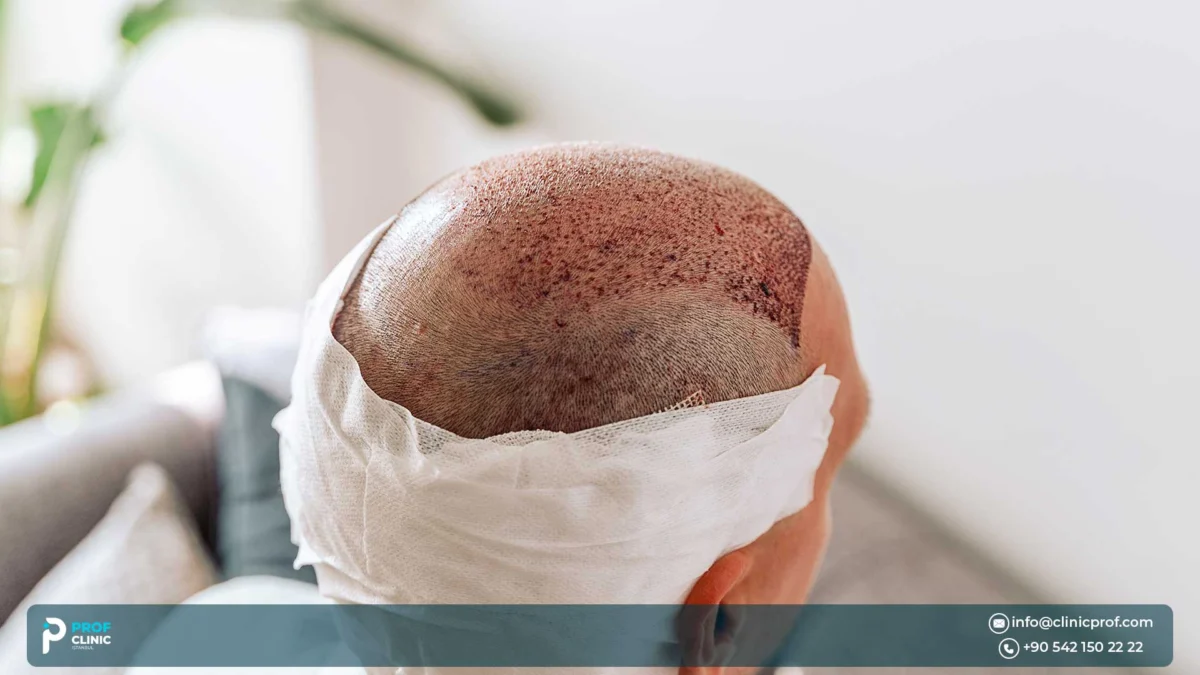
Yes: three different kinds of shedding can follow a hair transplant, and only one of them is shock loss in the strict sense. The American Academy of Dermatology (AAD) says that between two and eight weeks after surgery the transplanted hair will fall out, and that this is normal. Your own existing hairs in or beside the treated area can shed too, and so can hairs in the donor area. Mixing the three up is the main cause of early panic.
| Type of shedding | What sheds | Usually starts | Usually returns |
|---|---|---|---|
| Transplanted hairs | The implanted hair shafts; the follicles stay in the skin | Scabs and shafts come away in about 2–3 weeks; shedding continues through weeks 2–8 | New hairs from about months 3–4 |
| Shock loss (treated area) | Your own existing hairs in or next to the grafts | About weeks 2–8 | Regrowth usually begins around month 3 |
| Donor-area shedding | Remaining hairs in or beside the harvested zone | About weeks 2–4 | Usually settles within 3–6 months |
These are typical ranges, not fixed rules, and some people notice very little shedding at all.
Shock Loss After Hair Transplant: What Causes It?
Shock loss, known medically as recipient-site effluvium, usually happens when the stress of surgery pushes some of your own growing hairs into a resting phase, so they shed even though their follicles stay in the skin. A recent review in Frontiers in Medicine lists surgical trauma, inflammation around the follicle, reduced local blood flow and vasoconstrictor drugs such as epinephrine among the proposed causes.
The Transplanted Hairs: Expected Shedding, Not Shock Loss
The hairs that were implanted fall out first. A review of hair transplant surgery in the Indian Journal of Plastic Surgery explains that the scab and the hair shaft above the skin come away within two to three weeks, while the follicle remains and goes into a resting phase, and that new hairs start growing about three months after the procedure. A 2021 review of complications in the same journal links this early loss to the sudden cut-off of blood supply when grafts are moved. What you see in the shower or on the pillow is mostly hair shafts, not lost follicles.
Shock Loss of Your Own Hairs
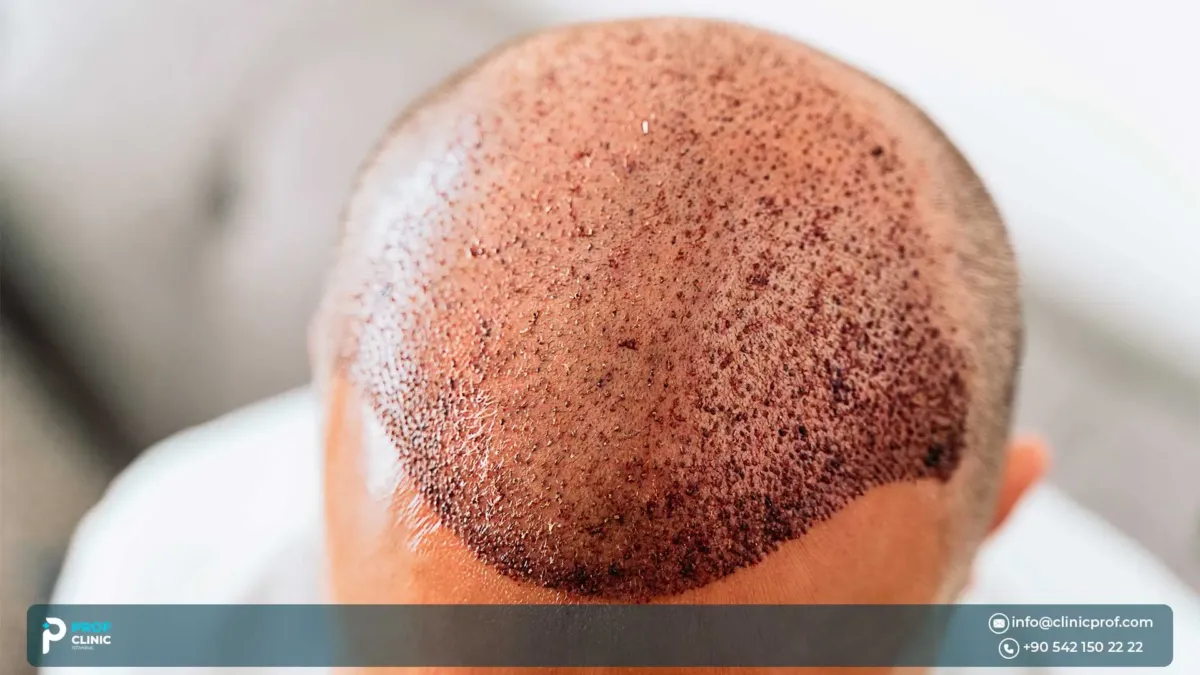
True shock loss is the temporary shedding of your native hairs inside or next to the treated area, either spread evenly or in patches. A review in the Journal of Cutaneous and Aesthetic Surgery describes it as an anagen effluvium, a telogen effluvium, or a mix of the two. It is the same kind of temporary shedding that DermNet lists after surgery, illness or emotional stress, and DermNet describes this type of hair loss as generally reversible once the trigger has passed.
You may notice thinner hair between the grafts and along the edges of the treated area. Together with the shedding of the transplanted hairs, this is why the area can look sparser than it did before surgery at around months 2–3.
Shedding in the Donor Area
Hair at the back and sides of the head can shed for a while as well, but this is less common than shock loss in the treated area. The Frontiers in Medicine review says it usually develops 2–4 weeks after surgery and resolves on its own within 3–6 months, and that it often shows up as a localised thinner patch that can look like alopecia areata. It links it to local trauma, reduced blood supply and a high extraction density. The 2018 complications review reports that full recovery is almost always seen within 3–4 months.
Because a bare patch can resemble other conditions, have your surgeon look at it instead of guessing.
Not sure which kind of shedding you are seeing? Contact our medical team and describe what you notice and when it started.
Who Is More Likely to Get Shock Loss, and Can It Be Prevented?
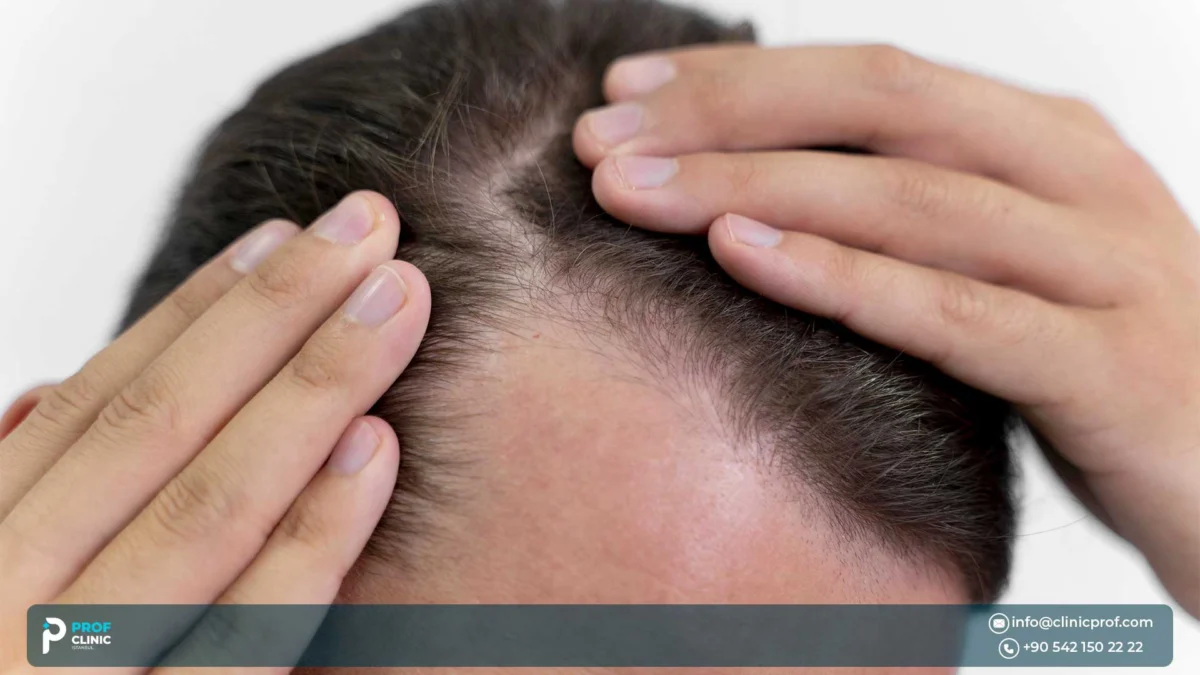
Anyone who still has hair in the treated area can get shock loss, but it is more likely in women and in people whose existing hairs are already thin. The Frontiers in Medicine review gives a wide range of reported rates, from about 0.15% to 15%, and the 2018 complications review notes that some degree of it appears in most patients who still have native hair in the transplant zone. Shock loss can only affect hairs you still have, so in a completely bald area only the shedding of the transplanted hairs applies.
The factors linked to a higher risk are:
- Female sex and female pattern hair loss: the Frontiers in Medicine review names female sex as a major risk factor, with older age adding to it in women with pattern loss.
- Thin, miniaturised hairs: the Journal of Cutaneous and Aesthetic Surgery review points to advanced miniaturisation of the existing hair.
- Very dense packing: a high implantation density (50–70 follicular units per cm²) is proposed as a contributing factor.
- Heavy tumescence and local trauma: too much fluid injected into the scalp and trauma to the tissue are both listed as possible causes.
- Stress: the Frontiers in Medicine review also proposes psychological stress as a contributor.
None of this predicts what will happen to one person. What a surgeon can control is technique: the review lists avoiding excessive implantation density and tumescence and keeping trauma to a minimum. What you can control is the conversation before surgery. Ask whether your existing hairs in the treatment zone are likely to shed, tell your surgeon about recent illness and every medicine you take, and, if you are a woman, make sure this possibility is explained to you in advance. Men weighing a male hair transplant in Turkey should ask the same questions.
What it means in real life: shock loss is something to expect and plan for with photos and patience. It is not a sign that you did anything wrong.
Shock Loss, Normal Shedding or a Failed Transplant? How to Tell
The difference is mostly timing: shedding in the first weeks followed by regrowth from about month 3 is the normal pattern, while poor growth is judged much later, between 6 and 12 months after surgery. Here is how to read what you see.
Usually normal: small scabs and hair shafts falling away in weeks 1–3, the transplanted hairs and some of your own hairs shedding in weeks 2–8, hair that looks thinner than before the transplant by month 3 (the AAD calls this normal), and first short, fine hairs around months 3–4, which fits the NHS timing of about 4 months for new hair.
Reasons to contact your clinic:
- Severe pain or unexpected symptoms: the NHS advises contacting the clinic as soon as possible.
- Signs of infection: spreading redness, warmth, pus or fever.
- Long-lasting redness: redness around the grafts beyond about 4 weeks, which the Frontiers in Medicine review notes can go with shedding or reduced graft survival.
- A sharply defined bare patch: especially in the donor area, where it can resemble alopecia areata and deserves a proper look.
- No new growth at all: little or nothing in the treated area by about month 6, or still very patchy at 12 months.
A genuinely failed transplant is a different problem with different causes, most often damage to the follicles during harvesting, handling or implantation. Our guide to a failed hair transplant covers the signs and the options.
Seeing something you can’t place? Send a photo to our team on WhatsApp rather than guessing.
When Does Hair Grow Back After Shock Loss?
Hair lost to shock loss usually starts to return around month 3, and the transplanted follicles typically begin new growth between months 3 and 4. The Frontiers in Medicine review puts regrowth at around 3 months, a 2021 complications review says the hairs also regrow after 3–4 months without treatment, and the NHS says new hair will usually start to appear after about 4 months. In brief:
- Months 2–3: the quiet phase, when the area can look thinner than before surgery.
- From about month 3: your own hairs begin to come back, and new transplanted hairs start to sprout.
- Months 6–9 and beyond: the AAD says most patients see results between six and nine months, and the NHS places the full result at 10 to 18 months.
Will every hair return? Most do, but not always. The Journal of Cutaneous and Aesthetic Surgery review notes that shock loss can sometimes permanently reduce the native hairs, particularly where they were already miniaturised. The NHS also notes that your hair might continue to thin around the transplant, so the result depends on your natural hair loss as well as on the grafts.
Also read: Hair Transplant Timeline Month by Month: What to Expect Up to Month 18
Want to see how regrowth looks in real cases? Browse consented patient photos in the Prof Clinic before-and-after gallery, and check how long after surgery each photo was taken.
What Helps While You Wait, and What Doesn’t
Most shock loss needs nothing more than time and reassurance, because spontaneous regrowth is expected. The Frontiers in Medicine review describes management as mainly conservative, with a few options your surgeon may add:
- Follow your aftercare: the NHS says to be very careful with the transplanted hair for the first 2 weeks, so don’t scratch or pick at the scabs. Our day-by-day aftercare guide covers the first month.
- Minoxidil, only if your surgeon prescribes it: the Frontiers in Medicine review says topical or oral minoxidil may help regrowth along, and the Journal of Cutaneous and Aesthetic Surgery review lists starting it within 2 weeks of surgery among measures that may reduce shock loss. Ask when to start and for how long.
- Finasteride and other long-term treatment: the Journal of Cutaneous and Aesthetic Surgery review adds that oral finasteride may help reduce the risk and speed recovery. Whether you need it is a medical decision, and you should not start or stop it on your own.
- PRP and low-level laser: the Frontiers in Medicine review says they may speed regrowth in donor-area shedding, as optional add-ons rather than a requirement. Ask whether PRP is included in your plan or billed per session, and read our guide to PRP after a hair transplant.
- Camouflage: fibre sprays and powder concealers can improve the look of the area during recovery, as the Frontiers in Medicine review notes. Ask your clinic when the scalp is ready for them.
- Patience before any decision: the NHS places the full result at 10 to 18 months, so avoid judging the outcome or planning a second session while the area is still shedding.
Also read: Finasteride and Minoxidil for Hair Loss and After a Transplant
How to Track Regrowth Without Checking the Mirror Daily
Checking every morning makes slow progress look like no progress. A simple monthly routine is easier on the nerves:
- Take photos once a month on the same date, in the same light, with dry hair.
- Shoot the same angles each time: front, top, crown and the donor area.
- Note the date you first saw heavy shedding and the date you first see short new hairs.
- Send them to your clinic if something changes in the way described above.
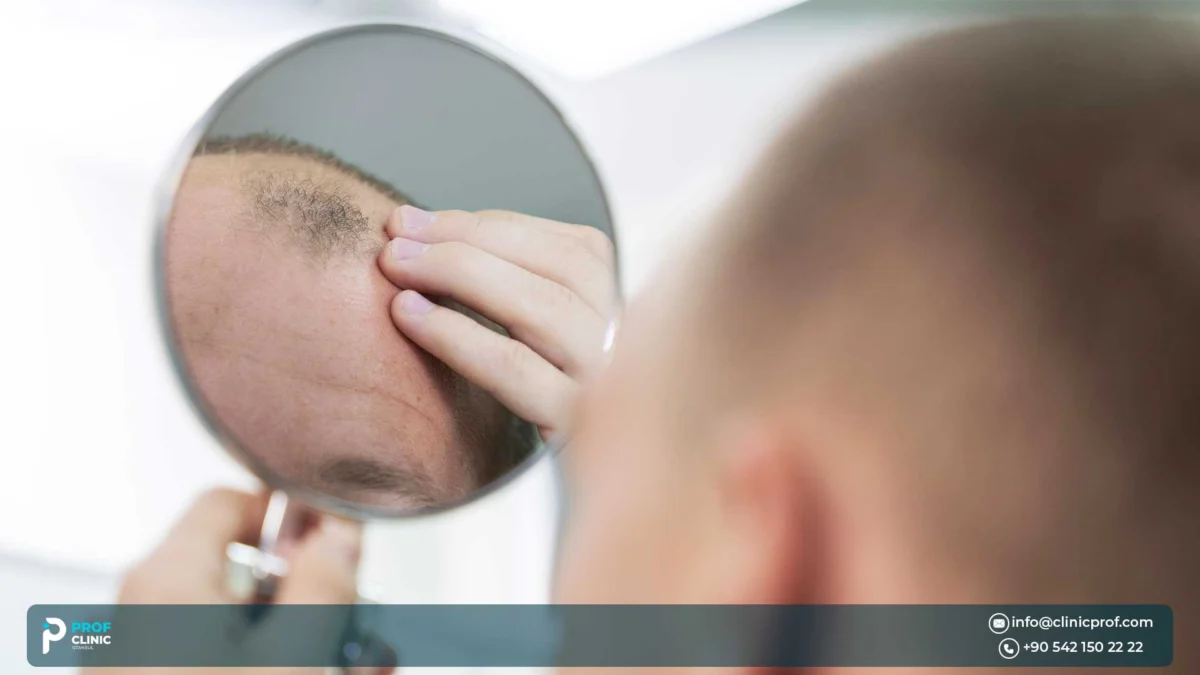
The practical takeaway: do the basics, document the changes and let the hair cycle finish. Want a second pair of eyes on your photos? Book a free online consultation and send your month-by-month photos so the shedding can be assessed.
Talking About Shedding Before Surgery at Prof Clinic in Istanbul
At Prof Clinic, we believe the right time to talk about shedding is before surgery, so the quiet months don’t come as a surprise. Our hair transplant in Turkey service starts with a medical assessment by Spc. Dr. Lütfi Öztürk. As the internal-medicine specialist who leads hair restoration, he plans your treatment and coordinates your follow-up.
Before you fly, it helps to confirm these points:
- Techniques: FUE, DHI, Sapphire FUE or Micro FUE, matched to your hair and donor area. A no-shave option is offered, particularly for women.
- Honest expectations: final density, which only shows once the shedding months are over, is discussed with you individually and never promised in advance.
- A written quote: once your scalp photos have been reviewed, the price arrives in writing. It bundles the procedure, accommodation, airport and hotel transfers, and post-op care into one package.
- Follow-up after you fly home: the coordination team stays reachable on WhatsApp for advice while you wait out the shedding.
FAQs About Shock Loss After a Hair Transplant
How long does shock loss last after a hair transplant?
Shock loss usually starts 2–8 weeks after surgery, and regrowth typically begins around month 3. Most of the lost hair returns over the following months, though timing varies from person to person. Donor-area shedding tends to settle within 3–6 months. If nothing is coming back by about month 6, ask your surgeon to review your photos.
Does losing the transplanted hair mean the transplant failed?
No. The implanted hairs normally fall out within weeks 2–8, but the follicles stay in the skin and rest, with new growth usually starting around months 3–4. Poor growth is judged much later, between 6 and 12 months, so early shedding says nothing about your final result.
Can shock loss be prevented?
Not completely. Surgeons can lower the risk by avoiding very dense packing, excessive tumescence and local trauma, and some surgeons use minoxidil or finasteride early to try to reduce it. Whether either is right for you is a medical decision, so raise it with your surgeon before surgery instead of starting anything on your own.
Is shock loss permanent?
Usually not, because most shock loss is temporary and the hairs regrow. Occasionally some very thin, miniaturised native hairs do not return, which is why your surgeon should assess how weak your existing hairs are before surgery. Ongoing natural hair loss is a separate process and can continue around the transplant.
Why is hair falling out from the back of my head after a hair transplant?
Temporary shedding in the donor area is possible, usually starting 2–4 weeks after surgery and settling within 3–6 months. It can look like a thinner patch rather than an even loss. It is less common than shock loss in the treated area, so if you see a bare patch, send photos to your clinic for review.
Can minoxidil help with shock loss after a hair transplant?
It may. Reviews report that topical or oral minoxidil can help regrowth along, and one review lists starting it within about two weeks of surgery among the measures that may reduce shock loss. It is still a medicine, so use it only if your surgeon advises it, and ask when to begin and for how long. Do not stop or change other treatments without medical advice.
The Bottom Line on Shock Loss
Shock loss after hair transplant is a temporary stress response, not a verdict on your grafts: the transplanted hairs shed in the first weeks, some of your own nearby hairs may join them, and most come back from around month 3. Judge progress with monthly photos, follow your aftercare, and call your clinic about severe pain, spreading redness or a sharply defined bare patch.
If you are planning a hair transplant in Istanbul and want to know what shedding to expect in your case, contact Prof Clinic and ask for a written plan that covers it.
Sources
- NHS — Hair transplant
- American Academy of Dermatology — A hair transplant can give you permanent, natural-looking results
- DermNet — Telogen effluvium
- Frontiers in Medicine — Complications in Follicular Unit Excision Hair Transplantation: Current Evidence and Practical Approaches (Romera de Blas et al.)
- Journal of Cutaneous and Aesthetic Surgery — Complications in Hair Transplantation (Kerure & Patwardhan, 2018)
- Indian Journal of Plastic Surgery — Hair Transplantation Surgery (Khanna, 2008)
- Indian Journal of Plastic Surgery — Complications of Hair Transplant Procedures: Causes and Management (Garg & Garg, 2021)