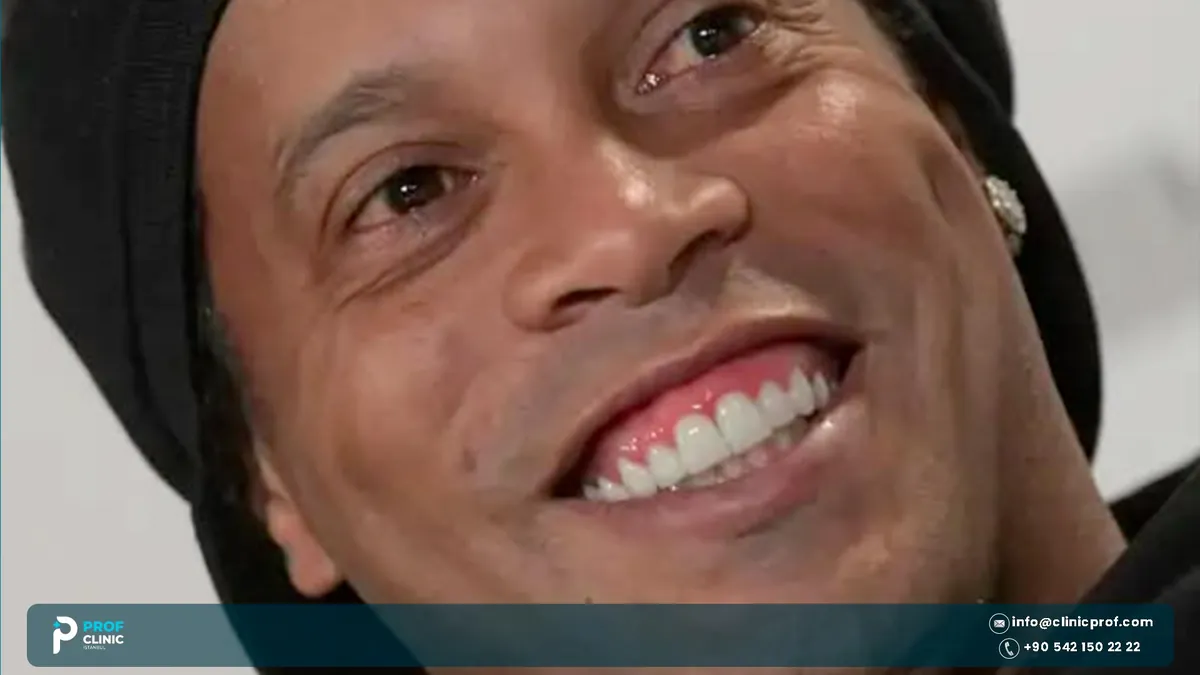
Did Elon Musk have a hair transplant, and why does his hair look so different from the way it did in his twenties? Those two questions are behind most searches for an Elon Musk hair transplant. The first has no confirmed answer: Musk has never publicly said that he had a transplant, and he has never denied it either. The second is easier, because archive footage such as CNN’s 1999 clip of him taking delivery of a McLaren F1 shows a higher, thinner hairline at the temples than the one he has in recent photographs.
In this article from Prof Clinic we look at what is actually on record, what photos can and can’t show, why men lose hair at the temples and crown, which treatments exist, and how a hair transplant is planned today.
What Has Elon Musk Said About His Hair?
Nothing that settles the question. There is no interview, post or statement in which Musk confirms or denies a hair transplant, or names a treatment such as minoxidil or finasteride. What does exist is almost three decades of footage and photographs, and that record is where the question comes from.

The best-known “before” material dates from the late 1990s, when Musk had just sold his first company, Zip2. CNN’s archive footage from 1999 follows him on the day his new McLaren F1 arrives, while he talks about his next venture, X.com. He is in his late twenties, and his hair is noticeably thinner at the front and temples than it is today. It is exactly the kind of clip people put side by side with a recent red-carpet photo.
Because Musk has been filmed and photographed constantly ever since, the change is easy to see, and that visibility keeps the rumour alive. Visibility is not evidence, though. A clip can show how his hair looked on one day in 1999; it can’t show what he did about it afterwards.
Did Elon Musk Get a Hair Transplant, or Is It Something Else?
There is no confirmed answer. In photographs from the 2010s onwards, his hairline sits lower and the front looks denser than in images from the late 1990s and early 2000s. A change like that can come from a transplant, from medication that slows loss and thickens the hair that is left, from both together, or partly from haircut, lighting and camera angle. We have left out surgeons’ opinions on his photos for that reason: a photo shows what a hairline looks like, not why it looks that way.

Where Do the Graft Counts and Price Tags Online Come From?
Many articles state that Musk had a strip procedure (FUT) in the 2000s, followed by FUE sessions, with a total of 3,000 to 5,500 grafts and a bill of $20,000 to $30,000. Those figures come from hair clinics estimating from pictures, not from Musk, a doctor who treated him or any medical record, so don’t take them as fact. The same applies to close-up images shared on social media that are said to show scars on the back of his head: no doctor or statement confirms what they show.
How Can a Doctor Tell Whether a Hairline Was Transplanted?
In a clinic, a doctor examines the scalp up close and asks about your history, which no photo allows. The main clue is usually in the donor area at the back of the head rather than in the hairline itself. The NHS describes the two methods this way:
- FUT (the strip method): a thin strip of skin with hair is removed from the back of the head. It leaves a scar there, which should not be visible unless the hair is cut very short.
- FUE: individual hairs are removed one by one as grafts. It leaves lots of tiny scars, which are not very noticeable.
The old “plug” look that once gave transplants away is also out of date. The American Academy of Dermatology (AAD) notes that modern transplants no longer move plugs of hair from one part of the scalp to another. So, can you spot a transplant from a photo? Rarely, and never with certainty.
Why Do Men Lose Hair at the Temples and Crown, and What Can Be Done?
The pattern visible in Musk’s early footage is the classic start of male pattern hair loss, also called androgenetic alopecia. MedlinePlus describes hair loss in men beginning above both temples, with the hairline gradually receding into an “M” shape and the crown thinning over time. It can start as early as the teenage years, the risk rises with age, and more than half of men over 50 have some degree of it. It is linked to a hormone called dihydrotestosterone (DHT) and, as the NHS notes, usually runs in the family.
Doctors track how far it has progressed with the Hamilton-Norwood scale, which a review in the Journal of Cutaneous and Aesthetic Surgery calls the most widely used classification for hair loss in men. It runs through seven main types, from slight recession at the temples to extensive loss across the top of the head. The NHS adds that losing your hair is not usually anything to worry about, although it can be upsetting, and occasionally it is a sign of a medical condition, so see a doctor if you’re unsure.
What Are the Treatment Options for a Receding Hairline?
The AAD says the men who tend to see the best results start treatment soon after they notice hair loss. These are the main options:
- Minoxidil: a treatment applied to the scalp every day. Results can take 6 to 12 months to show, and the benefit is lost when you stop.
- Finasteride: a daily prescription tablet that slows further loss in about 80% to 90% of men, according to the AAD. Hair loss returns once it is stopped, so discuss it with a doctor before starting.
- Hair transplant: surgery that moves hair from the back of the head to areas that are thin or bald. The NHS says it suits permanent, inherited baldness, not most other types of hair loss.
- Other options: the AAD lists platelet-rich plasma (PRP) and home laser devices. PRP is not permanent and needs maintenance sessions.
The NHS points out that finasteride and minoxidil don’t work for everyone and only work for as long as they are used. So, can a receding hairline be stopped for good? Medication can often slow it and a transplant can rebuild the front, but neither switches off the underlying process.
Also read: Matthew McConaughey Hair Transplant: Rumour or Regrowth?
Noticing your own temples moving back? Send photos of your hairline to our team on WhatsApp and ask what stage it looks like and which options are worth discussing.
What Does a Hair Transplant Involve, and How Long Do Results Take?
A transplant redistributes hair you already have; it doesn’t create new hair. The ISHRS stresses that donor hair is a finite, non-renewable supply, and that because hair loss is progressive, a first transplant may not be the last. The NHS adds that the hair around the transplanted area may keep thinning.
Growth is slow. According to the NHS, new hair usually starts to appear about 4 months after surgery, and the full result takes 10 to 18 months. How many grafts you need depends on your Norwood stage and your donor area; our guide How Many Grafts Do I Need? Graft Count by Norwood Stage explains how that estimate is made.

Cost varies widely. The NHS says a hair transplant in the UK can cost anywhere between £1,000 and £30,000. In Istanbul, a scalp transplant package (FUE, DHI or Sapphire FUE) usually costs about €1,800–€3,500. That is an approximate average for October 2026, not a final price: it depends on your case and is confirmed in a written quote after your photos are assessed.
Also read: DHI Hair Transplant in Turkey: Choi Pen Method, Cost & Results
Prof Clinic: Hair Transplant for Men in Istanbul, Turkey
At Prof Clinic, the aim is not to reproduce a celebrity’s hairline but to plan one that fits your own pattern of loss, donor area and age. Our hair transplant in Turkey uses FUE, DHI and Sapphire FUE, and Spc. Dr. Lütfi Öztürk carries out the medical assessment and treatment planning and coordinates follow-up. Before surgery we run pre-op tests, including a blood count, ECG, kidney and liver function, electrolytes, blood sugar, and hepatitis and HIV screening. Before recommending anything, we check:
| Factor | What we assess | Why it matters |
|---|---|---|
| Pattern of loss | Temples, front and crown, and the Norwood stage | Shows which areas need grafts first |
| Donor area | Density at the back and sides of the head | Sets how many grafts can be taken safely |
| Age and family history | How early the loss started and how it runs in the family | Helps place a hairline that still suits you if loss continues |
| Health and medication | Pre-op test results and current medicines | Confirms surgery is safe and when it can be done |
| Your expectations | Hairline height and the density you hope for | Density is discussed individually and can’t be promised in advance |
Packages include the procedure, accommodation, airport and hotel transfers and post-op care, and the price is set in a written quote after we assess your photos. After you fly home, our coordination team follows up and answers questions on WhatsApp. You can read more about planning a male hair transplant in Turkey, or book a free online consultation to have your own hairline assessed.
Whether Elon Musk had a hair transplant may stay an open question until he answers it himself. Your own hairline doesn’t have to wait for that: an assessment shows what is happening and what can realistically be done. Send us your photos through our contact page, or see real cases in our before-and-after gallery. If you’re comparing options, our hair transplant clinic in Istanbul page sets out the techniques we offer.
Elon Musk Hair Transplant: Your Questions Answered
Did Elon Musk get a hair transplant?
There is no confirmed answer. Musk has never publicly said he had a hair transplant, and he has never denied it. His hairline looks lower and denser in recent photos than in footage from the late 1990s, but that change could come from surgery, medication, styling or a mix of them, and no doctor or record has confirmed which.
Was Elon Musk ever bald?
Not completely, as far as public photos show. Footage from the late 1990s shows thinner hair at the front and temples, which is the usual early pattern of male pattern hair loss. Recent photos show a full hairline, and Musk has not explained the difference.
How many grafts did Elon Musk have?
Nobody outside his medical team would know, and he has not said. The figures quoted online, often 3,000 to 5,500 grafts, are estimates made from photos by hair clinics. For your own scalp, the graft count depends on your stage of hair loss and how much donor hair you have.
How much does a hair transplant like Elon Musk’s cost?
What Musk paid, if anything, is not public. The NHS puts the cost of a hair transplant in the UK at anywhere between £1,000 and £30,000. In Istanbul, a scalp transplant package usually costs about €1,800–€3,500 (approximate, October 2026), with the final price set in a written quote after assessment.
Can medication alone fix a receding hairline?
It can slow it, and sometimes regrow some hair, but only while you keep using it. The AAD reports that finasteride slows further loss in about 80% to 90% of men, and minoxidil can take 6 to 12 months to show results. Medication doesn’t move hair into areas that are already bald; that is what a transplant does.
Medical note: Interviews and photos can’t show whether any treatment lies behind a hairline, and this article is general information, not a diagnosis. Elon Musk has no known connection to Prof Clinic, and his hair should not be read as a Prof Clinic case.
Sources
- NHS — Hair transplant
- NHS — Hair loss
- MedlinePlus Genetics — Androgenetic alopecia
- American Academy of Dermatology — What is male pattern hair loss, and can it be treated?
- ISHRS — Top 5 Things to Know About Hair Transplantation
- Journal of Cutaneous and Aesthetic Surgery — Classifications of Patterned Hair Loss: A Review (Gupta & Mysore, 2016)
- CNN Business — Watch a young Elon Musk get his first supercar in 1999