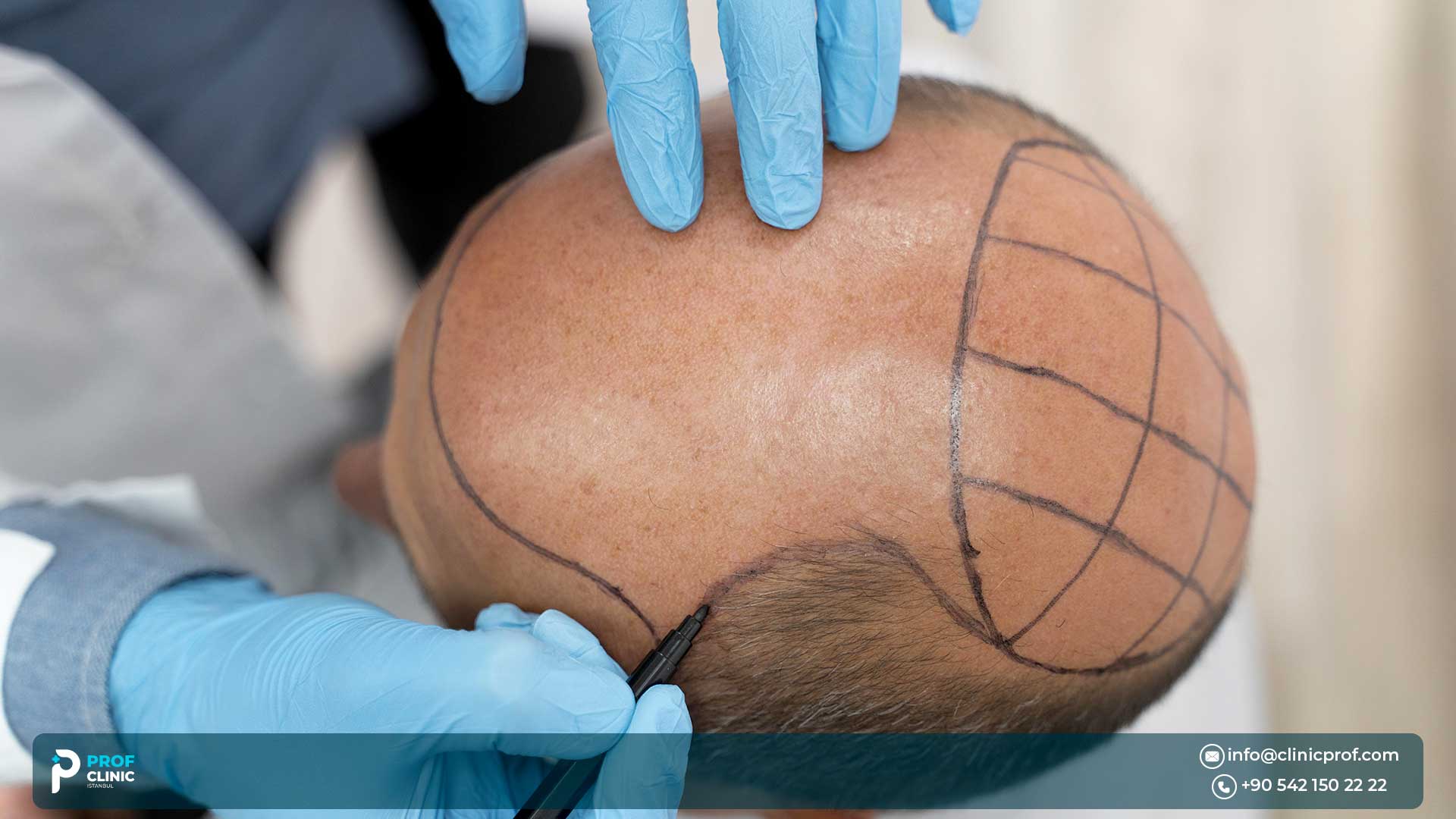
How do you know whether you have a failed hair transplant, or just one that hasn’t finished growing? Most worry in the first few months is premature: transplanted hairs shed, the area can look thinner than before surgery, and the real result only shows after about a year. A transplant has genuinely gone wrong when, once fully grown, it shows poor growth, an unnatural design or a damaged donor area.
In this guide by Prof Clinic, you’ll learn the signs of a failed hair transplant, the main reasons a hair transplant goes wrong, when it’s fair to judge the result, and what repair can and can’t achieve. By the end, you’ll know what to check before booking surgery in Turkey and what to ask if you need a second opinion.
This article is general information, not a diagnosis. Only a doctor who examines your scalp can say whether your result needs treatment.

What Counts as a Failed Hair Transplant?
A failed hair transplant is one where the final result, judged after the growth period, clearly falls short of what a sound plan should have delivered. That usually means one of three things: too few grafts grew, the grafts grew but look unnatural, or the donor area was damaged in a way that limits future options. The NHS notes that there is a small risk the transplant will not take and the hair falls out, and that cosmetic surgery can sometimes produce results that are not what you expected.
Plenty of things look like failure but usually aren’t. It helps to separate them before deciding anything:
| What you see | Often normal or expected | May point to a real problem |
|---|---|---|
| Transplanted hairs falling out | Weeks 2–8 after surgery, as part of the growth cycle | Little or no regrowth in the area after 12 months |
| A thinner look at months 2–3 | The quiet phase before new hairs appear | Thinness that persists after 12–18 months |
| Fine, wispy new hairs | Early growth that thickens over the following months | Hairs that stay fine and sparse after a year |
| Loss behind the new hairline | Ongoing pattern hair loss in your own, non-transplanted hair | A widening gap because future loss wasn’t planned for |
| Small dot scars in the donor area | Expected with FUE and usually hidden by short hair | A visibly thinned, patchy or “moth-eaten” donor area |
Notice that the fourth row isn’t about grafts failing at all. Your native hair can keep thinning around the transplant, so a result that looked good at 18 months may look less convincing years later. That’s a planning problem, not a growth problem, and it changes how repair is approached.
Signs of a Failed Hair Transplant
The most reliable signs of a failed hair transplant appear once the result has matured: density that’s clearly lower than planned, a hairline that doesn’t look natural, scarring or uneven skin in the recipient area, and a donor area that looks depleted. A review of complications in the Journal of Cutaneous and Aesthetic Surgery lists poor hairline, low density and unnatural appearance among the main recipient-area problems, and donor depletion among the main donor-area problems.
Low Density After Hair Transplant
Low density after a hair transplant shows up as see-through coverage, patchy growth or zones where far fewer hairs grew than were placed. Some see-through look is normal in a large bald area, because one session can only move a limited number of grafts. It becomes a sign of failure when growth is uneven, or clearly poor compared with the number of grafts you were told you received.
An Unnatural or Badly Designed Hairline
A hairline usually looks unnatural for one of four reasons: it sits too low, it’s too straight or rounded, the temples were filled in flat, or the grafts point in the wrong direction. The same review calls the hairline “the surgeon’s signature” and warns that a low hairline can look artificial and become harder to live with as hair loss progresses behind it. Thick multi-hair grafts placed right at the front, instead of fine single hairs, can also give a tufted, pluggy look.
For how a natural hairline is planned in the first place, see What Is a Hair Transplant? Pros, Cons, Hairline & Who It Suits.
Pitting, Cobblestoning and Visible Scarring
Pitting (small dents) and cobblestoning (small bumps around the grafts) leave the skin surface uneven. According to the Journal of Cutaneous and Aesthetic Surgery review, cobblestoning comes from placing grafts at the wrong depth or into slits that are too small, and it mostly improves with time. In the donor area, FUE leaves tiny dot scars that normal-length hair usually hides but a very short cut can reveal.
An Overharvested Donor Area
Overharvesting means too many grafts were taken from the back and sides of the head, or taken unevenly. The review describes the result as a “moth-eaten” appearance. It matters more than it first seems, because the donor area is a finite supply.
Recognise one of these signs in your own result? Contact the Prof Clinic team with the date of your surgery and clear photos of the front, top and back of your head.
When Can You Tell? Why Judging Before Month 12 Is Too Early
You can only judge a hair transplant fairly once the transplanted hair has had time to grow and thicken, which usually means around 12 months and sometimes up to 18. Before that point, almost every result looks worse than it will end up. The American Academy of Dermatology (AAD) explains that transplanted hair falls out between two and eight weeks after surgery, and that by the third month the hair may look thinner than before.
Think of it as the 12-month rule: until then, you’re watching a process, not a result. Here’s the usual sequence:
- Weeks 2–8, shedding: most transplanted hairs fall out, while the follicles stay in the skin and rest.
- Months 2–3, the quiet phase: the area can look as thin as before surgery, or thinner if some native hairs shed too.
- Around month 4, first new hairs: the NHS says new hair will usually start to appear at this stage.
- Months 6–9, visible change: according to the AAD, most patients see results in this window, though for some it takes 12 months.
- Months 10–18, the final result: the NHS places full results in this range, as hairs thicken and the crown often catches up last.
These are typical ranges, not fixed rules. After a large session, a crown transplant or with very curly hair, expect to sit towards the later end.
What it means in real life: a disappointing photo at month 4 tells you very little. A disappointing photo at month 14, compared with the plan you were given, tells you a lot.

Not sure whether what you see is normal for your month? Send your photos to our team on WhatsApp and say how many months ago you had surgery.
Hair Transplant Gone Wrong? The Main Causes
Most hair transplants that go wrong do so for avoidable reasons: poor planning, rough graft handling, overharvesting, problems during healing, or hair loss that continues around the grafts. The Journal of Cutaneous and Aesthetic Surgery review concludes that most complications of hair transplantation are avoidable, and that a detailed history, proper counselling and discussion before surgery help prevent dissatisfaction.
Poor Planning and Patient Selection
Planning goes wrong when the design doesn’t match the donor supply or the pattern of loss. Promising full coverage of a very large bald area, or operating before the cause of hair loss has been properly diagnosed, sets up disappointment from day one. The review also notes that poor-quality donor hair, such as very fine vellus hairs, should be identified before surgery, and that such patients should not be selected for it.
Graft Handling and Placement
Grafts are living tissue, and they’re fragile once they’re outside the body. According to the same review, poor growth can follow traumatic dissection of the grafts, rough placement or drying out (desiccation). Placing grafts at the wrong depth can cause cobblestoning, and wrong angles produce hairs that stick out. This is where the skill and consistency of the whole team matter in any hair transplant in Turkey, whether the technique is FUE, DHI or Sapphire FUE.
Overharvesting the Donor Area
Taking too many grafts, or taking them too close together, thins the donor area and, the review notes, can also contribute to temporary shedding around the harvested zone. It’s one of the hardest problems to correct, because the hair you would need for repair has already been used up.
Health, Healing and Aftercare
Your own health and the first weeks of healing also shape the outcome. The review lists heavy smoking, diabetes and severe sun damage to the scalp among factors linked with decreased growth, and puts infection at under 1% of cases. General aftercare advice from medical sources is consistent: don’t pick the scabs, keep the area clean as instructed, and contact your clinic promptly about spreading redness, pus or severe pain.
Ongoing Hair Loss Around the Grafts
Transplanted hair usually keeps growing, but your native hair may not. The AAD notes that hair loss and thinning can continue after a hair transplant, and that a dermatologist may recommend hair loss medicine to help keep the results. When a result seems to fail five years later, this is often the reason rather than the grafts themselves.
Also read: Hair Transplant Side Effects and Risks: What’s Normal, What’s Not
Can a Failed Hair Transplant Be Repaired?
Yes, a failed hair transplant can often be improved, though repair rarely erases the first surgery completely. What’s possible depends mostly on how much donor hair you have left, what exactly went wrong and whether your hair loss is still active. Hair transplant repair is usually slower and more conservative than a first procedure, and it may take more than one step.
Start With a Proper Assessment
A sound repair plan begins with questions, not with a surgery date. Before recommending anything, the doctor should:
- Check the timing: confirm the first transplant has had at least 12 months to mature.
- Assess the donor area: estimate how many grafts can still be taken safely, now and later.
- Diagnose current hair loss: find out whether pattern loss or another condition is still progressing.
- Define the problem: separate low density, poor design, scarring and donor damage, because each needs a different approach.
Hair Transplant Repair Options
The approach follows the problem. The table summarises common options; your doctor will tell you which, if any, suit your case.
| Problem | Common repair approach | Things to know |
|---|---|---|
| Low density or patchy growth | A second transplant to add grafts where coverage is thin | Limited by the remaining donor supply |
| Low, straight or unnatural hairline | Removing misplaced grafts with FUE, then redesigning the hairline | Can take more than one session |
| Thick, pluggy grafts at the front | Removing them and placing fine single-hair grafts in front | Careful, small-scale work |
| Cobblestoning or bumps | Often improves with time; some scars may need to be excised | Wait before deciding |
| Visible donor scars or a thinned donor area | Scalp micropigmentation (SMP) to camouflage the area | SMP creates the look of stubble; it does not grow hair |
| Loss around the grafts | Medical treatment of the underlying hair loss, then reassessment | Avoids chasing a moving target |
Evidence on repair is still limited, but it’s encouraging. In a 2026 multicentre study in Frontiers in Medicine, 20 men had unnatural or low hairlines corrected by removing grafts with FUE; 28% needed a second corrective procedure, and 95% said they were satisfied or highly satisfied. The authors also mention laser hair removal and electrolysis as non-surgical options for removing unwanted grafts in selected patients. A paper in Plastic and Reconstructive Surgery Global Open describes SMP as an effective treatment for most scalp scars left by previous hair transplants.
Second Hair Transplant: Timing and Limits
A second hair transplant usually waits until the first has fully matured, which means at least about 12 months and often longer. Operating earlier risks placing grafts among follicles that are still growing, and spending donor hair on an area that might have filled in on its own. Because every session uses part of a finite donor supply, the new plan should also leave room for future hair loss.

Thinking about a correction or a second transplant? Book a consultation and ask for a written assessment of your donor area before any surgery is planned.
How to Avoid a Bad Hair Transplant: 12 Things to Check in Turkey
The strongest protection against a botched hair transplant is choosing a clinic for who does the work and how it’s planned, not for price alone. Turkey has many experienced teams, but also providers that hand much of the surgery to unlicensed staff. The ISHRS (International Society of Hair Restoration Surgery) warns that unlicensed personnel are performing substantial parts of hair restoration surgery worldwide, and says that diagnosis, surgical planning and execution, and the management of complications belong with physicians.
Before you book, check these points:
- Who operates: ask which doctor will be present, and who will make the incisions and remove the grafts.
- Licensing: confirm the clinic is licensed by the Turkish Ministry of Health.
- A realistic graft count: expect your hair loss to be assessed first, and be wary of very large numbers promised from photos alone.
- Donor capacity: ask how many grafts your donor area can safely give, now and in the future.
- Hairline design: ask to see and agree on the drawn hairline before surgery starts.
- Daily caseload: ask how many patients the same team operates on that day.
- Technique choice: ask why FUE, DHI or Sapphire FUE is recommended for you specifically.
- Medical screening: check that blood tests and a health review happen before surgery.
- Honest expectations: be cautious of any clinic that promises a fixed density or growth rate.
- Written quote: get the price, inclusions and graft estimate in writing.
- Aftercare plan: ask what follow-up looks like once you’re home, and who handles problems after you leave Turkey.
- Real results: look at consented before-and-after cases photographed at least 12 months after surgery, from similar starting points.
The ISHRS also reminds patients that there is no such thing as “scarless surgery” in hair transplantation, so treat that promise as a warning sign. If you’re a man comparing options, our page on male hair transplant in Turkey explains how techniques and session length are planned.
Also read: How to Choose a Hair Transplant Clinic in Turkey: What to Check
Prof Clinic for Hair Transplant Repair Consultations in Istanbul
At Prof Clinic in Istanbul, a repair enquiry starts the same way as any hair transplant in Istanbul: with a medical assessment rather than a surgery date. Medical oversight of hair restoration is led by Spc. Dr. Lütfi Öztürk, an internal-medicine specialist who carries out the medical assessment, plans treatment and coordinates follow-up.
Here’s what you can check before you travel:
- Photo review and written quote: the team evaluates your photos and then sends a written price offer.
- Pre-op tests: blood count, ECG, kidney and liver function, electrolytes, blood sugar, and hepatitis and HIV screening.
- Techniques: the clinic works with FUE, DHI, Sapphire FUE and Micro FUE.
- Honest density talk: expected density is discussed individually and isn’t promised in advance.
- Packages: these include the procedure, accommodation, airport and hotel transfers, and post-op care.
- Follow-up: the coordination team stays in touch after the procedure and gives advice over WhatsApp.
As a general guide, a scalp hair transplant package in Istanbul costs about €1,800–€3,500. This is an approximate range as of October 2026, not a final price. Repair cases are priced individually after assessment, because the work involved varies so much from one case to the next. For a full breakdown, see Hair Transplant Cost in Turkey 2026: Prices, Packages & Grafts.
Want to see what matured results look like? Browse consented cases in our before-and-after gallery and compare them with your own starting point.
Failed Hair Transplant: Frequently Asked Questions
How do I know if my hair transplant has failed?
Wait until about 12 months after surgery, then compare the result with the plan you agreed. Signs of a real problem include clearly patchy or low growth, an unnatural hairline, uneven or scarred skin in the recipient area and a thinned donor area. Shedding or thinness in the first few months is usually part of normal healing.
What percentage of hair transplants fail?
There’s no reliable single hair transplant failure rate. “Failure” isn’t defined the same way across studies, and most research measures graft survival in small groups rather than overall patient outcomes. Serious complications are uncommon: one review puts infection at under 1%. Most disappointing results trace back to planning, graft handling or ongoing hair loss, and many can be improved.
Can a botched hair transplant be fixed?
Often, yes, at least in part. Misplaced grafts can be removed and the hairline redesigned, thin areas can receive more grafts, and scars can be camouflaged with scalp micropigmentation. How far a repair can go depends mainly on how much donor hair remains, so an assessment of the donor area comes before any plan.
How long should I wait before a second hair transplant?
Usually at least 12 months after the first, and longer if the crown or a large area was treated. The NHS says full results can take 10 to 18 months, so operating earlier risks adding grafts to an area that is still filling in. Your doctor should also check your remaining donor supply first.
Why did my transplanted hair not grow?
If it’s before month 6, it may simply be too early to tell. If growth is still poor after a year, common causes include graft damage during extraction or handling, grafts drying out, incorrect placement depth, heavy smoking, diabetes or poor-quality donor hair. An examination can usually narrow down which of these applies to you.
Final Thoughts
A failed hair transplant is a judgement you can only make fairly after about a year, against the plan you were given: patchy density, an unnatural hairline, scarring or a depleted donor area are the signs that count. If you see them, don’t rush into a quick fix. A careful look at your donor area and current hair loss is what decides how much a repair can realistically achieve. Ask Prof Clinic for a repair assessment to start there.
Sources
- NHS — Hair transplant
- American Academy of Dermatology — A hair transplant can give you permanent, natural-looking results
- ISHRS — Consumer Alert
- Journal of Cutaneous and Aesthetic Surgery — Complications in Hair Transplantation (Kerure & Patwardhan, 2018)
- Frontiers in Medicine — FUE for the repair of unnaturally designed or low hairlines in men with androgenetic alopecia (Gómez-Zubiaur et al., 2026)
- Plastic and Reconstructive Surgery Global Open — Combining Follicular Unit Extraction and Scalp Micropigmentation for the Cosmetic Treatment of Alopecias (Rassman et al., 2017)