What will my beard look like after the transplant, and when will I see the real result? That is the question behind most searches for beard transplant before and after photos. The honest answer: a transplanted beard does not appear all at once. It looks full for the first few days, the transplanted hairs shed within weeks, new hair starts growing around month three or four, and the result usually matures between months 10 and 14.
In this article from Prof Clinic, we explain what before and after photos reveal and what they hide, the growth stages month by month, why results differ from man to man, and how to judge your own result without rushing.
Medical note: This information is educational, and the timings are averages from medical sources. Your doctor sets the timing of each stage in your case after examining you.
What Beard Transplant Before and After Photos Really Show
A before and after photo shows the beard at one moment only; it doesn’t tell you which month it was taken in or how it was shot. So it helps to know first what makes a result successful, and why every transplanted beard goes through a stage where it looks thinner than before.
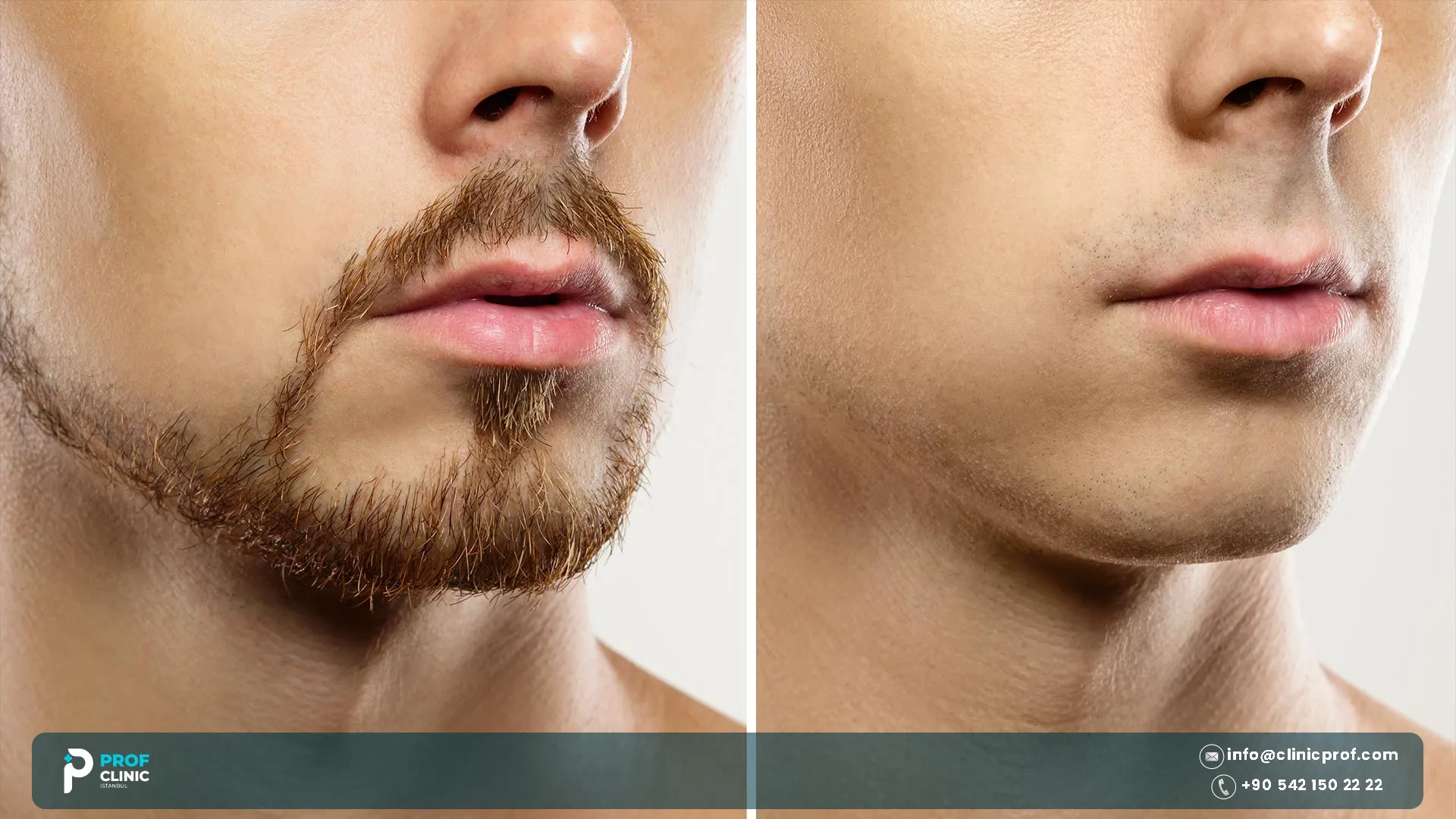
What Does a Successful Beard Transplant Look Like?
A beard transplant moves hair follicles from a donor area, usually the back of the scalp and sometimes under the jawline, to the thin areas of the face: cheeks, chin, moustache and sideburns. It is usually done with FUE (follicular unit extraction) under local anaesthetic: follicles are removed one by one and implanted at an angle that mimics natural facial hair.
Success is not measured by density alone. A thick beard with hairs standing upright or growing the wrong way looks artificial, however full it is. In any photo, check four things:
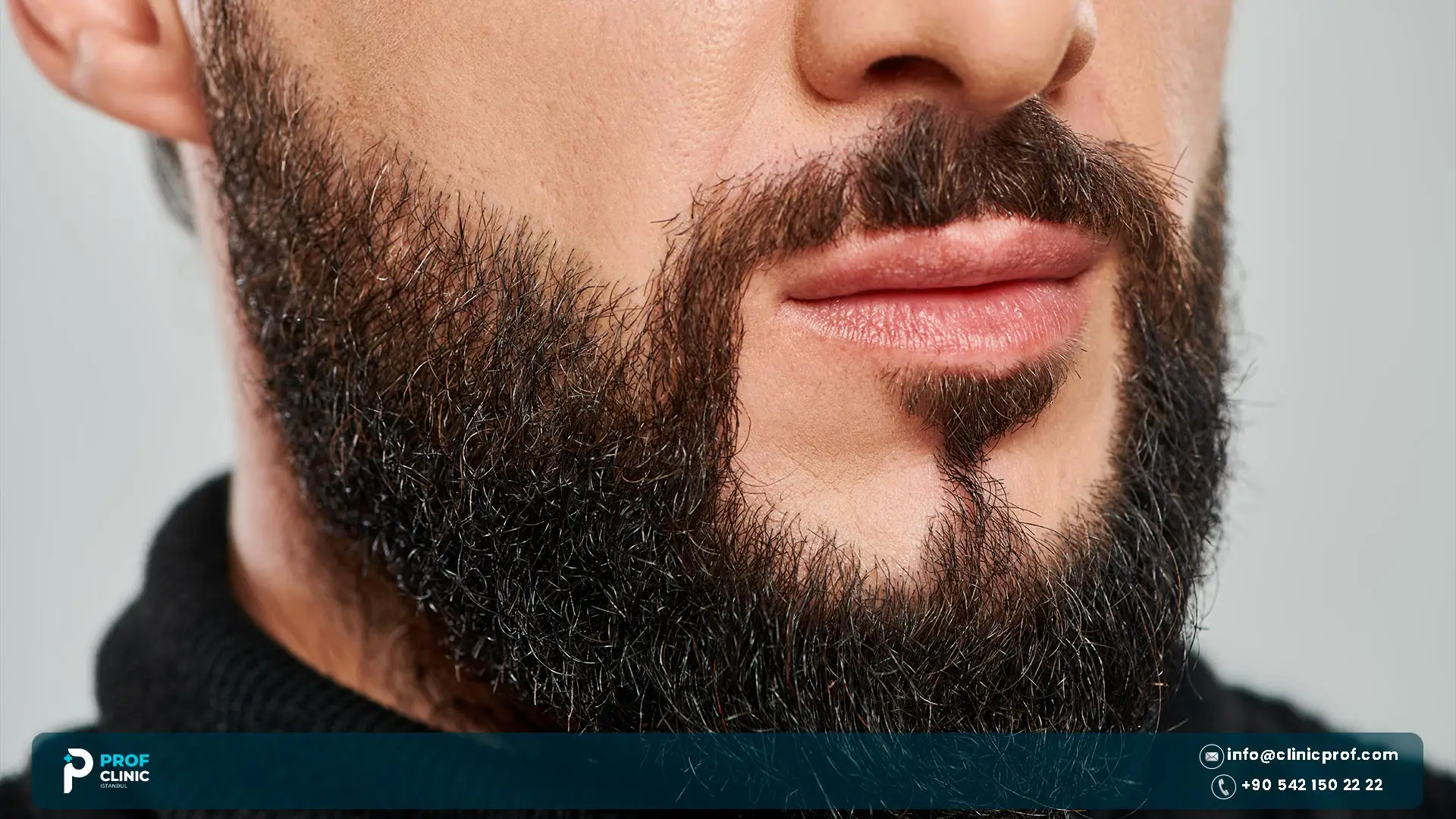
- Hair angle: Beard hair grows at a low angle, close to the skin, not upright.
- Growth direction: Direction changes between cheek, chin and neck, and good work follows each zone.
- Graded density: Edges along the cheek line are lighter than the centre, so the border doesn’t look drawn on.
- Design that fits the face: The cheek line, chin and moustache suit the man’s features and age.
Specialist beard surgeons build the procedure around these points: an acute angle and correct direction for every channel, and a design agreed in advance.
Why Your Beard Looks Thinner Before It Fills In
Because transplanted hair sheds before it grows back. Straight after surgery the treated areas look full of short hairs; these usually fall out between weeks two and eight, and by month three the beard may look thinner than before the transplant.
This shedding does not mean failure. Only the hair shaft falls out; the follicle, the small factory under the skin, stays in place and rests before producing new hair. A month-two photo often looks much like your pre-surgery photo, and that is expected.
So, does a sparse beard after one month mean something is wrong? In most cases no, as long as the skin is calm, with no increasing redness or discharge.
Also read: Eyebrow Hair Transplant Before and After: Time & Reviews
Beard Transplant Growth Stages: When Do Results Show?
The beard transplant timeline has three milestones: the skin heals in the first two weeks, then come temporary shedding and a resting phase, then growth from around month three or four. The International Society of Hair Restoration Surgery (ISHRS) says the overall result usually shows after 10 to 14 months.
| Stage | What you usually see | What to do |
|---|---|---|
| Days 1–3 | Redness, mild swelling and tiny scabs around each graft | Avoid pressure; sleep in the position the team advises |
| Days 7–14 | Scabs come away and redness settles | Wash as instructed; never pick the scabs |
| Weeks 2–8 | Transplanted hair shafts shed | Don’t judge yet: the follicles are still in place |
| Months 3–4 | Fine, uneven new hairs appear | Take a monthly photo in the same light and angle |
| Months 6–9 | Density and texture improve | Keep beard length the same between photos |
| Months 10–14 | Density matures and direction settles | Assess the final result; discuss a second session if needed |
Beard Transplant After One Month: Scabs and Shedding
The first month is the most unsettling. For the first two or three days there is usually redness and mild swelling, and a small scab forms over each graft. If you have your transplant in Istanbul, these are usually the days you spend there, and you fly home with light redness still visible.
Between days seven and 14 the scabs come away on their own and the skin looks almost normal again. The ISHRS notes that most patients can shave after about two weeks, and advises avoiding pressure on the grafts in the first days and strong sun after surgery.
Then shedding begins: a beard transplant after one month looks very close to your “before” photo, which is normal, not a sign of failure.
Months 3 to 6: When Transplanted Beard Hair Grows
New hair usually appears between months three and four. In a study of 20 men who had FUE beard reconstruction, growth began at three months and kept improving until the end of the first year.
At this stage the hairs are fine and grow at different speeds, sometimes on the cheek before the chin or the reverse. A patchy beard after 3 months is normal, so compare it with your own month-two photo, not with someone else’s final result.
When Will You See Final Beard Transplant Results?
Final beard transplant results usually show between months 10 and 14, according to the ISHRS; for hair transplants in general, the NHS says full results can take up to 18 months. Over this period the hairs thicken, their direction settles and the true density becomes clear.
That is why a second session is not decided until about a year has passed. The photo worth comparing with your “before” picture is the one from month 12, not week one.
Noticed something in your beard and not sure it’s normal? Send a clear photo to the Prof Clinic team on WhatsApp instead of guessing.
Also read: Beard Transplant Side Effects: Risks and How to Avoid Them
How to Judge Beard Transplant Photos and Protect Your Result
A reliable photo compares the same face under the same conditions and states the month it was taken. Once you know what to look for in other men’s photos, you can judge your own result fairly too.
How to Tell Real Before and After Photos From Misleading Ones
The difference between a photo that helps you decide and one that misleads lies in the details:
- Light, angle and distance: These should match; strong light hides gaps, side light reveals them.
- Hair length: The beard is trimmed to a few millimetres before surgery, and longer hair afterwards can cover gaps.
- The month stated: An undated “after” photo doesn’t say whether it is final or midway.
- The whole face: A front view and both profiles show balance between the cheeks; one close-up is not enough.
- No retouching: Unnaturally smooth skin or blurred beard edges suggest editing.
Why Beard Transplant Results Differ Between Patients
Because the result depends on each man’s donor hair, hair type and skin, not on technique alone. In a Turkish study that followed 10 beard transplant patients for at least a year, gaps closed by 53% on average; results were stronger with brown or red hair of medium or fine thickness, and straight-haired patients were more satisfied.
Other factors also count:
- Cause of the gap: A genetically patchy beard usually responds more readily than scars or burns, which may need more than one session.
- Donor area: Follicles usually come from the back of the scalp, the same area a hair transplant would need later. The ISHRS calls these follicles non-renewable, so they should be used with care.
- Skin tone: Darker skin is more prone to temporary colour change around the grafts.
- Following instructions: Pressing on grafts or picking scabs early can reduce how many grow.
14 Things to Check Before Judging Your Beard Transplant Result
This list doesn’t measure success from one photo; it helps you read the mirror at the right time:
- Timing: There is no final result before roughly month 10.
- Early shedding: Hair loss between weeks two and eight is expected.
- Reference photo: Compare with your pre-surgery photo in the same light.
- Hair length: Compare similar lengths, not short with long.
- Both cheeks: Judge the balance between sides, not one side alone.
- Hair angle: Hair lying low against the skin is a good sign.
- Beard edges: Soft, graded edges look more natural than a sharp line.
- Moustache and chin: These may grow at a different pace from the cheeks.
- Skin colour: Mild redness or pigmentation usually fades with time.
- Small bumps: These may appear under the lip or on the chin and are worth asking about.
- Donor area: It usually loses a little density and looks normal again as surrounding hair grows.
- Pain or fever: Increasing pain, discharge or fever means calling your doctor straight away.
- Shaving: Don’t shave until your doctor clears you.
- Second session decision: This is discussed after growth is complete, not before.
If you have gaps and want to know what is realistic in your case, book a consultation and ask for a preliminary beard design before you decide.
Also read: Sapphire FUE Hair Transplant: Everything you want to know
Prof Clinic: Beard and Moustache Transplant in Istanbul, Turkey
At Prof Clinic we don’t start from a beard photo you liked; we start from your face: your current density, where the gaps are and how much donor hair you have. We perform a beard transplant in Istanbul with Micro FUE, and also offer Sapphire FUE beard transplant, in which sapphire blades open the channels. It is done under local anaesthetic and usually takes six to eight hours; follicles mostly come from the back of the scalp or dense areas around the neck and jawline.
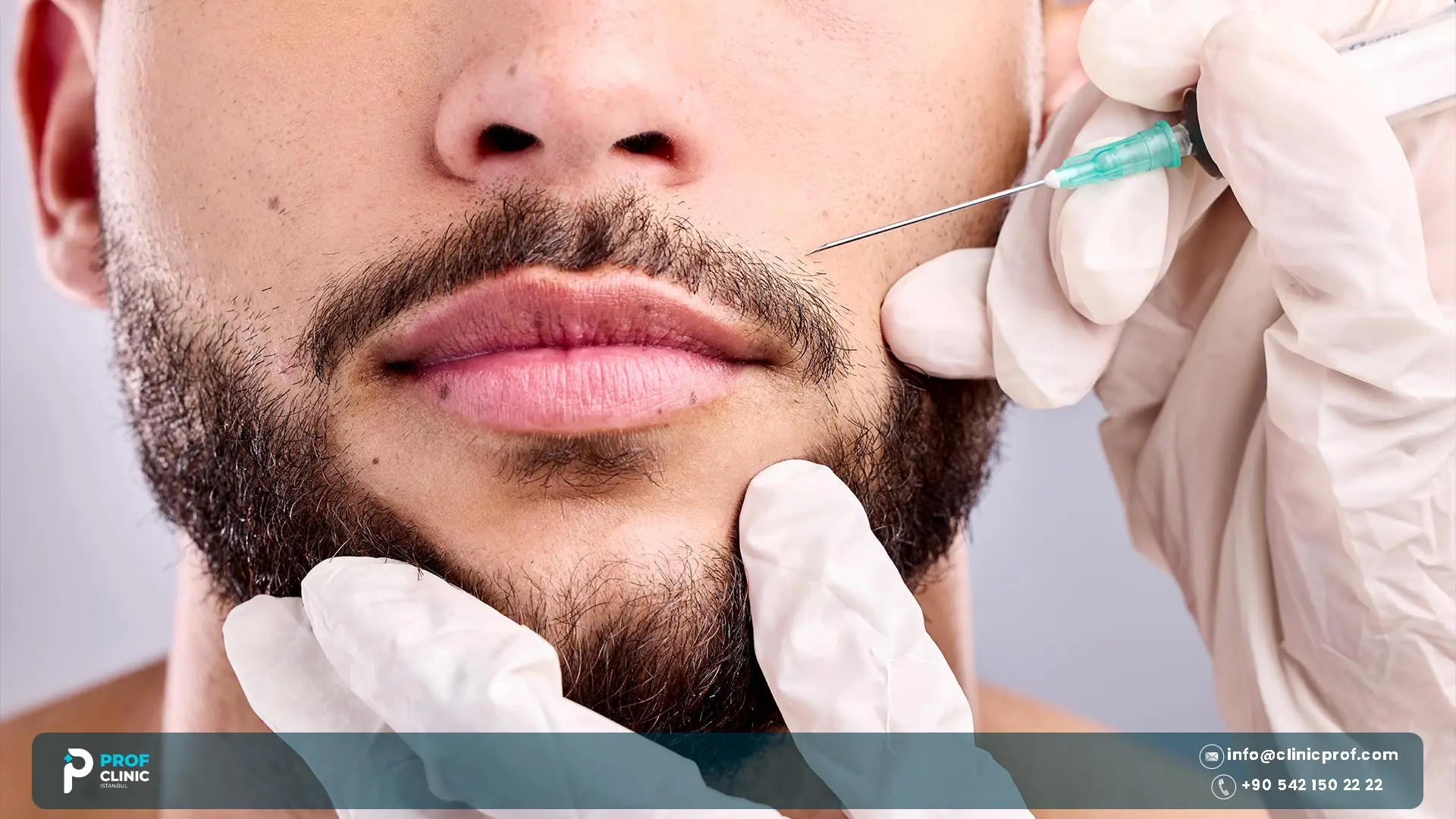
As a beard and moustache transplant clinic in Turkey, Prof Clinic coordinates with you on WhatsApp before you fly. After the operation, the Prof Clinic team follows your case and gives you advice once you are back home, and you can send your photos and questions on WhatsApp.
Prof Clinic vs Other Options: Comparison Table
Compare what you actually get, not price alone. Here is what we offer, and what to ask about any other offer:
| Criterion | At Prof Clinic | What to ask any other offer |
|---|---|---|
| Beard design | Tailored to your face: cheek line, chin and moustache | Who draws the design, and will you see it first? |
| Technique | Micro FUE, with a Sapphire FUE option for opening channels | Which technique, and why does it suit your case? |
| Donor area | Back of the scalp or dense areas around the neck and jawline, chosen per case | How many grafts, from where, and will enough remain for a scalp transplant later? |
| Anaesthesia and duration | Local anaesthetic; usually six to eight hours | What anaesthesia is used, and how long does it take? |
| Follow-up after you fly home | The team follows your case after surgery and gives you advice; send photos and questions on WhatsApp | Who follows you up after you return, and how? |
| Showing results | A before and after gallery on the clinic’s website | Are photos dated, and how long after surgery were they taken? |
How Prof Clinic Follows Up Your Beard Until It Matures
Follow-up starts with detailed aftercare instructions for the first days, including sleeping position. Once you are home, the team keeps following your case: photograph your face at each stage and send the pictures, with any questions, on WhatsApp, especially if something looks unexpected. Comparing them with what is normal for that month shows whether a review is needed.
That is why a monthly photo in the same light and angle is worth the effort. The change between month one and month 12 is invisible day to day but obvious side by side.
To see cases that started close to yours, browse our before and after gallery and patient testimonials, or send photos of your beard through our contact page and ask the Prof Clinic team about beard and moustache transplant in your case.
Also read: Beard Transplant Cost in Turkey: What Really Sets the Price?
Beard Transplant Before and After: FAQs
Are beard transplant results permanent?
In most cases yes, because the follicles come from the back of the scalp, where hair usually resists genetic hair loss. The transplanted hair stays and grows like beard hair, so you can shave and style it freely. The exception is a gap caused by an active condition such as alopecia areata, which needs a dermatologist’s assessment first.
How long does redness last after a beard transplant?
Swelling usually eases within two or three days and scabs come away between days seven and 14, so most patients are back at work within a week. Mild redness or slight colour change around the grafts can last longer, especially in darker skin, and fades gradually.
When can I shave after a beard transplant?
Most patients can shave about two weeks after the procedure, once the scabs have gone and the skin has healed. Your doctor sets the exact timing, so wait until you are cleared.
Will I need a second beard transplant session?
Most patients don’t, but one may be needed to add density or to fill scars and burns that the first session did not fully cover. The decision waits about a year, until the first session’s full result is visible.
References / Sources
- ISHRS — Beard and Mustache Transplant
- ISHRS — Beard Transplants: Hollywood Hype or True Trend?
- NHS — Hair transplant
- American Academy of Dermatology — Hair transplants
- Cleveland Clinic — Hair Transplant
- Yaseen U, Ahmed S, Ahmed M — Beard Reconstruction, International Journal of Trichology, 2021
- Civaş E, Aksoy B, Aksoy HM, Çalıkoğlu E — Follicular unit extraction as a valuable method for the restoration of beard, Journal of Cosmetic Dermatology, 2020
- Epstein JS — Facial Hair in Hair Restoration Surgery: Beard Transplantation and Beard-To-Scalp Hair Restoration, Facial Plastic Surgery Clinics of North America, 2024