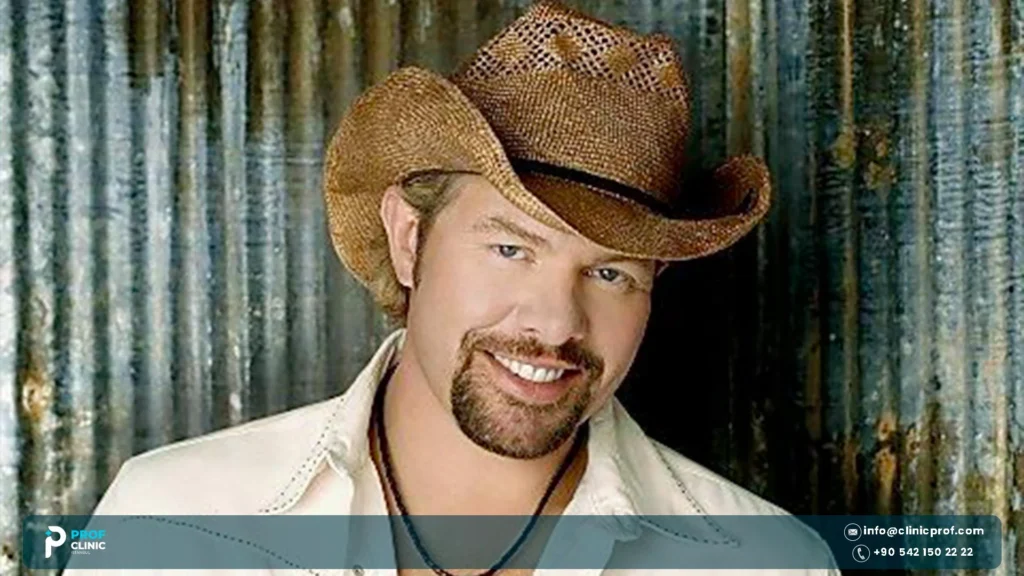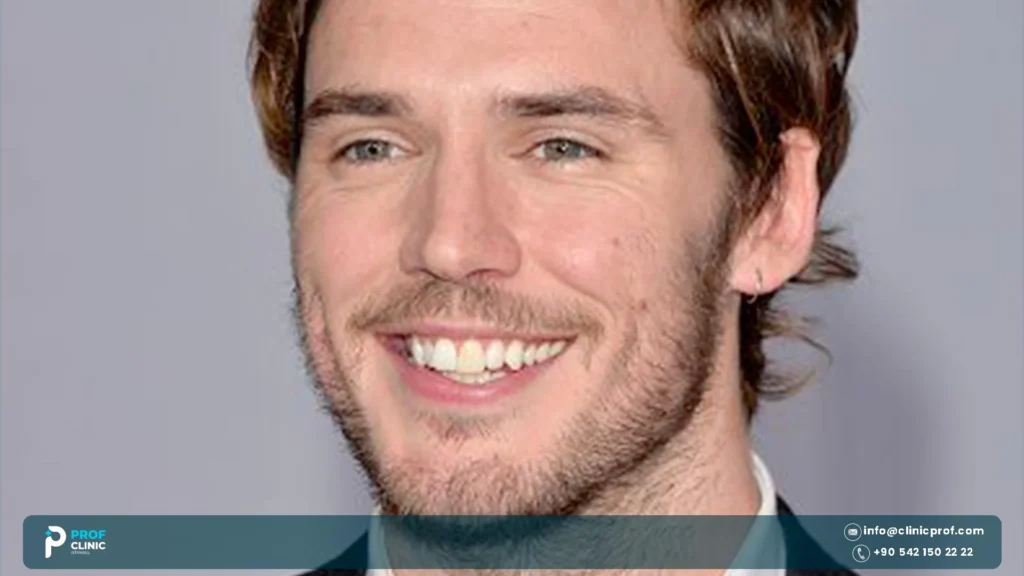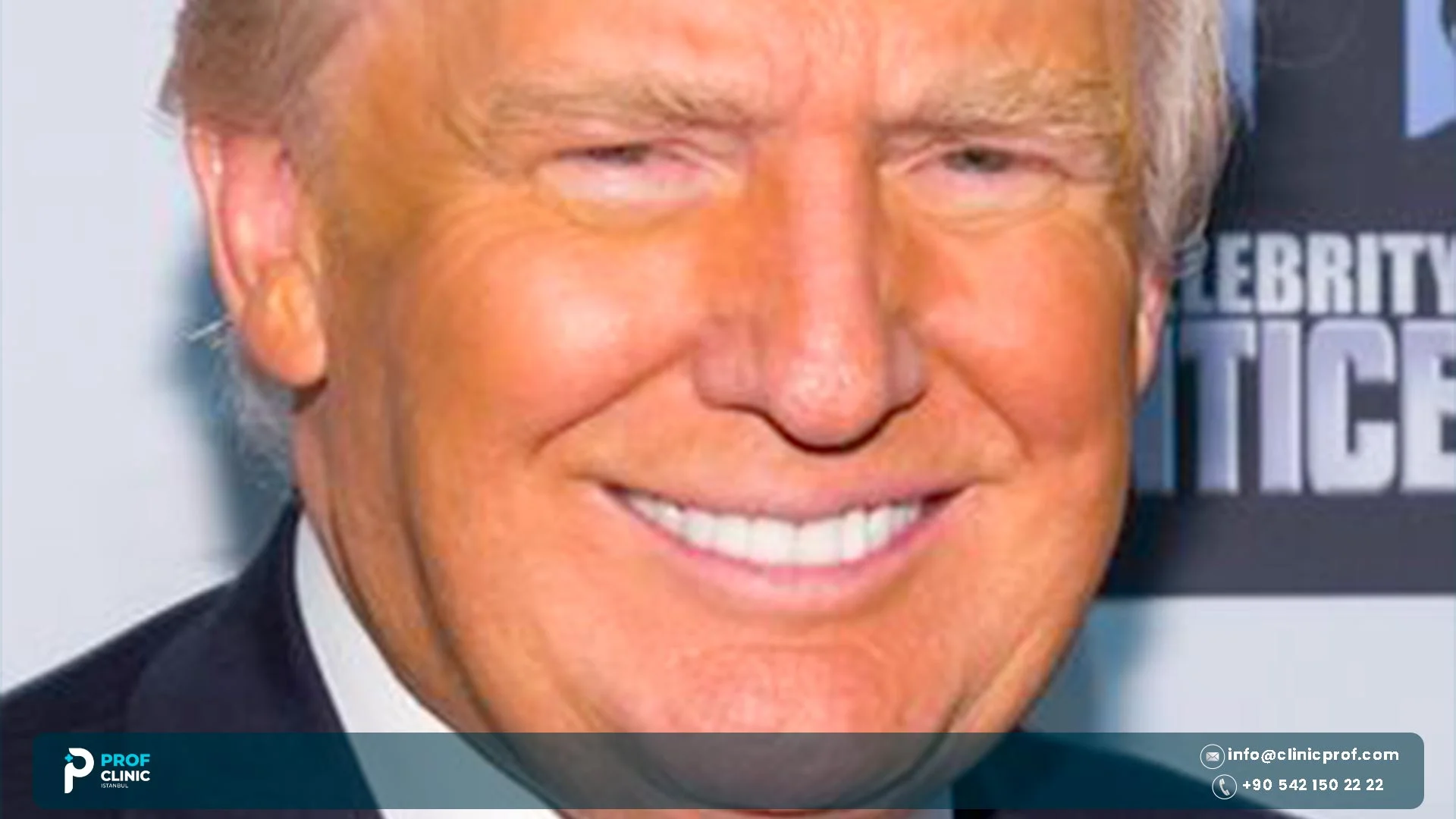
When people search for Donald Trump teeth, one question comes up repeatedly: does Donald Trump wear dentures? The clearest public answer came in 2018, when his physician said he had no partial or full dentures. That does not establish whether he has crowns, veneers or other restorations.
This guide looks at where the dentures rumor came from, what has actually been confirmed about Donald Trump’s teeth, what photographs can and cannot show, and how dentists distinguish crowns, veneers and dentures.
Medical note:
Public photographs cannot establish a person’s exact dental treatment, restoration materials or complete clinical history. Donald Trump has no known connection to Prof Clinic, and his appearance should not be interpreted as a Prof Clinic case.
Why This Became a Search Question
The question of does Donald Trump wear dentures gained attention after viewers noticed an apparent change in his speech during a December 2017 televised address. Online discussion quickly connected the change with the possibility of dentures.
The speculation was not supported by the medical examination that followed. During Trump’s January 2018 physical, White House physician Dr. Ronny Jackson said that Trump’s dental examination showed healthy teeth and gums. When asked specifically whether he wore dentures, Jackson stated that Trump had no partial or full dentures in a White House press briefing.
Where the Dentures Rumour Started
The dentures theory was largely driven by online commentary surrounding Trump’s December 2017 speech. Some viewers and commentators speculated that the change in his speech could have been caused by dentures.
That interpretation remained speculation. In the subsequent medical briefing, Jackson said that Trump had been evaluated after the speech and that the examination and specialist assessment did not identify a clinical abnormality. He attributed the speech issue to dry secretions after medication and specifically rejected the dentures explanation.
The official 2018 White House medical examination recorded a normal head, ears, nose and throat examination and described his teeth and gums as healthy.
Why Public Figures Attract Dental Speculation
Public figures are photographed and filmed constantly, often in high-definition close-ups. This creates an unusually large visual record in which differences in lighting, camera angle, facial expression and image quality can make teeth appear different from one appearance to another.
Age can also change the appearance of a smile. Tooth colour, wear, gum contours and the way teeth appear on camera may change over time without proving that a particular restoration was placed.
A photograph can therefore show what a smile looks like, but it generally cannot establish why it looks that way.
Read as well: Bad Bunny Teeth & Veneers: Before and After His Smile
What Is Actually Visible
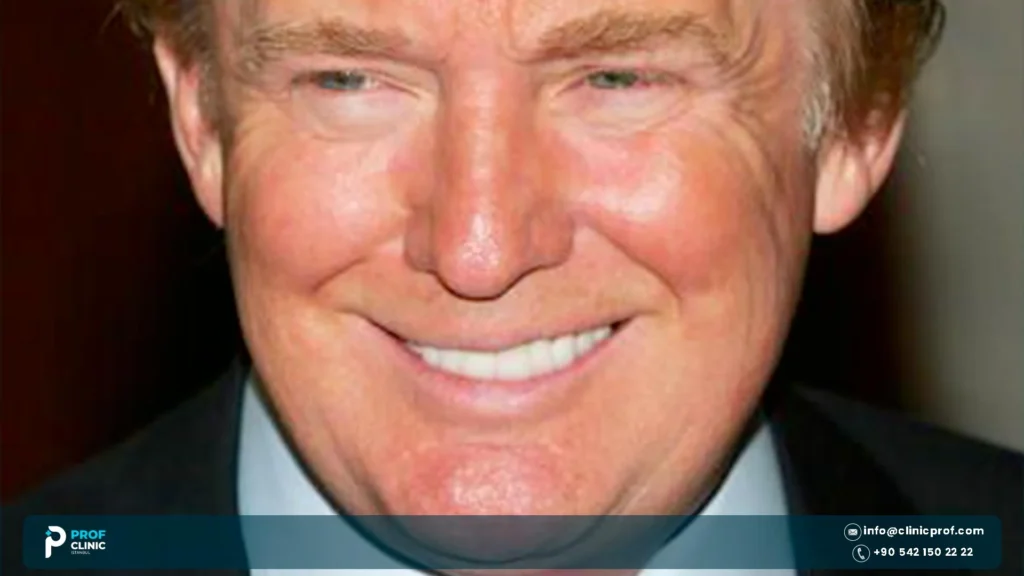
The safest way to discuss Donald Trump’s teeth is to separate visual observation from confirmed dental information.
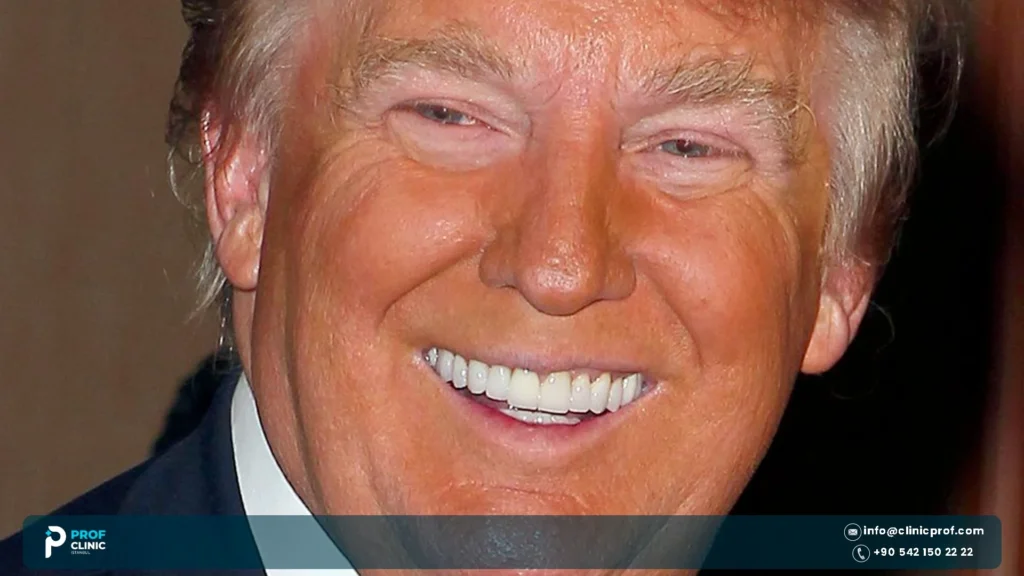
Public images can show apparent tooth colour, alignment, proportions and how much of the teeth are visible when he smiles. They cannot reliably establish whether an individual tooth is natural, crowned, veneered, bonded or otherwise restored.
The 2018 medical statement provides a stronger piece of evidence for the specific dentures question: Jackson said Trump did not wear partial or full dentures.
Donald Trump’s Teeth Across the Decades
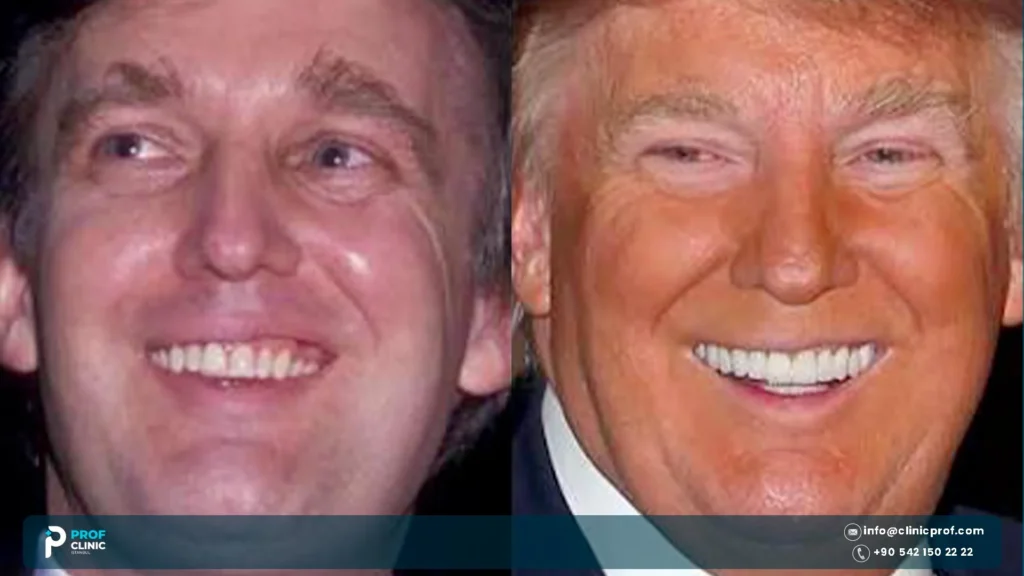
Comparisons of older and newer photographs can make Trump’s smile appear different in colour, uniformity or apparent shape. Those differences are useful when discussing visual change, but they should not be presented as proof of a particular dental procedure.
A brighter smile, for example, can result from professional whitening, photography or restorative dentistry. Greater uniformity can also occur with veneers, crowns, bonding or naturally consistent tooth anatomy.
For that reason, changes visible in photographs should be described as observations rather than diagnoses.
Does Donald Trump Wear Dentures?
According to the clearest public medical statement on the subject, no.
During Trump’s 2018 physical examination, Dr. Ronny Jackson was asked directly whether Trump wore dentures. Jackson replied that Trump had no partial or full dentures of any kind. The examination also described his teeth and gums as healthy.
That statement answers the dentures question, but it does not establish whether individual teeth have crowns, veneers, bonding or another type of fixed restoration.
Crowns, Veneers or Natural Teeth?
Crowns, veneers and natural teeth can look similar in photographs, which is why it is difficult to identify dental work from images alone.
A dental crown is a tooth-shaped cap that covers the entire tooth. According to Cleveland Clinic’s guide to dental crowns, crowns can restore broken, weak, worn or decayed teeth and can also be placed over dental implants.
A veneer is different. It is a thin covering placed over the front surface of a tooth. Cleveland Clinic explains that veneers can conceal chips, cracks, stains and other cosmetic imperfections.
The NHS guide to dental treatments similarly distinguishes crowns, which completely cover a real tooth, from veneers, which are thin facings placed over the front surface.
Natural teeth can also appear very uniform, particularly under controlled lighting or after whitening. Consequently, appearance alone cannot reliably identify which option is present.
Also Read: Young Thug’s Teeth Before Fame and After: What Changed?
Telling Dentures, Crowns and Veneers Apart
The useful question is not whether a celebrity’s teeth look fake. It is what physical characteristics are normally associated with each type of restoration.
14 Ways to Tell Restored Teeth From Natural Ones
These are clinical clues, not diagnostic tests. None can prove a restoration from a photograph alone.
- Shade uniformity: Several teeth with unusually consistent colour may attract attention, but whitening can create a similar appearance.
- Translucency: Natural enamel has optical characteristics that differ from some restorative materials, although photographs rarely capture this reliably.
- Gum emergence: A crown or veneer should transition naturally toward the gum, but a photograph usually cannot show enough detail to identify the restoration.
- Shape repetition: Multiple teeth with highly similar proportions can occur with planned restorations, although naturally uniform teeth can look similar.
- Surface texture: Enamel and dental ceramics may reflect light differently, but camera processing can exaggerate these differences.
- Edge shape: The edges of front teeth can reveal differences in contour or wear, but image resolution limits what can be concluded.
- Wear patterns: Natural teeth develop wear over time, while restorative materials have their own wear characteristics.
- Colour near the gum line: A visible colour transition can sometimes be relevant clinically, but lighting can create a similar effect.
- Tooth proportions: Changes in apparent width or length can result from restorations, wear, orthodontic treatment or camera perspective.
- Surface reflections: Ceramic and enamel reflect light differently, but this is not enough to identify a material from one image.
- Contact points: The way neighbouring teeth meet can provide useful clinical information, but these areas are rarely visible in photographs.
- Gum contour: Gum shape around a restoration may be clinically relevant, but it does not prove that a crown or veneer is present.
- Denture base: A removable denture may include a gum-coloured acrylic or similar base that replaces missing teeth and some gum volume.
- Movement: Conventional dentures are removable and may move when poorly fitted, while crowns and veneers are fixed to teeth. Implant-supported dentures attach to implants and are designed to provide greater stability.
How Dentures Look and Move Differently
Traditional dentures are removable appliances used to replace missing teeth. The NHS explains that complete dentures can replace all the teeth in an upper or lower arch, while partial dentures replace one or more missing teeth.
Because conventional dentures rest on the gums, their fit and stability are important. Poorly fitting dentures can move during speaking or eating.
Implant-supported dentures work differently. According to Cleveland Clinic’s explanation of restorative dentistry, implant-supported dentures attach to dental implants rather than relying solely on the gums, which provides greater stability than conventional dentures.
This distinction matters because “dentures” does not automatically mean a loose or visibly moving smile.
Why Photographs Are Unreliable Evidence
Photographs are useful for showing appearance, but they are weak evidence for identifying dental treatment.
Lighting can make enamel or ceramic appear brighter. Camera angles can change the apparent width of front teeth. High contrast can make edges look sharper, while lower-resolution images can hide the transition between a restoration and natural tooth structure.
Even a large collection of photographs cannot reliably determine whether a particular tooth has a crown or veneer without clinical examination, dental records or direct confirmation.
That is why the documented 2018 medical statement carries more weight than online speculation based on individual photographs or video clips.
Read as well: Brock Lesnar’s Teeth: The Bottom Crowding Explained
Prof Clinic: Dental Crowns in Istanbul, Turkey
The distinction between natural teeth, crowns, veneers and dentures becomes clinically important when planning treatment for an actual patient.
At Prof Clinic, we start with the condition of the teeth, gums, bite and any missing teeth before deciding which restorative option is appropriate. The aim is not to reproduce a celebrity smile, but to select a treatment that fits the patient’s own dental condition.
Prof Clinic’s Crown and Prosthetic Services
At Prof Clinic, our dental treatment services in Istanbul include dental implants, veneers and restorative dental treatments.
For crown treatment, our Hollywood Smile and crown services include metal, zirconia and E-max crown options depending on the patient’s needs and our specialists’ assessment.
For missing teeth, implants can provide support for crowns, bridges or dentures. Our dental implant treatment explains how an implant can act as an artificial tooth root and support a crown, bridge or denture.
The appropriate option depends on whether the patient has a damaged natural tooth, one or more missing teeth, or a broader restorative need.
How Prof Clinic Chooses Between Options
There is no single restoration that is best for every patient. At Prof Clinic, we consider factors such as:
| Factor | What we assess | Why it matters |
| Tooth condition | Remaining structure, decay, fractures and existing restorations | Helps determine whether the tooth can be preserved and what level of coverage it needs |
| Bone level | Bone quantity and quality when implants are being considered | Helps determine whether implant treatment is appropriate |
| Coverage | Whether the tooth needs a veneer, crown or another restoration | Matches treatment to the amount of structural or cosmetic change required |
| Missing teeth | Number and position of missing teeth | Helps distinguish between bridge, implant and denture options |
| Bite | How the upper and lower teeth contact | Affects function and restoration design |
| Material | Ceramic, zirconia, E-max or another suitable material | Balances appearance, strength and clinical requirements |
| Maintenance | Cleaning access and long-term follow-up | Helps protect the restoration and surrounding tissues |
| Patient goals | Functional and aesthetic priorities | Keeps the treatment plan individual rather than copying another smile |
Prosthetic Results at Prof Clinic
Our dental cases demonstrate different treatment possibilities rather than promising the same outcome for every patient.
A crown case may begin with a damaged or weakened tooth. An implant case may begin with tooth loss. A veneer case may involve relatively healthy teeth where the primary goal is aesthetic improvement.
The starting condition matters as much as the final appearance. At Prof Clinic, we use the patient’s own teeth, gums, bite and treatment goals to determine the appropriate plan.
The question of does Donald Trump have dentures has a documented answer: during his 2018 medical examination, Dr. Ronny Jackson said that Trump did not have partial or full dentures.
That does not allow us to identify crowns, veneers or other fixed restorations from photographs. Those treatments can produce overlapping visual characteristics, and a clinical examination is needed to determine what is actually present.
For patients considering dental crowns or other prosthetic treatment, the important question is not which restoration a public figure may have, but which option fits the condition of their own teeth, gums, bone and bite.
At Prof Clinic, we assess those factors before recommending a restorative treatment plan. Contact us for a personalized dental assessment in Istanbul.
Donald Trump’s Teeth: Your Questions Answered
- Does Donald Trump wear dentures?
The clearest public answer is no. During his 2018 medical examination, White House physician Dr. Ronny Jackson said Trump had no partial or full dentures.
That statement specifically addresses dentures. It does not establish whether individual teeth have crowns, veneers, bonding or other fixed restorations.
- Are Donald Trump’s teeth capped?
There is no publicly available clinical record that allows us to confirm which of Trump’s teeth, if any, have crowns.
Photographs may show teeth that appear uniform or bright, but those characteristics are not enough to distinguish crowns from veneers, whitening or natural tooth structure.
- How can you tell if someone has dentures?
Traditional dentures may have a visible gum-coloured base, particularly when several or all teeth are missing. They are removable and can move if their fit is inadequate.
However, these signs are not reliable enough to diagnose dentures from photographs. Implant-supported dentures are designed to provide greater stability and may not show obvious movement.
- Are implant-supported dentures better than traditional ones?
“Better” depends on the patient’s condition and treatment goals.
Implant-supported dentures attach to dental implants and generally provide greater stability than conventional dentures. They can be particularly useful when stability during chewing and speaking is an important goal.
However, implant treatment requires appropriate evaluation of the gums, jawbone and overall oral health. The NHS notes that dental implants can replace tooth roots and support crowns or some types of dentures.
The right option therefore depends on the number of missing teeth, bone and gum condition, bite, maintenance needs and whether the patient wants a removable or fixed solution.