If you are losing your upper teeth or struggling with a top denture, upper jaw All-on-4 is probably one of the options you are weighing. It fixes a full arch of teeth onto four implants in the upper jaw and works well for many people. The upper jaw does, however, ask for more careful planning than the lower one.
Two things set the upper jaw apart. Its bone is usually softer, and the maxillary sinuses sit just above the back teeth. Both affect where implants can go, how firmly they hold on the day of surgery and whether a temporary fixed bridge can be attached straight away.
This guide explains how the sinus and bone density shape an upper full-arch plan and why the back implants are tilted. It also covers when a sinus lift, zygomatic implants or six implants come into the discussion, and what recovery feels like. For the basics of the treatment itself, start with our page on All-on-4 dental implants in Turkey, part of our wider dental treatment in Istanbul.
Why Is Upper Jaw All-on-4 Different from the Lower Jaw?
Upper jaw All-on-4, also called maxillary All-on-4, differs mainly because the upper bone is less dense and the sinuses limit how much bone is available at the back. The lower jaw usually has thicker, harder bone and no sinus above it, so implants there often grip more firmly from the start.
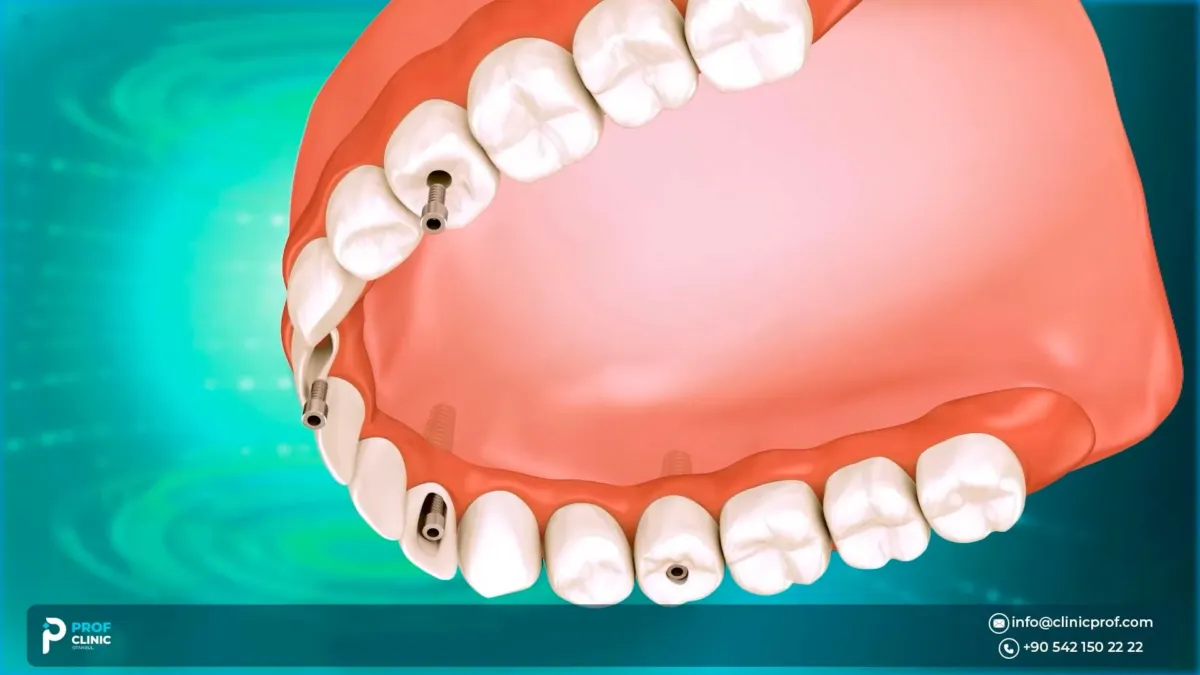
The upper jaw can still carry a fixed bridge very well. The difference lies in how closely the team reads the scan, where the implants are placed and how cautiously the new teeth are loaded. If only a few upper teeth are missing and the rest can be kept, individual dental implants in Turkey may suit you better than a full arch.
The lower arch has its own concerns, mainly the nerve that runs through the jaw, which we cover in our guide to All-on-4 in the lower jaw. Here we stay with the upper arch and what makes it different.
Why is the bone in the upper jaw softer?
The upper jaw is usually built from a thin outer shell of hard cortical bone around a larger core of spongy, trabecular bone. Spongy bone heals well because it has a rich blood supply, yet it gives less mechanical grip to a freshly placed implant.
After teeth are lost, the ridge also shrinks over time, especially at the back. People who have worn an upper denture for many years often have a thinner ridge than those whose teeth were removed recently. A 3D CBCT scan shows how much bone remains and how dense it is in each area.
Bone Density and Primary Stability in the Upper Jaw
Primary stability is how firmly an implant sits in the bone at the moment it is placed, before any healing has happened. In softer upper bone it can vary from one implant site to the next, which is why it is measured during surgery and never simply assumed.
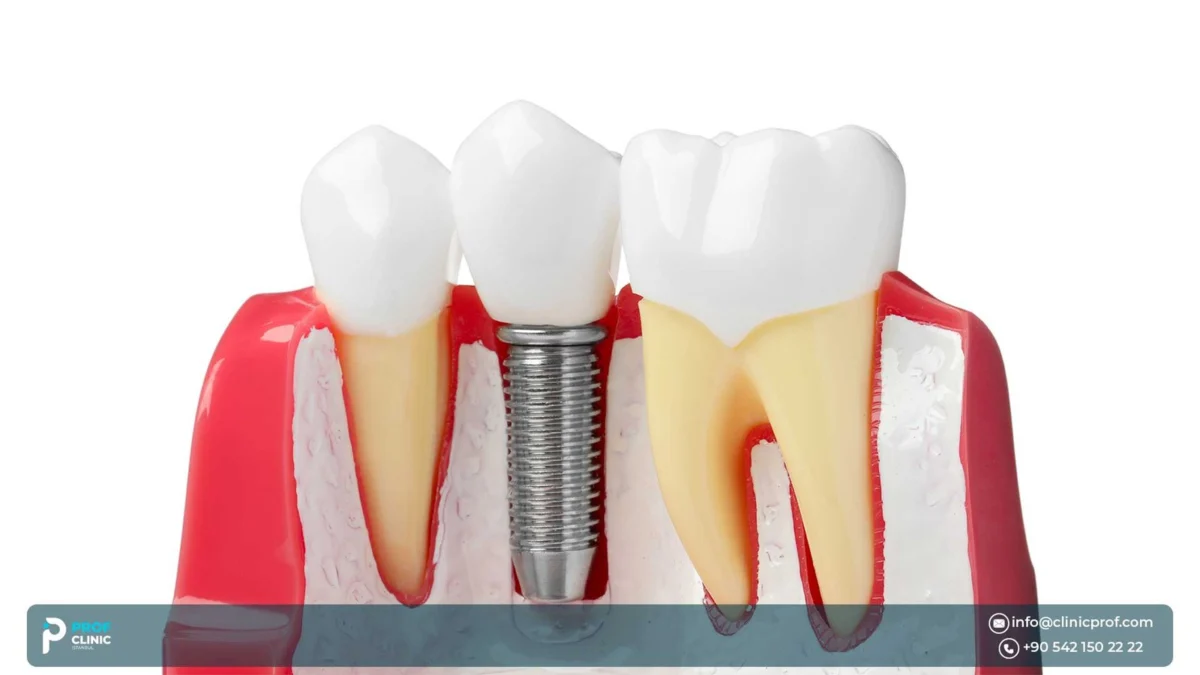
Osseointegration is the slower biological process in which bone grows onto the implant surface, and it usually takes about 3–6 months. A large study that followed All-on-4 patients for 3 to 17 years found high survival in both jaws. Implant survival was lower in the upper jaw, though, and early failures in the first two years happened more often there.
To protect stability in softer bone, the surgical team can adjust several parts of the plan:
- Implant position, placing each implant where the bone is densest, usually towards the front of the arch.
- Implant spread, keeping the front and back implants as far apart as is safe so the bridge rests on a wider base.
- Site preparation, shaping the implant bed gently so the implant presses into the soft bone and gains extra grip.
- Bite design of the temporary bridge, with shorter back extensions and lighter contacts while the implants heal.
None of these steps replaces a careful reading of the scan. Together they help the plan fit the bone you actually have, which matters more in the upper jaw than in the lower one.
Can you get fixed teeth within a few days in the upper jaw?
Often, yes, provided the implants reach enough stability during surgery. In that case a temporary fixed bridge is usually attached within a few days, so you leave with teeth that stay in place. If stability is lower than planned, the implants heal first and a removable temporary is worn for a while.
This decision is made on the day, from what the implants show in your bone. If you would like an early idea of how it might apply to your upper arch, send your X-rays or CBCT scan on WhatsApp for a first review.
How Does the Sinus Affect All-on-4 in the Upper Jaw?
The maxillary sinuses are air-filled spaces above the upper back teeth, and they limit the bone height available for implants in that area. In upper jaw All-on-4 planning, the sinus is the main reason the back implants are tilted instead of placed straight up.
After the upper back teeth are lost, two changes often happen together. The ridge loses height from below, and the sinus can expand downwards into the space the roots once filled. In some people only a few millimetres of bone are left between the mouth and the sinus floor.
On the CBCT scan, the surgeon usually checks the following points before deciding where each implant goes:
- Bone height and width beneath each sinus, and how far forward the sinus reaches.
- The thickness of the sinus lining and any signs of swelling or fluid.
- Thin bony walls or partitions inside the sinus that could change the surgical approach.
- The nasal floor and the small canal behind the front teeth, which also limit implant positions.
Do sinus problems need treating before upper jaw implants?
Active sinus infection or long-standing sinus symptoms are usually assessed and treated before planned implant surgery. Tell your dentist about frequent sinusitis, nasal surgery or allergies. The scan may show a thickened sinus lining, and sometimes a visit to an ear, nose and throat specialist is the safest first step.
What is the risk of entering the sinus during surgery?
With All-on-4, the tilted back implants are planned to stay in front of the sinus, so the sinus lining is usually left undisturbed. The risk rises when a sinus lift is added, because that procedure raises the thin lining covering the sinus floor.
According to patient guidance from Cambridge University Hospitals (NHS), a tear in this lining is the main risk of a sinus lift. The surgeon can often repair a small tear during the same operation, and a second attempt is usually possible once the lining has healed.
How Do Tilted Back Implants Help the Upper Jaw?
Tilted back implants let the upper jaw carry a fixed bridge without placing implants under the sinus. The two front implants stand upright, and the two back implants lean backwards along the front wall of the sinus, so their tops come out further back in the mouth.
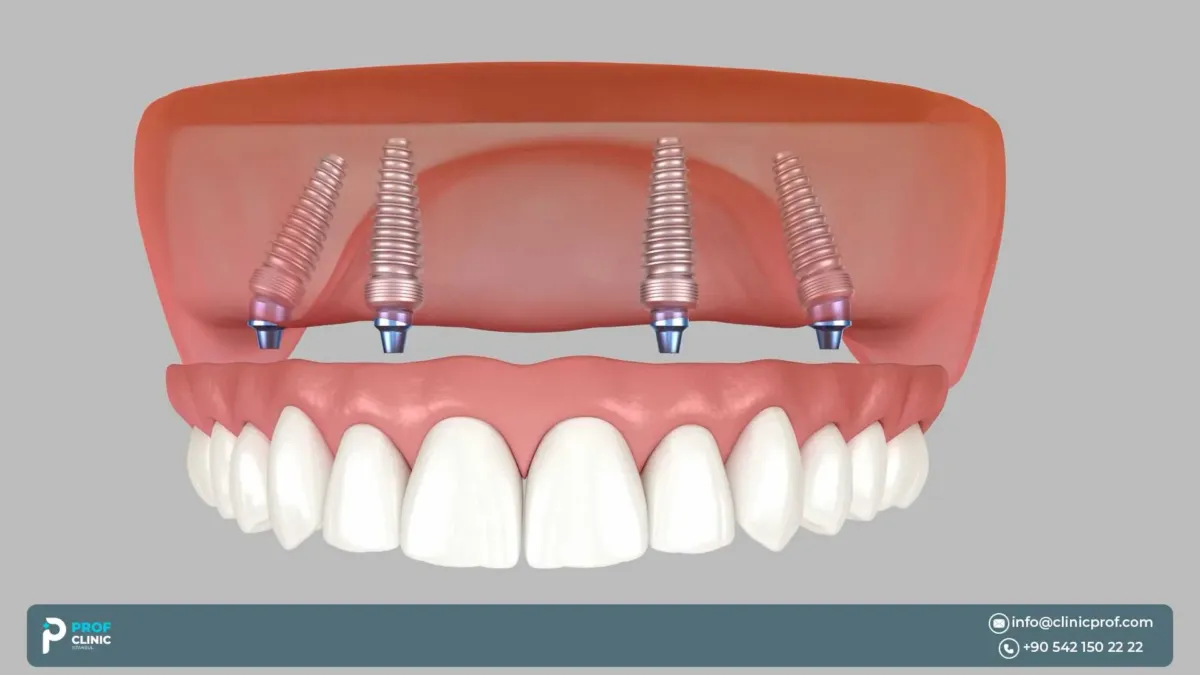
This spreads the four implants over a longer stretch of the arch. The bridge then needs shorter extensions behind the last implant, which reduces the leverage on the back implants each time you chew.
Research supports the approach. A systematic review in Clinical Oral Implants Research found no clear difference in implant survival, bone loss or bridge survival between intentionally tilted and straight implants.
Tilting has limits, though. If the front of the upper jaw is also thin, or the sinus reaches far forward, there may be no room for a long enough tilted implant. The plan then has to change.
When Do You Need a Sinus Lift, Zygomatic Implants or All-on-6?
These options come into the discussion when the scan shows that four implants cannot be anchored safely in the bone you have, or when extra support is wanted in soft bone. The table shows how scan findings usually guide the choice, while your own plan depends on your scan and examination.
| What the CBCT shows | What it usually means | Likely direction |
|---|---|---|
| Good front bone, sinus limits the back | Tilted implants can usually avoid the sinus | Standard All-on-4, often without grafting |
| Enough bone along the arch, but soft | More implants can share the biting load | All-on-6 may be preferred |
| Very little bone under the sinus | Support at the back may fall short | Sinus lift, sometimes before the implants |
| Severe bone loss at the front and back | Standard implants may not hold predictably | Zygomatic implants or bone grafting |
| Signs of active sinus disease | Higher risk for any sinus procedure | Sinus treatment first, then a new plan |
A sinus lift adds bone beneath the sinus floor so implants can be placed further back. When some bone is already present, the implant can sometimes go in at the same time. When there is very little, the graft usually heals for several months first.
Zygomatic implants are much longer implants anchored in the cheekbone. The ITI consensus report describes them as mainly indicated for severe bone loss in the upper jaw and names sinusitis as their most common complication.
All-on-6 uses six implants instead of four and can give soft upper bone more support, provided there is room for the extra implants. Our comparison of All-on-4 and All-on-6 explains how that choice is made.
Also read: All-on-4 Zygomatic Implants: Fixed Teeth With Severe Upper Bone Loss
If you already have a recent scan, you can book a free consultation and ask which of these paths fits your upper jaw.
Can upper jaw All-on-4 be done without bone grafting?
In many cases, yes, because the concept uses the existing front bone and avoids the sinus with tilted implants. A systematic review in the Journal of Clinical and Experimental Dentistry describes All-on-4 as a predictable way to treat a shrunken jaw for patients who prefer to avoid bone regeneration. Grafting is still needed when the front bone is too thin.
Will an Upper All-on-4 Bridge Cover the Roof of My Mouth?
No, a fixed upper All-on-4 bridge normally leaves the palate uncovered. A full upper denture depends on a plate across the roof of the mouth for suction. The implant bridge is held by screws and follows only the curve of the teeth and gums.
Many former denture wearers notice the difference quickly. Food temperature and texture often feel more natural, and the gagging some people get with a full plate is no longer triggered.
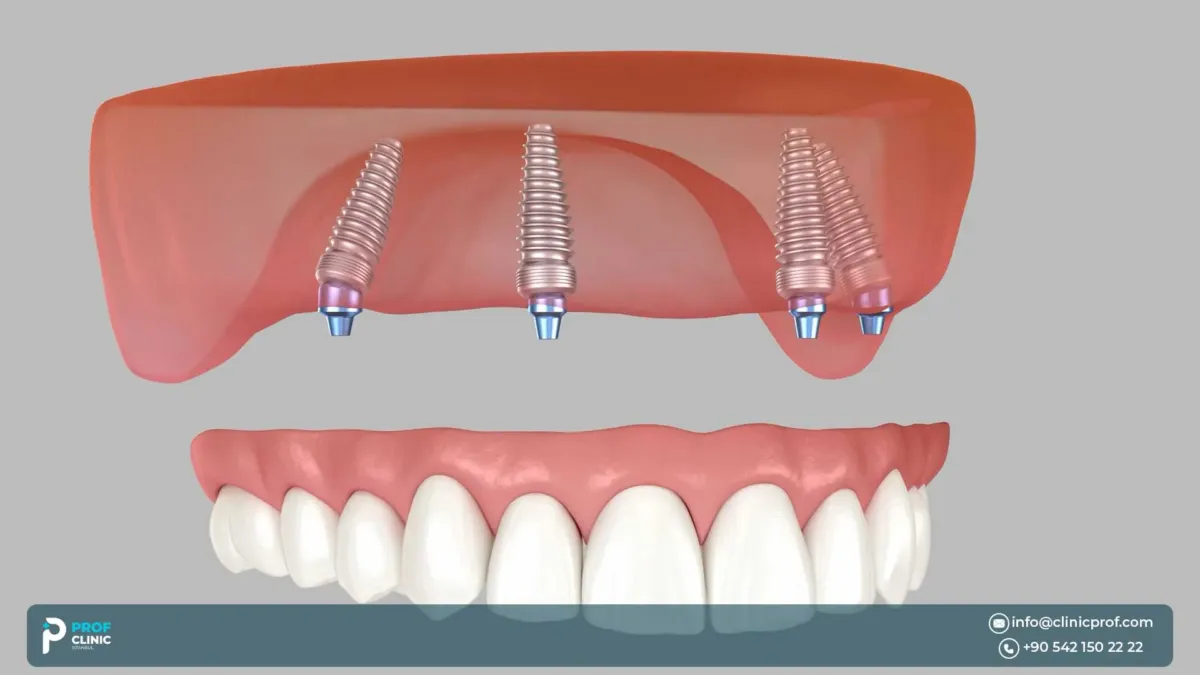
Because the upper teeth shape your smile and support your top lip, the bridge is designed around tooth position first. The team plans where the teeth should sit for lip support, smile line and speech, and then places the implants to carry that design.
How long does it take to speak normally with upper fixed teeth?
Most people adapt within a few days to a few weeks. The tongue touches the back of the upper teeth for sounds such as ‘s’ and ‘t’, so a new bridge can change them briefly. Reading aloud helps, and small changes to the bridge shape can be made at check-ups.
Recovery After Upper Jaw All-on-4: What Is Different?
Recovery after upper jaw All-on-4 is similar to the lower jaw in most ways, with a few points specific to the upper arch. Swelling often spreads into the cheeks and sometimes under the eyes, and light bruising there is common for some days.
- Swelling usually peaks around the second or third day and then settles; cold packs help in the first hours.
- If a sinus lift was part of your surgery, NHS guidance advises not blowing your nose for two weeks.
- A soft diet protects the implants while they fuse, which matters more when the bone is soft.
- Cleaning around and under the bridge starts early, with the brushes or water flosser your dentist recommends.
Fusion with the bone usually takes about 3–6 months. New scans are then taken, and the final bridge is made and screwed in place. Regular check-ups and professional cleaning after that help keep the implants and gums healthy.
Planning Your Upper Arch at Prof Clinic in Istanbul
At Prof Clinic, treatment with upper full-arch implants starts with an assessment of your photos, X-rays and a 3D CBCT scan. The scan is used to build a digital plan that decides between four and six implants and shows how the sinus and bone density shape each implant position. When the assessment shows that the upper bone is too thin even for tilted implants, Prof Clinic also offers zygomatic implants.
Complex upper-jaw cases are assessed by Spc. Dt. Oğuzhan Sunar, a periodontology specialist whose clinical work centres on implant surgery, including sinus lift and bone grafting procedures. Surgery is done under local anaesthesia, with sedation if needed, and recommendations follow only after a clinical assessment and review of your records.
You receive a written plan that explains whether a temporary fixed bridge is likely, how long healing should take and what follow-up looks like after you return home. To read more about full-arch treatment in Istanbul or to send your scans, contact our team.
Frequently Asked Questions
Is All-on-4 less successful in the upper jaw?
Upper jaw All-on-4 shows high survival in studies, though slightly lower than in the lower jaw. In a long-term study of more than 500 treated arches, upper implants failed a little more often, mostly in the first two years. Careful scan planning, cautious loading and good home care help reduce that risk.
How many implants does a full upper jaw need?
Four implants are often enough to hold a fixed upper bridge when the front bone is good. In softer or thinner bone, six implants may be advised so the load is shared more widely. The number is decided on your CBCT scan, and no single rule fits every upper jaw.
Do I need bone grafting before upper jaw implants?
Not always. Tilted implants often avoid the need for grafting. If the bone under the sinus or at the front is too thin, though, a sinus lift or bone graft may be planned first. Your scan shows which areas lack bone and whether grafting can be done during implant surgery.
Can upper jaw implants cause sinus problems?
Sinus problems after upper jaw All-on-4 are uncommon when the implants are planned to stay clear of the sinus. The risk is higher after a sinus lift or with zygomatic implants. Report congestion, facial pressure or discharge that does not settle, so your dentist can check it early.
Can I have All-on-4 on the upper jaw only?
Yes, the upper jaw can be treated on its own. Each arch is planned separately, so you can keep healthy lower teeth or a lower denture. Your bite against the opposite jaw is still checked, because it affects how the upper bridge is designed and loaded.
The Bottom Line
Upper jaw All-on-4 can give you a fixed set of teeth on four implants that leaves the palate open, even when the sinus limits the back of the jaw. Softer bone and sinus anatomy mean the plan must be built from a CBCT scan, with six implants, a sinus lift or zygomatic implants kept in reserve for harder cases.
Before deciding, it can help to see how other full-arch cases have looked. You can browse before-and-after results and then ask for an assessment of your own scan.
Sources
- PMC (Int J Implant Dent) — The All-on-four concept for the edentulous maxilla and mandible: 3–17-year follow-up and risk factors
- PMC (J Clin Exp Dent) — The all-on-four treatment concept: Systematic review
- PubMed (Clin Oral Implants Res) — Clinical performance of intentionally tilted implants versus axially positioned implants: A systematic review
- PMC (Diagnostics) — CBCT Assessment for Dental Implant Surgery at the Maxilla: A Clinical Update
- PMC (Cureus) — Maxillary Sinus Lift Procedures: An Overview of Current Techniques, Presurgical Evaluation, and Complications
- PMC (Int J Implant Dent) — ITI consensus report on zygomatic implants: indications, surgical techniques and long-term outcomes
- Cambridge University Hospitals NHS — Sinus lift procedures