If you have been told that you don’t have enough jawbone for dental surgery, the frustration is real. Many patients feel stuck between choosing painful bone grafts or settling for loose dentures. However, subperiosteal dental implants have changed the game, offering a specialized solution for low bone implants without the need for invasive, long-term procedures.
For patients considering subperiosteal dental implants in Turkey, this treatment offers a fixed solution for severe bone loss without the long delay of bone grafting.
In this guide by Prof Clinic, we will show you how to get implants without bone graft surgery, explaining the technology, the benefits, and why Prof Clinic is the global choice for restoring smiles in complex cases.
What is a subperiosteal dental implant?
If you’ve been told your jawbone is “too thin” for standard implants, a subperiosteal dental implant is your specialized solution.
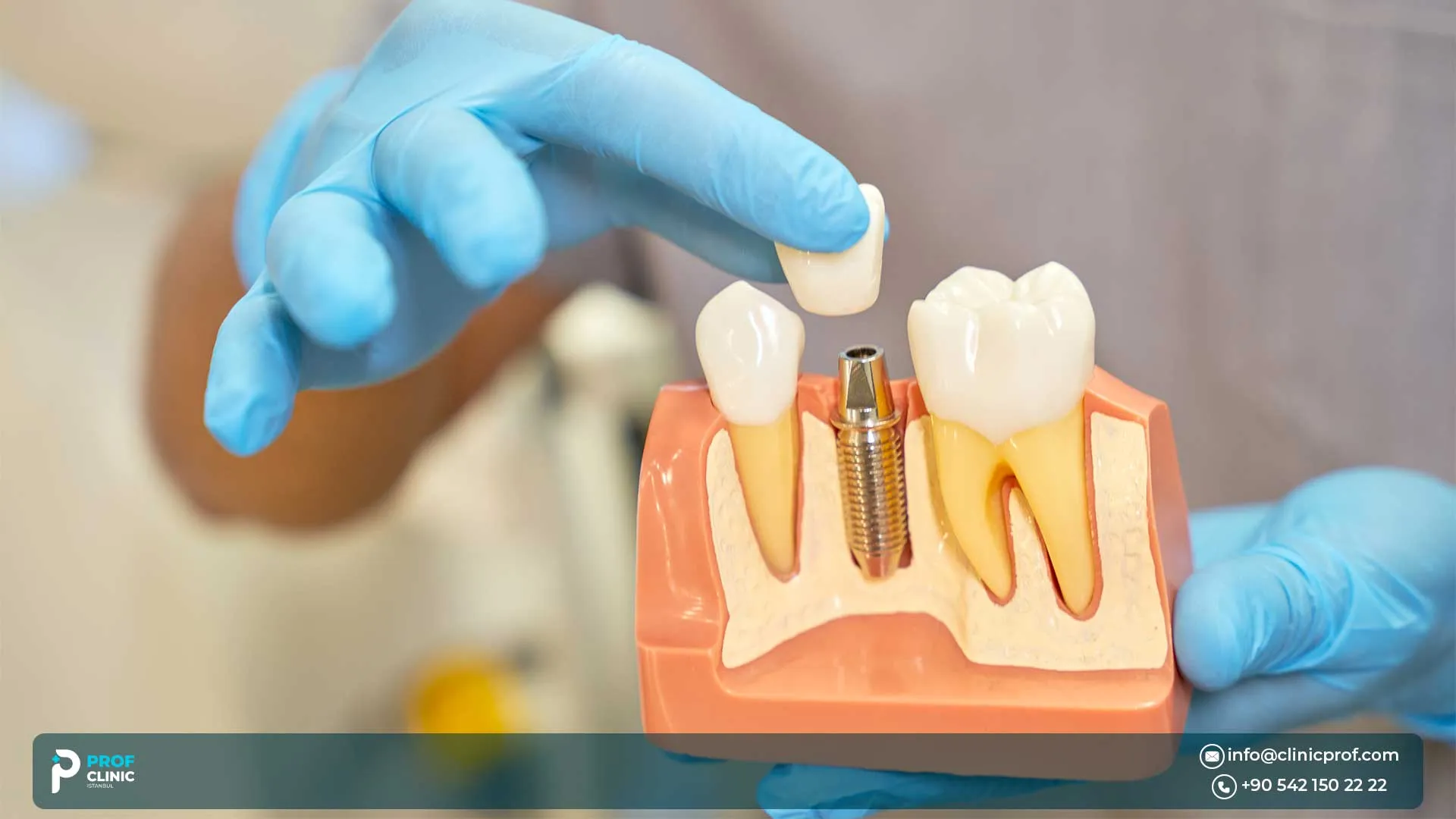
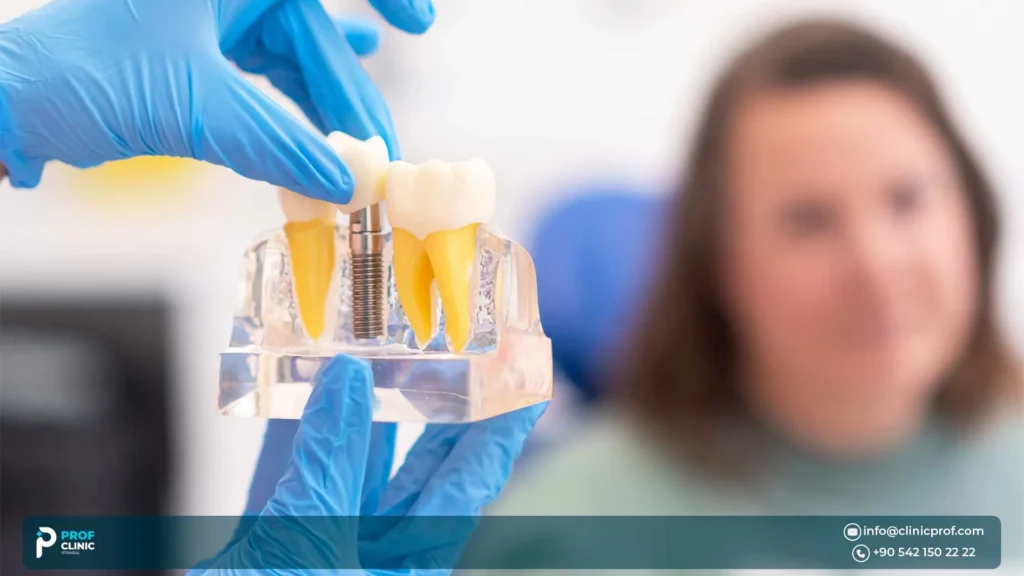
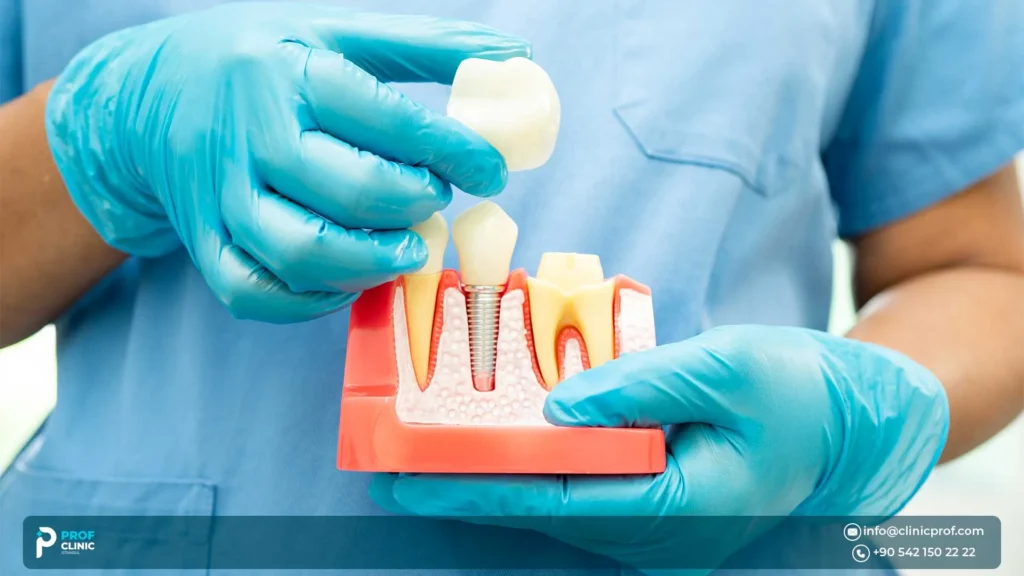
Unlike traditional endosteal implants that are embedded into the bone like a screw, a subperiosteal implant is a custom-engineered framework that sits on top of the bone but remains hidden under the gum tissue. It’s a sophisticated “saddle-like” structure that distributes the pressure of biting across a wider area of your jaw, making it the premier choice for patients with significant bone resorption.
Also read: Types of Dental Implants: Complete Guide 2026
How are subperiosteal dental implants designed today
At Prof Clinic, we’ve moved far beyond the invasive methods of the past. Modern subperiosteal implants are now a masterpiece of digital dentistry. Here is how we craft your new smile:
- Precision 3D Imaging: We start with high-resolution CT scans to create a “digital twin” of your jawbone. No messy molds—just pure data.
- Virtual Prototyping: Our specialists use CAD (Computer-Aided Design) software to build your implant framework virtually, ensuring it fits the unique “hills and valleys” of your bone with microscopic accuracy.
- 3D Metal Printing: Your implant is then 3D printed or milled from a solid block of medical-grade metal. This ensures the structure is incredibly thin yet strong enough to support a full bridge of teeth.
The Result? A surgery that is less invasive, more predictable, and custom-tailored to your exact anatomy. See how Prof Clinic transforms smiles with 3D technology.
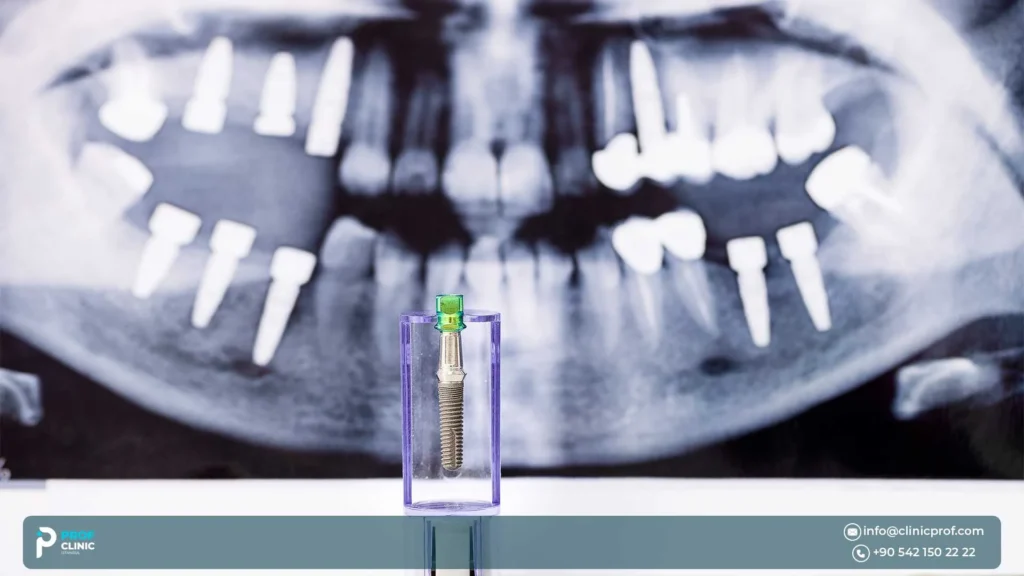
Materials used in subperiosteal implants
We don’t compromise on quality because your health depends on it. To ensure your body accepts the implant (biocompatibility) and that it lasts for decades, we utilize:
| Material | Why We Use It |
| Medical-Grade Titanium | The gold standard. It’s ultra-strong, lightweight, and naturally fuses with your body’s tissues. |
| Cobalt-Chrome (CoCr) | Known for its extreme rigidity, making it perfect for very thin frameworks that need to support heavy chewing forces. |
| Biocompatible Coatings | We often use specialized surface treatments to help the gum tissue “seal” tightly around the implant posts, creating a barrier against bacteria. |
Ready to bypass the bone graft? Don’t let bone loss dictate your quality of life. At Prof Clinic, we specialize in the “impossible” cases. Our advanced subperiosteal techniques mean you can skip the months of painful bone grafting and jump straight to a secure, beautiful smile.
Schedule your digital assessment at Prof Clinic today.
Why are people rejected for traditional dental implant treatment
It is a frustrating moment: you visit a dentist hoping for a permanent smile, only to be told you are “not a candidate.” In most cases, this rejection happens because traditional endosteal implants are like screws—they require a specific depth and density of “soil” (bone) to hold them in place.
If you have suffered from long-term tooth loss, advanced periodontal disease, or have worn ill-fitting dentures for years, your jawbone naturally shrinks (atrophies). Without enough bone height or width, a traditional implant has nothing to grab onto. While other clinics might insist on multiple, painful bone grafting surgeries that take months to heal, Prof Clinic offers a more efficient path forward.
How do subperiosteal dental implants work for patients with severe bone loss?
If traditional implants are like screws in a wall, think of subperiosteal dental implants as a sophisticated structural bracket.
Instead of relying on the interior volume of the bone, this technology utilizes the exterior surface area. Because the custom-made frame is designed to rest precisely on the solid cortical bone of your jaw, it doesn’t need “depth” to be stable.
At Prof Clinic, the process works in harmony with your anatomy:
- Load Distribution: The framework spreads the force of your bite across the entire jaw ridge rather than a single point.
- Tissue Integration: Your gum tissue heals over the frame, securing it firmly against the bone.
- Immediate Foundation: Small pillars (posts) protrude through the gums, allowing us to attach your new teeth securely without waiting for “osseointegration” in the traditional sense.
Who is a good candidate for subperiosteal implants?
Not everyone needs a subperiosteal solution, but for a specific group of patients, it is a life, changing miracle. You are likely an ideal candidate at Prof Clinic if:
- You have “Zero” Bone Elevation: If your maxillary sinus is too low or your mandibular bone is too thin for even a “mini” implant.
- You want to avoid Bone Grafting: If you prefer a faster, less invasive route that doesn’t involve harvesting bone from other parts of your body.
- You’ve experienced “Denture Failure”: If your dentures no longer stay in place because there is no ridge left to hold them.
- You want a Fixed Solution: If you are tired of removable plates and want teeth that feel, look, and function like the real thing.
Stop settling for “No.” At Prof Clinic, we specialize in the cases that others call “impossible.” If you’ve been rejected elsewhere, our advanced subperiosteal technology might be exactly what you need.
Get a second opinion from the specialists at Prof Clinic today.
Subperiosteal Implant Procedure in Istanbul
At Prof Clinic in Istanbul, we’ve streamlined the journey to your new smile into a highly predictable, tech-driven process. Here is what you can expect:
- The Digital Blueprint: We begin with a high-definition CBCT scan. This allows us to see your bone structure in 3D without a single incision.
- Custom Engineering: Using the scan data, our engineers design a framework that fits your jaw like a jigsaw puzzle piece.
- The Placement: In a specialized surgical procedure, the gum tissue is gently lifted, and the custom frame is seated directly onto the bone.
- Securing the Frame: The frame is stabilized (often with tiny fixation screws), and the gum tissue is closed over it, leaving only the small attachment posts visible.
- The Restoration: Once initial healing is complete, your custom-made teeth are securely attached to the posts.
Does subperiosteal need implant too?
This is a common question! To clarify: The subperiosteal framework is the implant. In traditional dentistry, an “implant” refers to the titanium screw. In this case, the “implant” is the entire custom-shaped mesh or frame. You do not need to have traditional screw-in implants and a subperiosteal frame. The frame itself provides the anchors (posts) that act just like the tops of traditional implants to hold your teeth in place.
Can I get a fixed bridge on subperiosteal implants?
Yes, absolutely! In fact, this is one of the primary reasons patients choose this treatment at Prof Clinic.
Because the subperiosteal frame is engineered to be incredibly rigid and spans a large surface area of your jaw, it provides a rock-solid foundation for:
- Fixed Full-Arch Bridges: Teeth that stay in your mouth 24/7, just like natural teeth.
- Overdentures: Securely “snapped on” restorations for those who prefer easier cleaning.
How long does the recovery process take after getting subperiosteal dental implants?
One of the biggest advantages of avoiding bone grafts is the dramatic reduction in total treatment time.
- Initial Healing (The First 7–14 Days): You may experience minor swelling or bruising, similar to a standard extraction. Most patients return to light work within 3 to 5 days.
- Soft Tissue Integration (4–8 Weeks): During this time, your gums heal and “seal” around the implant posts.
- The Comparison: While traditional implants with bone grafting can take 9 to 12 months to finish, a subperiosteal case at Prof Clinic is often completed in just a few months from start to finish.
Why wait a year for a smile? At Prof Clinic, our advanced recovery protocols ensure you spend less time in the chair and more time enjoying your favorite foods.
Contact Prof Clinic today to get your personalized recovery timeline.
Subperiosteal vs. other solutions
Subperiosteal vs endosteal implant
To choose the right path, you first need to understand the fundamental difference in how these implants interact with your body.
- Endosteal Implants (The “Standard”): These are the common titanium screws placed inside the bone. They are excellent if you have thick, healthy jawbone density.
- Subperiosteal Implants (The “Specialized”): These sit on top of the bone. They are the go-to solution when the bone has thinned out so much that it can no longer hold a screw.
Subperiosteal vs. endosteal implants: pros and cons
| Feature | Endosteal (Traditional) | Subperiosteal (Atrophy Solution) |
| Bone Requirement | High (Requires depth/width) | Low (Uses surface area) |
| Bone Grafting | Often required if bone is thin | None required |
| Healing Time | 4–9 months (if grafting) | 2–4 months |
| Customization | Standard sizes | 100% Custom-designed |
| Best For | Routine tooth replacement | Complex/Severe bone loss cases |
What are the differences between endosteal implants, subperiosteal implants, and Zygomatic implants?
When bone loss is severe, the dental world offers three main “heavy-duty” options. At Prof Clinic, we evaluate which of these fits your anatomy best:
- Endosteal: Best for localized tooth loss with healthy bone.
- Subperiosteal: Ideal for the lower jaw (mandible) or upper jaw when bone is thin but wide. It avoids the need for sinus lifts or complex grafting.
- Zygomatic Implants: These are extra-long implants used only in the upper jaw. They bypass the jawbone entirely and anchor into the cheekbones (Zygoma).
Subperiosteal implants vs. other atrophy solutions
Patients with bone atrophy are often presented with several daunting options. Here is how the subperiosteal approach stacks up against them:
- VS. Major Bone Grafting: Bone grafting requires “harvesting” bone from your hip or chin, involving two surgical sites and a year of healing. Subperiosteal is a single-site solution.
- VS. Sinus Lifts: In the upper jaw, traditional implants often require “lifting” the sinus membrane. Subperiosteal implants sit below the sinus, removing this surgical risk entirely.
- VS. Snap-on Dentures: While dentures just sit on the gums and often slip, a subperiosteal frame is fixed to the bone, providing the chewing power of natural teeth.
Why take the long road when a custom shortcut exists? Many clinics don’t offer subperiosteal implants because they require advanced digital engineering and surgical expertise. At Prof Clinic, we specialize in these “atrophy solutions” to save you time, pain, and uncertainty.
Compare your options with a specialist at Prof Clinic. Book your 3D Scan today!
ِِِِAlso read: Dental Implants Without Surgery: Is It Possible?
What are the advantages of subperiosteal dental implants compared to traditional implants?
Choosing a subperiosteal approach isn’t just about “settling” for a different method; for many, it is actually the superior choice.
- Zero Bone Grafting: The most significant advantage. You avoid the morbidity and pain associated with harvesting bone from elsewhere in your body.
- Reduced Surgical Visits: Traditional implants with grafting can involve 3 to 4 separate surgeries over a year. Subperiosteal implants typically require far fewer appointments.
- Predictable Anatomy: Because the frame is 3D-printed to your exact jaw shape, there is no “guesswork” during surgery.
- Ideal for the “Impossible” Jaw: It provides a fixed, stable foundation even when the jawbone is as thin as a wafer.
Subperiosteal Implants pros and cons
Every medical procedure has a balance. At Prof Clinic, we believe in full transparency so you can make an informed choice.
The Pros:
- Speed: Much faster “final teeth” delivery compared to grafting.
- Comfort: The frame distributes biting pressure, preventing the “sore spots” common with dentures.
- Success in Atrophy: Higher success rates for patients with extreme bone loss who often fail traditional implants.
The Cons:
- Complexity: Requires a highly skilled surgeon and advanced digital lab work (which we specialize in).
- Cost: The custom 3D engineering and high-grade materials can make the initial cost higher than a single standard screw (though often cheaper than multiple grafts + implants).
Are subperiosteal dental implants safe?
Yes. In fact, with modern technology, they are safer than ever. While the concept has existed since the 1940s, the “old” versions were hand-fitted.
Today, at Prof Clinic, safety is enhanced by:
- Biocompatible Materials: We use medical-grade titanium that the body naturally accepts.
- Digital Precision: 3D imaging ensures the implant avoids critical nerves and blood vessels with sub-millimeter accuracy.
- Minimally Invasive Design: Because we don’t drill deep into the bone, there is often less risk of certain complications compared to deep-seated endosteal implants in thin bone.
Subperiosteal dental implants cost in Turkey
The cost of a subperiosteal implant is personalized because every framework is custom-engineered for a single patient’s anatomy.
While the initial price may be higher than a single standard “screw-in” implant, it is often more cost-effective in the long run for patients with severe bone loss. Why? Because you save on the high costs of:
- Multiple bone grafting surgeries.
- Sinus lift procedures.
- Extended hospital stays and repeated surgical fees.
At Prof Clinic, we provide a transparent, all-inclusive quote after your initial 3D scan, ensuring there are no hidden surprises in your journey to a new smile.
Are subperiosteal implants worth it in Turkey?
When you consider the alternative—living with slipping dentures, avoiding your favorite foods, or undergoing years of bone graft surgery—the value of a subperiosteal implant becomes clear.
It is an investment in quality of life. Being able to smile without fear and eat a steak again isn’t just a dental fix; it’s a life transformation. At Prof Clinic in Turkey, we see patients regain their confidence in weeks rather than years.
If you have been rejected for traditional implants, the subperiosteal route is not just “worth it”—it is often the only reliable path to a permanent, fixed smile. Contact Prof Clinic for a personalized cost-benefit analysis of your case.
Also read: Cost of Dental Implants in Turkey: Everything you want to know
FAQs about subperiosteal dental implants
Are subperiosteal implants still used today?
Absolutely, but they have undergone a digital revolution. While they were less common for a few years due to the rise of bone grafting, they have made a massive comeback. At Prof Clinic, we use “modern” subperiosteal implants. Unlike the handmade versions of the past, today’s implants are designed using 3D CT scans and CAD/CAM technology, making them more precise, successful, and popular than ever for complex cases.
Are subperiosteal implants permanent?
Yes. Just like traditional implants, subperiosteal implants are designed to be a long-term, permanent solution for tooth loss. Once the frame is seated on the bone and the gum tissue heals over it, it becomes a stable, integral part of your jaw structure. It is not a removable device like a denture; it is a fixed foundation for your new teeth.
How long do subperiosteal implants last?
With proper care, subperiosteal implants can last 20 years or more. Because they are made from biocompatible medical-grade titanium, they do not decay. Their lifespan depends largely on:
- Oral Hygiene: Keeping the gums around the posts clean to prevent infection.
- Regular Check-ups: Routine visits to Prof Clinic to ensure the framework remains secure.
- Lifestyle: Non-smokers generally experience longer-lasting results.