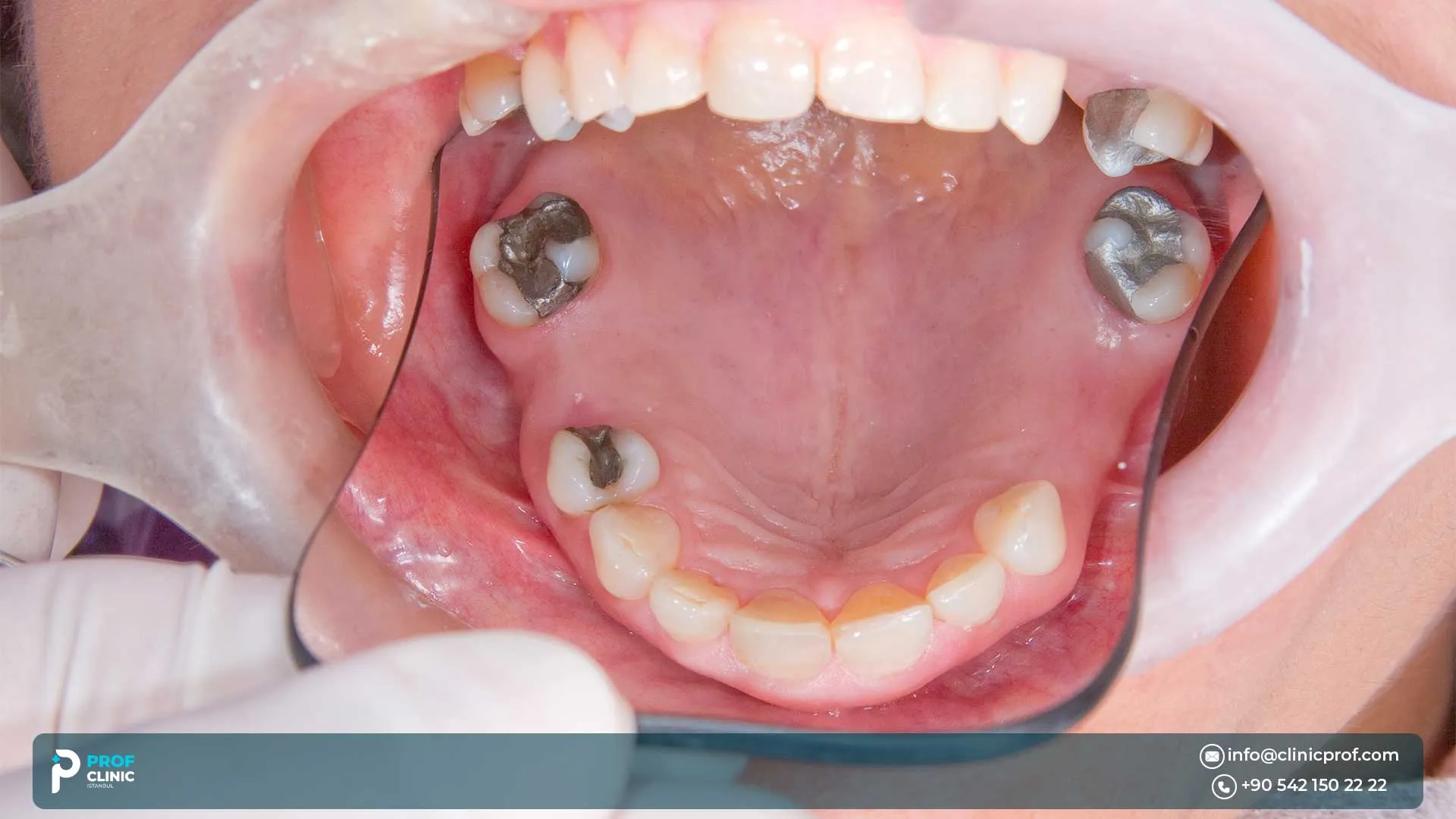
Being told that your jawbone is “too thin” or “too narrow” can make dental implants feel out of reach. Many patients worry that missing teeth, old dentures, gum problems, or years of bone shrinkage mean they have lost their chance to replace their teeth with implants. The good news is that a narrow ridge does not always end the implant plan. It simply means the case needs careful evaluation before choosing the safest route.
This guide explains how ridge expansion for dental implants are planned, when bone ridge expansion may help, when narrow ridge implants or bone grafting may be considered instead, and how Prof Clinic in Istanbul evaluates these options for patients from Turkey, the Gulf, Europe, the UK, the US, and other international markets.
What is ridge expansion for dental implants?
Bone ridge expansion planning may be considered when the jaw ridge is too narrow to hold an implant in a safe and stable position. The ridge is the part of the jawbone that supports teeth. After tooth loss, infection, gum disease, trauma, or long-term denture use, this area can lose width and volume.
In simple terms, narrow ridge implants means widening a narrow foundation before or during implant planning. The goal is to create enough usable bone width so the implant can be positioned more appropriately for chewing function, gum support, and the future crown or bridge.
- Ridge splitting.
- Alveolar ridge expansion.
- Ridge modification.
- Jaw ridge widening.
- Bone expansion for implants.
These terms are related, but the exact technique depends on your anatomy and treatment plan. Ridge expansion is not needed for every implant patient. Some patients already have enough bone width; others may need bone grafting, staged bone rebuilding, short or narrow-diameter implants, or another tooth replacement strategy.
For a broader understanding of implant treatment, review our Dental Implants in Turkey service before comparing advanced options.
If you have been told your jawbone is too narrow, send us your X-ray or scan via WhatsApp and ask our doctors whether ridge expansion, bone grafting, or another implant pathway should be considered.
Why can a bone ridge become too narrow for implants?
A bone ridge can become too narrow after tooth loss because the bone no longer receives the same chewing stimulation. Over time, the ridge may shrink horizontally, vertically, or both. Some patients still have enough height but not enough width, which is why narrow ridge implants require more careful planning.
Common reasons for a narrow ridge include:
- Long-term missing teeth.
- Infection around a tooth before extraction.
- Dental trauma or previous surgery.
- Pressure from removable dentures.
- Natural bone resorption after extraction.
- Previous failed dental or implant work.
- Periodontal disease or bone loss around previous teeth.
The key point is that bone height and bone width are different measurements. A patient may have enough vertical bone but still lack the width needed for an implant in the correct position. This is where 3D evaluation becomes important, because implant planning must consider bone volume, anatomical limits, bite forces, and the final restoration together.
Our guide to 3D Dental Implant Planning in Turkey explains why CBCT or CT-based planning can help dentists evaluate bone volume, implant angulation, depth, and future crown position before surgery.

Who may need bone ridge expansion before narrow ridge implants?
A patient may be considered for bone ridge expansion when the ridge is narrow but still has enough structure to be widened safely. Suitability depends on more than one measurement. The dentist must assess the bone, gum tissue, bite, medical history, and final restoration goals before recommending the technique.
A dentist may assess:
- Smoking or vaping habits.
- Bone width and bone height.
- Gum thickness and gum health.
- Diabetes control and general medical history.
- Bite forces, teeth grinding, and implant location.
- Whether infection or active gum disease is present.
- Whether the plan involves one tooth, several teeth, or a full-arch restoration.
- Whether immediate implant placement is realistic or staged treatment is safer.
Quick checklist: you may need an implant evaluation if…
- You were told your jawbone is “too thin” or “too narrow.”
- The missing tooth has been absent for months or years.
- You wear dentures and have noticed ridge shrinkage.
- You need implants in the front jaw where bone can be naturally thin.
- A dentist mentioned ridge splitting, grafting, or staged implant surgery.
- You had gum disease or infection near the missing tooth area.
- You are travelling to Istanbul and need a realistic timeline before booking flights.
Share your case details with our doctors via WhatsApp before travel, so the team can explain whether ridge expansion dental implants are worth discussing in your consultation.
How does Prof Clinic evaluate ridge expansion for dental implants in Istanbul
At Prof Clinic, ridge expansion is not treated as a one-size-fits-all solution. For patients with narrow jawbone, the first step is to understand whether the problem is mainly bone width, bone height, gum quality, bite load, or a combination of factors. This helps the dental team compare ridge expansion with bone grafting, narrow-diameter implants, short implants, sinus-related procedures, or staged implant placement.
A case-based evaluation may include:
- Reviewing your dental history and missing tooth area.
- Checking gum condition and oral hygiene.
- Reviewing X-rays or CBCT/CT imaging when available or clinically needed.
- Assessing whether the ridge limitation affects implant angle, depth, and crown position.
- Comparing ridge expansion with bone grafting, narrow-diameter implants, or delayed placement.
- Explaining how the plan may affect visit length, healing, and whether a second visit is needed for international patients.
This planning-led approach matches our wider implant workflow, where 3D imaging and personalized evaluation support more transparent treatment decisions. You can also learn about our Medical Team before requesting an implant assessment.
Before deciding on surgery in Istanbul, contact us with your photos, X-ray or CBCT if available, medical history, and treatment goals so the team can guide you toward the next evaluation step.
How does the bone ridge expansion procedure usually work?
The bone ridge expansion procedure is planned differently for each patient. The steps below explain the general pathway, not a fixed promise. Your actual sequence depends on clinical examination, imaging, anatomy, medical history, and whether the implant can be placed at the same time.
| Stage | What usually happens | Patient focus |
| Consultation and imaging | The dentist reviews your missing tooth area, bite, gum health, medical history, and X-rays or 3D imaging. | Ask whether the issue is bone width, bone height, or both. |
| Gum and medical review | Active gum disease, infection, heavy smoking, or uncontrolled medical factors may need attention first. | Be honest about medication, smoking, diabetes, and previous dental work. |
| Anesthesia discussion | Local anesthesia is commonly used; sedation may be discussed depending on the patient and procedure. | Ask what comfort plan fits your case. |
| Controlled ridge expansion | The clinician widens the narrow ridge gradually using a surgical technique selected for your anatomy. | Do not expect every case to follow the same surgical route. |
| Graft or membrane if needed | Bone graft material or a membrane may be added when the site needs extra support. | Ask whether grafting changes healing time or visit planning. |
| Implant placement timing | In selected cases, the implant may be placed during the same surgery; in others, delayed placement is safer. | Confirm whether you need one visit, staged care, or a second visit. |
Ridge expansion should not be described as painless. Anesthesia helps control pain during treatment, but swelling, tenderness, bruising, mild bleeding, and recovery discomfort can happen after surgery.
Same-day implant placement vs delayed placement after ridge expansion
Some patients want the implant placed at the same time as ridge expansion, but this decision depends on stability and safety. Same-day placement may be considered only when the implant can be placed securely and the bone, gum, and bite conditions support that plan.
Delayed placement may be recommended when the ridge needs time to stabilize, when grafting is more extensive, or when the dentist wants to protect the site during healing. This is common in more complex narrow ridge cases.
For a clearer explanation of staging, read our guide to One-Stage vs Two-Stage Dental Implants, which explains how bone quality, grafting, bite forces, smoking, diabetes control, and gum health can affect timing.
Then let’s discuss whether your narrow ridge implant case is more likely to follow a same-day, delayed, or staged pathway before arranging travel dates.
Ridge expansion vs bone grafting vs narrow ridge implants
Ridge expansion is one possible solution for a narrow jaw ridge, but it is not the only option. Patients often need help comparing bone ridge expansion with bone grafting, narrow-diameter implants, short implants, sinus-related procedures, or staged placement.
| Option | Best suited for | Main advantage | Question to ask |
| Ridge expansion | A narrow ridge with enough height and suitable bone structure. | May widen existing bone for implant planning. | Is my bone stable enough for expansion? |
| Bone grafting / GBR | Missing bone width, volume, or contour. | Can rebuild deficient areas before or during implant planning. | Will healing be needed before implant placement? |
| Narrow-diameter implants | Selected narrow spaces and lower-load situations. | May reduce the need for larger augmentation in some cases. | Is it safe for my bite and tooth position? |
| Short implants | Selected low-bone-height cases where anatomy limits vertical placement. | May reduce the need for some vertical augmentation in suitable cases. | Is my issue height, width, or both? |
| Staged implant placement | Complex cases, uncertain stability, grafting, or higher risk factors. | Allows healing before implant placement or restoration. | How many visits should I plan? |
| Sinus lift | Upper back jaw with low sinus or limited bone height. | Creates support in posterior upper jaw cases. | Is my problem near the sinus or mainly ridge width? |
For patients travelling to Turkey, this comparison matters because each option can change the treatment timeline. A narrow-diameter implant may sound simpler, but it is not suitable for every bite load or restoration type. Bone grafting may provide better support in some cases but may also require healing time. Ridge expansion may be efficient for selected patients, but only when the anatomy allows it.
Send via WhatsApp your X-ray or CBCT scan to discuss which option should be evaluated for your case: ridge expansion, bone grafting, narrow ridge implants, short implants, or staged placement.
Recovery after bone ridge expansion for dental implants
Recovery after bone ridge expansion varies according to the amount of expansion, whether grafting was added, whether implants were placed immediately, your oral hygiene, smoking status, medical history, and your body’s healing response.
After treatment, you may experience:
- Swelling.
- Bruising.
- Mild bleeding.
- Temporary diet changes.
- Tenderness or soreness.
- Difficulty chewing on the treated side.
- Follow-up visits to monitor healing.
- A need for careful cleaning around the surgical area.
| Phase | What to expect | Patient focus |
| First days | Swelling, tenderness, mild bleeding, and soft diet. | Rest, follow medication and cleaning instructions, and avoid smoking. |
| First weeks | Gum healing and gradual comfort improvement. | Attend follow-up, protect the site, and avoid hard chewing. |
| Bone healing period | The expanded or grafted area may continue developing. | Do not rush implant loading or final restoration. |
| Implant or restoration planning | Implant placement or final restoration may be planned depending on healing. | Confirm the next step with imaging and clinical review. |
Contact your clinic if you notice increasing swelling, fever, severe pain, persistent bleeding, pus, numbness, wound opening, or implant mobility. These symptoms do not automatically mean failure, but they should be checked promptly.
For more protection-focused guidance, read our blog on How to Prevent Dental Implant Failure in Turkey.
Risks and limits of ridge expansion for narrow ridge implants
A trustworthy consultation should explain both benefits and limits. Ridge expansion dental implants planning may help selected patients, but it is not suitable for every narrow ridge.
Possible risks and limitations include:
- Gum recession.
- Infection or delayed healing.
- Need for additional bone grafting.
- Need for staged implant placement.
- Graft complications if grafting is used.
- Fracture or instability of a very thin bone plate.
- Nerve-related considerations in the lower jaw.
- Sinus-related considerations in the upper jaw.
- Swelling, bruising, or postoperative discomfort.
- Prosthetic limitations if the final crown or bridge position is not ideal.
Ridge expansion may not be the right option if bone loss is severe, the ridge is too thin or unstable, gum disease is uncontrolled, oral hygiene is poor, smoking risk is high, or medical conditions affect healing. In these cases, your clinician may recommend guided bone regeneration, staged grafting, sinus-related procedures, different implant dimensions, or another tooth replacement plan.

Ridge expansion for dental implants at Prof Clinic in Turkey
After understanding how ridge expansion works, the next step is choosing a clinic that can evaluate your case carefully before treatment begins. At Prof Clinic in Turkey, ridge expansion dental implants are planned according to your bone width, tooth loss history, medical background, aesthetic goals, and travel schedule.
This is especially important for international patients coming to Istanbul. A narrow ridge case may affect the number of visits, healing time, implant timing, and whether bone grafting or staged treatment is needed. For this reason, we encourage patients to share their case details before booking flights, so the dental team can review the available information and guide them toward a realistic treatment plan.
Before contacting us, prepare:
- How long the tooth has been missing.
- A panoramic X-ray or CBCT scan if available.
- Clear smile photos and close-up photos of the missing tooth area.
- Your preferred travel dates and the maximum time you can stay in Istanbul.
- Whether you wear dentures or had previous implants, grafting, or failed dental work.
- Your main priority: function, front-tooth aesthetics, fixed teeth, fewer visits, or avoiding unnecessary surgery.
- Your medical history, medication list, allergies, smoking status, and diabetes status if relevant.
During your consultation, our doctors can review whether bone ridge expansion is suitable for your case, whether narrow ridge implants can be placed safely, and whether your treatment should be completed in one stage or planned over more than one visit.
A useful next step is to bring case-specific questions to your consultation. Our blog on Questions to Ask an Implant Dentist can help you prepare before committing to treatment.
Speak with us before booking flights. Send your scan, X-ray, photos, and treatment goals via WhatsApp to request a personalized implant evaluation in Istanbul.

FAQs about ridge expansion for dental implants
Is ridge expansion always needed before dental implants?
No. Ridge expansion is only considered when the jaw ridge is too narrow for stable implant planning. Some patients may need bone grafting, narrow-diameter implants, staged treatment, or no bone procedure at all, depending on imaging and clinical evaluation.
Is bone ridge expansion the same as bone grafting?
No. Bone ridge expansion aims to widen existing bone in selected cases, while bone grafting adds bone or bone-like material to rebuild deficient areas. Some cases may involve both, depending on the defect.
Can dental implants be placed at the same time as ridge expansion?
Sometimes, but not always. Same-day placement depends on bone quality, implant stability, gum health, bite pressure, and the amount of expansion needed. In more complex cases, delayed placement may be safer.
Are narrow ridge implants possible without ridge expansion?
In selected cases, yes. Narrow-diameter implants or alternative implant planning may be possible, but they are not suitable for every tooth position, bite force, or restoration type. A 3D evaluation is often needed to compare options safely.
How do I know if my jaw ridge is too thin for implants?
You cannot confirm this by looking in the mirror. The dentist needs clinical examination and imaging to measure bone width, bone height, nearby structures, and the expected position of the future crown or bridge.
How long does healing take after bone ridge expansion?
Healing varies by case. Some patients may need a staged healing period before implant placement or final restoration, especially if grafting was added or the ridge needs time to stabilize.
Can international patients send scans before travelling to Istanbul?
Yes. If you already have a panoramic X-ray or CBCT scan, send it with your photos, medical history, and treatment goals. Online review can help with preliminary planning, but the final decision is made after examination in Istanbul.