If you’ve been told you lack the bone density for traditional implants, or you’re struggling with loose, “floating” dentures, you aren’t out of options. At Prof Clinic, we use mini dental implants in Turkey (MDI) to provide immediate stability without the need for invasive bone grafts or long recovery times.
In this guide, we break down why these small but mighty anchors are the smartest choice for 2026:
- Why slim diameters work where standard implants can’t.
- Understanding why narrow implants cost is more budget-friendly.
- How our 20-minute “flapless” surgery delivers same-day results.
- Identifying the best candidates for small implants in Turkey.
What Are Mini Dental Implants (MDI)?
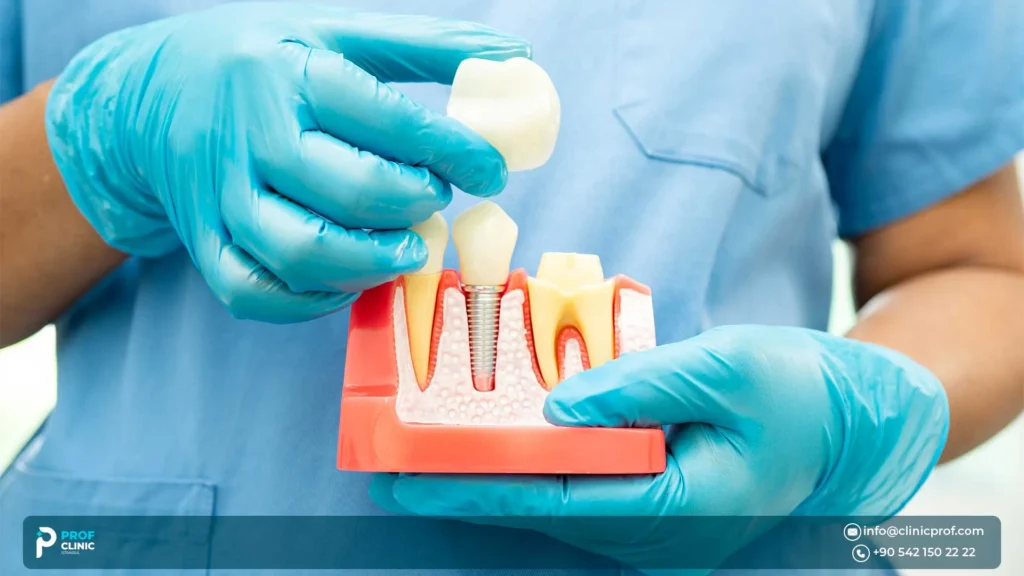
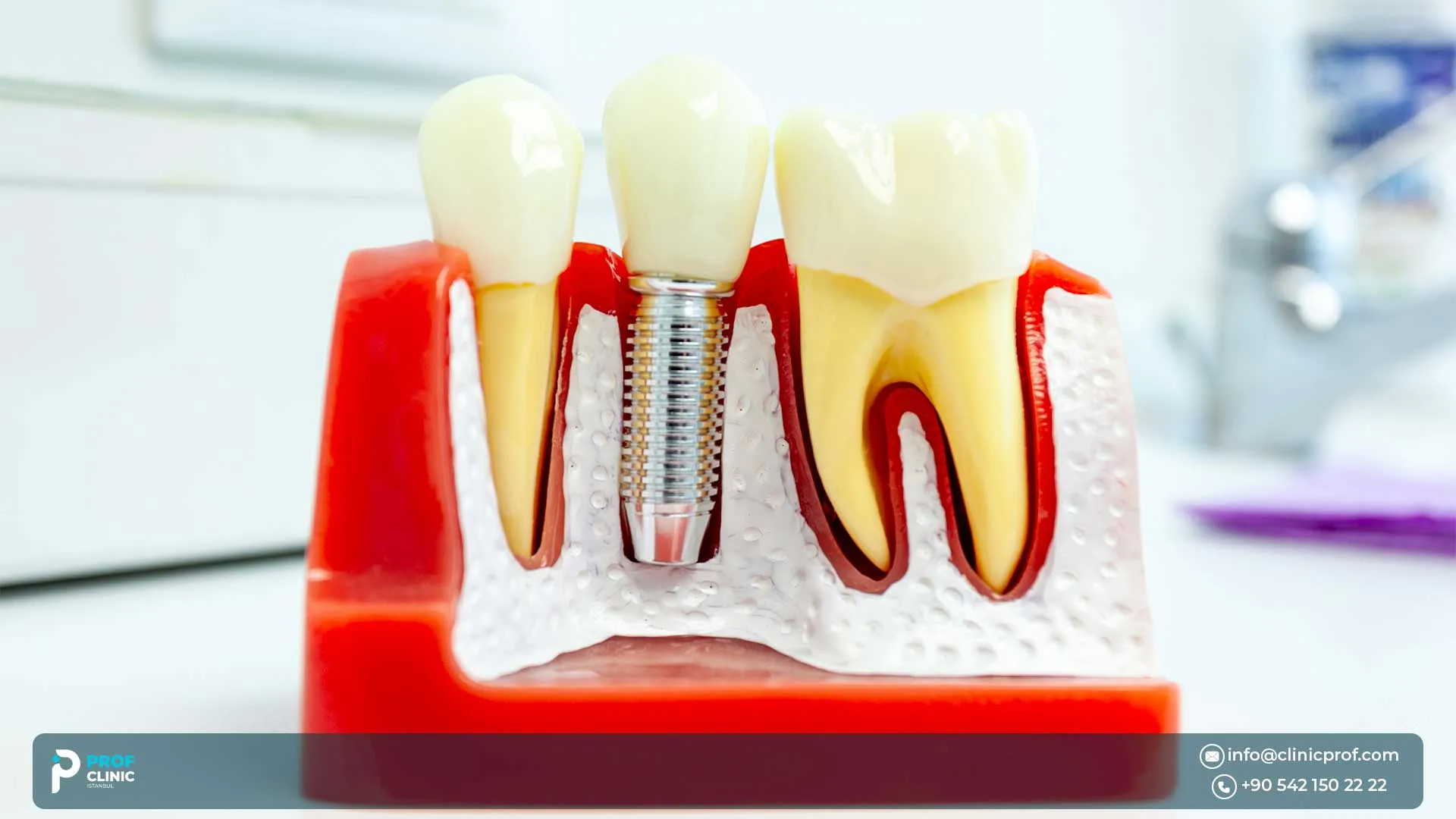
Mini Dental Implants (MDI) are a specialized category of dental implants characterized by their ultra-slim diameter, typically ranging from 1.8 mm to 2.9 mm. Unlike traditional implants which consist of two pieces (the screw and the abutment), an MDI is a single, solid titanium piece with a ball-shaped top that acts as a secure anchor for your teeth.
At Prof Clinic Istanbul, we use these “small but mighty” screws primarily for:
- Denture Stabilization: Snapping loose dentures firmly into place.
- Narrow Ridges: Providing a solution when the jawbone is too thin for standard implants.
- Space-Restricted Areas: Ideal for replacing small teeth like incisors.
Because of their design, MDI placement is minimally invasive, often requiring no incisions or stitches, making them a faster and more comfortable alternative for many patients.
Types of Mini Implant
At Prof Clinic, we recognize that every jawbone is different. While systems like “All-on-4” are popular, they aren’t always possible for patients with severe bone resorption. That’s why we offer mini dental implants in Turkey as the “Smart Alternative”—specifically engineered to fit where others can’t.
Our specialized categories of small implants in Turkey include:
1. Ball-O-Ring Mini Implants
This is the gold standard for patients struggling with “floating” lower dentures. The implant features a ball-shaped head that snaps into a socket inside your denture. At Prof Clinic, our prosthodontists use this system to provide instant stability for patients with significant bone loss, allowing the denture to snap on and off with ease.
2. Fixed Crown Mini Implants:
Designed for narrow gaps where a standard $3.5\text{–}4\ mm$ screw is too wide. These implants allow us to cement a permanent zirconia or E-max crown directly onto the post. This is the ideal solution for replacing small incisors or filling tight spaces without compromising the health of adjacent teeth.
3. Orthodontic Mini-Implants (TADs)
Utilized within our specialized Orthodontics department, these small implants in Turkey act as Temporary Anchorage Devices (TADs). They provide a fixed point to move teeth more efficiently during braces or aligner treatments and are easily removed once the perfect alignment is achieved.
4. Immediate Load MDIs (Same-Day Teeth)
Engineering meets speed. These implants feature aggressive threads designed for high “primary stability.” This allows our team to perform Immediate Loading, meaning your crown or stabilized denture can be attached in the same visit—often just 20 minutes after placement.
Not sure which type fits your bone profile? Whether you need to stabilize a loose denture or fill a narrow gap, our 3D AI-driven diagnostic tools will determine the perfect fit for you. Don’t let bone loss hold you back from a perfect smile. Click here to book your free 3D consultation at Prof Clinic Today
Also read: Best Mini Dental Implants (MDI): pros, cons, cost
How Do Mini Implants Differ From Standard (Traditional) Implants?
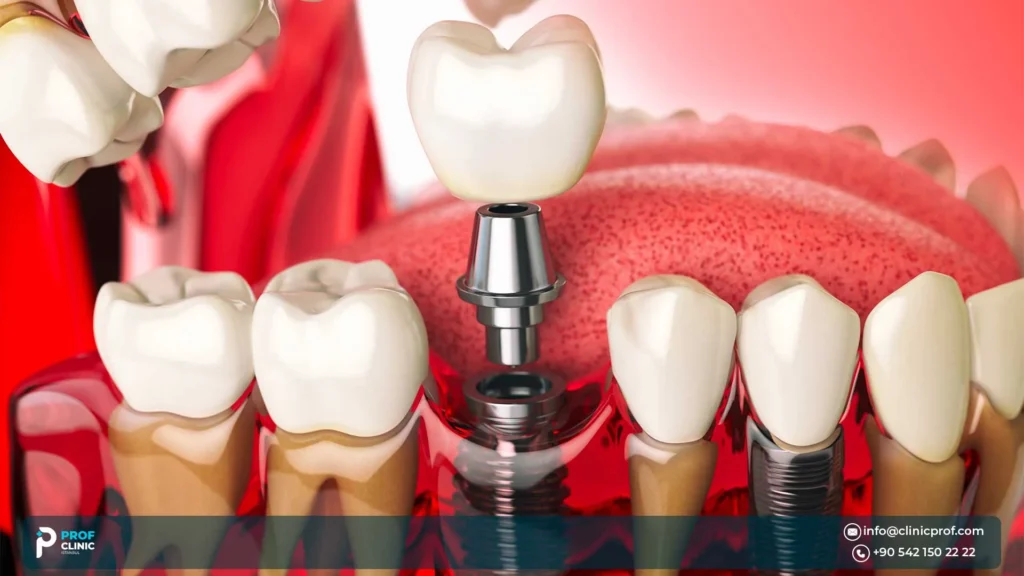
To understand why mini dental implants in Turkey are often called a “small but mighty” alternative, it is essential to compare them to their full-sized counterparts. While both serve to replace missing tooth roots, their engineering and surgical requirements differ significantly.
| Feature | Standard Implants | Mini Implants (MDI) |
| Diameter | Large ($3.5\ mm+$) | Slim ($<3\ mm$) |
| Structure | 2 Pieces (Screw + Abutment) | 1 Solid Piece |
| Bone Needs | High volume required | Ideal for thin bone |
| Surgery | Invasive (often stitches) | Minimally invasive |
| Narrow Implants Cost | Higher | More Affordable |
At Prof Clinic, we categorize these differences into four main pillars:
1. Size and Diameter
The most obvious difference is the width.
- Standard Implants: Typically measure $3.5\ mm$ to $6\ mm$ in diameter.
- Mini Dental Implants (MDI): Measure between $1.8\ mm$ and $2.9\ mm$.
This smaller profile is what makes them “narrow implants,” allowing them to fit into jawbones that have experienced significant thinning or resorption.
2. Structural Design
- Traditional: Usually a two-piece system. The titanium screw is placed first, and an “abutment” (the connector) is screwed into it later.
- MDI: A single, solid piece. The screw and the connector are integrated into one unit. This removes the risk of a screw loosening between the two parts over time.
3. Surgical Invasiveness and Bone Requirements
- Standard Implants: Often require “flapping” the gum (making an incision) and may necessitate bone grafting if the jaw isn’t wide enough. This leads to a longer healing period.
- Mini Implants: Because of their slim design, they can be placed directly through the gum tissue without heavy surgery. According to clinical data from the Journal of Oral Implantology, MDIs are the preferred choice for patients who are medically fragile or lack the bone volume for traditional surgery.
4. Loading Time and Healing
- Standard: Requires a “waiting period” of 3 to 6 months for the bone to fuse (osseointegration) before the final tooth is attached.
- MDI: Often supports immediate loading. Since they are less invasive, patients at Prof Clinic can frequently have their dentures snapped onto the MDIs the very same day.
The Advantages of Mini Dental Implants
Choosing mini dental implants Turkey offers several distinct advantages, especially for patients who have been told they are not candidates for traditional implants. At Prof Clinic, we leverage these “small but mighty” screws to provide faster, more affordable, and less invasive results.
The pros of Mini Dental Implants
1. Minimally Invasive Procedure
Unlike standard implants that often require cutting the gums and placing stitches, MDI placement is “flapless.” We use a specialized 2026 micro-drilling technique to place the implant directly through the gum tissue. This leads to:
- Less bleeding and swelling.
- Minimal post-operative pain.
- A faster procedure (often completed in just 20 minutes per implant).
2. No Bone Grafting Required
One of the biggest hurdles for dental patients is lack of bone. Traditional implants need a wide foundation, but small implants Turkey are so slender they can fit into narrow or resorbed ridges. This eliminates the need for expensive and painful bone graft surgeries, which can take up to 6 months to heal.
3. Immediate Results (Same Day Teeth)
Because MDIs are minimally invasive, they achieve immediate “mechanical” stability. At Prof Clinic, this often allows us to:
- Snap your denture onto the implants immediately.
- Attach a temporary crown on the same day.
- Avoid the 3-6 month waiting period required by traditional methods.
4. Significant Cost Savings
The narrow implants cost is a major advantage. Because the hardware is smaller and the surgical process is simplified (no grafts, fewer visits, no stitches), the total price is typically 40% to 60% less than traditional implants.
5. Preservation of Facial Structure
Just like full-sized implants, mini dental implants stimulate the jawbone. This prevents the “sunken look” and facial collapse that typically occurs after years of wearing loose, traditional dentures.
According to the Journal of Oral Implantology, mini implants have a success rate of over 95% when used for denture stabilization, making them a reliable long-term solution for aging patients.
Also read: Best Dental Implants in Istanbul Turkey

Who Are Good Candidates for Mini Implants in Turkey?
Not everyone is a candidate for traditional dental implants, but the “small but mighty” design of mini dental implants in Turkey opens the door for many who were previously told “no.” At Prof Clinic Istanbul, we use these to solve specific challenges that standard implants cannot address.
You may be an ideal candidate for small implants in Turkey if you fall into one of the following categories:
Patients with Significant Bone Loss
After years of missing teeth, the jawbone naturally thins (resorption). While traditional implants require a wide bone base or expensive bone grafting, MDI can often be placed in narrow ridges. If you want to avoid the $6$-month healing time of a bone graft, mini implants are your best alternative.
Long-term Denture Wearers
If your lower denture “floats,” slips, or makes eating difficult, you are the perfect candidate for MDI stabilization. We can often retro-fit your existing denture to “snap” onto four mini implants, providing instant security and comfort.
Patients Seeking Minimally Invasive Care
Because mini dental implants Turkey do not require a surgical “flap” (cutting the gum), they are ideal for:
- Elderly patients who want to avoid long surgeries.
- Patients with medical sensitivities who need a faster healing time.
- Those with “dental phobia looking for a procedure that takes less than $20$ minutes per site.
Replacing Small Teeth
Mini implants are the “gold standard” for replacing teeth in tight spaces, such as:
- Lower incisors.
- Small upper lateral incisors.
- Any area where a standard $3.5\text{–}4\ mm$ screw would be too wide for the gap.
Who Should Avoid Mini Implants?
While versatile, MDI is not for everyone. You may not be a candidate if you have:
- Severe Bruxism: Chronic teeth grinding can put too much lateral force on a thin mini implant.
- Uncontrolled Diabetes: This can hinder the “osseointegration” process where the bone bonds to the titanium.
- Inadequate Vertical Bone: While they work in narrow bone, they still require a certain height to be anchored safely.
Also read: Types of Dental Implants: Complete Guide 2026
What are the Primary Uses of Mini Dental Implants?
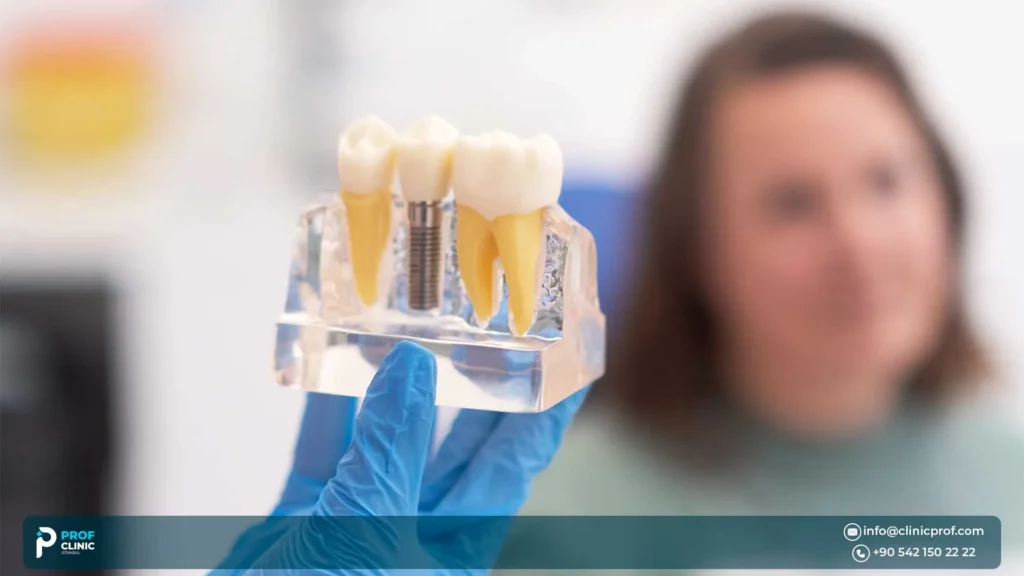
While they are small in diameter, the primary uses of mini dental implants in Turkey are diverse, offering a “mighty” solution for complex dental challenges. At Prof Clinic, we utilize these specialized implants to bridge the gap between traditional dentures and full-scale surgical implants.
1. Denture Stabilization (The Snap-On Solution)
The most common and impactful use for MDI is anchoring loose dentures. Many patients struggle with lower dentures that slip, wobble, or cause sores.
- How it works: A series of 4 to 6 mini implants are placed in the jaw. The ball-shaped heads of the implants “snap” into O-rings built into your denture.
- The Result: Immediate stability that allows you to eat, speak, and laugh without the fear of your teeth falling out.
2. Replacing Small Teeth in Narrow Spaces
Traditional implants are often too wide for the gaps left by smaller teeth, such as the lower incisors or small upper lateral incisors.
- The Solution: Small implants in Turkey provide a slender root that fits perfectly into these tight spaces. According to the American Academy of Implant Dentistry (AAID), mini implants are the preferred clinical choice when inter-dental space is less than $5\ mm$.
3. Support for Patients with Thin Jawbones
When a patient has experienced significant bone resorption (thinning), they are often told they need a bone graft before getting standard implants.
- The Use Case: Because narrow implants require much less bone volume, they can be placed in ridges that are otherwise too thin, effectively bypassing the need for expensive and invasive bone grafting surgery.
4. Temporary Anchorage Devices (TADs) in Orthodontics
In 2026, many orthodontic treatments use mini implants as “anchors” to move teeth more precisely.
- The Function: They provide a fixed point to pull or push other teeth. Once the teeth are correctly aligned, these temporary MDI units are simply unscrewed and removed.
5. Single or Multi-Unit Bridges
In specific cases where the biting force is not excessive (such as the front of the mouth), mini dental implants can support fixed bridges. This is a popular cost-effective choice for patients looking for a permanent, non-removable solution on a budget.
Did You Know? Research published in the Journal of Oral Rehabilitation shows that mini-implant retained dentures can improve chewing efficiency by up to 80% compared to traditional “floating” dentures.
Also read: Dental Implant Pain: Causes, Period, & Solutions
How Does Mini Dental Implant Surgery Work at Prof Clinic Istanbul?
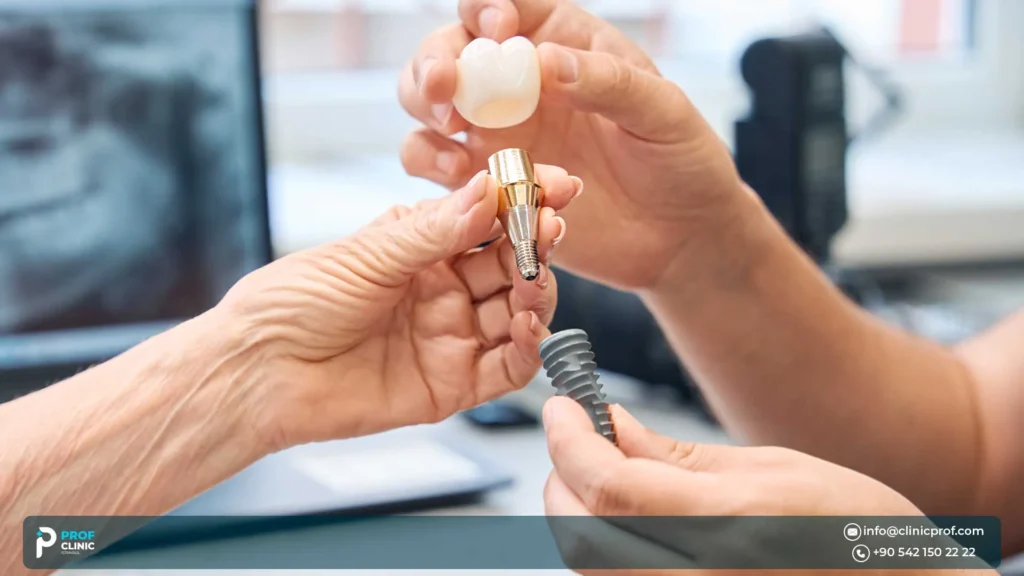
The surgical process for mini dental implants in Turkey at Prof Clinic Istanbul is designed to be a streamlined, “patient-first” experience. By integrating advanced 3D imaging with minimally invasive techniques, we ensure the procedure is fast, precise, and virtually pain-free.
Stage 1: Digital 3D Mapping & Planning
At Prof Clinic, accuracy starts before you even sit in the chair. We use 3D CBCT scanning and Digital Smile Design to create a high-definition map of your jaw. This allow our surgeons to identify the densest bone areas and virtually plan the exact angle of each mini implant, ensuring 100% precision and safety.
Stage 2: Painless Local Anesthesia
We prioritize your comfort using advanced local anesthesia techniques. Because MDI is minimally invasive, there is no need to “flap” or cut the gum tissue. Most of our patients describe the sensation as being even lighter and more comfortable than a routine dental filling.
Stage 3: Flapless Micro-Drilling & Placement
Using a “flapless” technique, our specialists create a tiny pilot hole directly through the gum. The single-piece titanium MDI is then threaded into place. Its self-tapping design compresses the bone, creating “instant primary stability.”
- Duration: Placing a single mini implant at Prof Clinic typically takes only 10 to 15 minutes.
Stage 4: Immediate Loading (Same-Day Results)
This is where Prof Clinic excels. Because mini implants achieve immediate stability, we can often perform Immediate Loading. Your existing or new denture is fitted with O-ring housings and “snapped” onto the implants in the same visit. You arrive with missing teeth and leave with a functional, secure smile.
Stage 5: VIP Aftercare & Rapid Recovery
With no incisions or stitches, the healing process is incredibly fast. As part of our all-inclusive package, we provide 12 months of structured aftercare. Most patients report:
- Zero to minimal swelling.
- The ability to return to normal daily activities within 24 hours.
- A celebratory soft meal the very same evening.
Also read: What do Dental Implants Look Like?
| Feature | Traditional Surgery | Prof Clinic MDI Surgery |
| Technique | Invasive (Scalpel & Flaps) | Minimally Invasive (Micro-hole) |
| Digital Tools | Standard X-ray | 3D CBCT & AI Planning |
| Stitches | Required (Multiple) | None Required |
| Time per Implant | 45 – 60 Minutes | 10 – 15 Minutes |
| Loading | Wait 3–6 Months | Same-Day Loading possible |
What is the Success Rate of Mini Dental Implants in Turkey?
The success rate of MDI is remarkably high, especially when used for their primary purpose: denture stabilization.
- Denture Stabilization (Lower Jaw): Studies and clinical trials, such as those documented by the National Institutes of Health (NIH), show a success rate between 95% and 98%. Because the lower jawbone is typically denser, it provides an excellent foundation for small implants Turkey.
- Single Tooth Replacement: When used to replace small teeth (like incisors) in the aesthetic zone, success rates remain high at approximately 92% to 95%, provided there is no excessive biting force (bruxism).
Factors That Influence Success at Prof Clinic
At Prof Clinic, we don’t leave success to chance. We optimize the survival rate of your small implants through three critical factors:
- Primary Stability: We ensure the implant reaches a specific torque during placement. Because MDIs are “self-tapping,” they compress the bone as they are inserted, creating an immediate, tight grip.
- 3D AI-Guided Planning: By using 3D CBCT scans, we avoid placing implants in areas of low bone density. This “GPS-guided” approach reduces human error and maximizes the implant-to-bone contact.
- Strict Candidacy Screening: We only proceed with MDI if the patient meets the health requirements. Success rates drop in heavy smokers or patients with uncontrolled diabetes; therefore, we provide a pre-treatment plan to manage these factors first.
While some older dental literature viewed mini implants as “temporary,” 2026 clinical standards recognize them as a long-term solution. With proper oral hygiene and regular check-ups at Prof Clinic, mini implants can last 10 to 15 years or more.
| Procedure Type | Traditional Implants | Mini Dental Implants (MDI) |
| Global Success Rate | 97% – 98% | 95% – 97% |
| Failure Risk Factor | Surgical complications | Lateral force (grinding) |
| Stability Source | Osseointegration (Bone growth) | Mechanical Grip + Osseointegration |
Disadvantages of Mini Dental Implants: Is Small Always Better?
At Prof Clinic, we believe in “Right Fit, Not Just Fast Fit.” While mini dental implants Turkey are a miracle for many, they are not a universal replacement for standard implants. Understanding their limitations is key to a long-lasting smile.
1. Lower Bite Force Tolerance
Due to their slender diameter (under $3\ mm$), mini implants have less surface area to bond with the bone. This means they cannot withstand the heavy chewing pressure of back teeth (molars) as well as traditional implants. They are “small but mighty” for dentures, but may struggle with the $500\text{–}700\ psi$ of force generated in the back of the mouth.
2. Increased Risk of Fracture
Because the titanium post is much thinner, there is a slightly higher risk of the implant bending or snapping if placed under extreme stress. This is why we rarely recommend MDI for patients with severe bruxism (chronic teeth grinding), as the constant lateral force can fatigue the metal over time.
3. Reliance on Multiple Units
While one standard implant can often support a large molar, you might need two or three mini implants to support that same load. This can sometimes complicate cleaning and hygiene between the tiny posts.
4. Bone Health Requirements
It is a common misconception that mini implants require no bone. While they work in narrow ridges, they still require adequate vertical bone height. If the bone is too shallow or too soft (low density), even a mini implant may fail to achieve the necessary stability.
5. Not Always a “Permanent” Single-Tooth Solution
In the dental world, MDIs are often seen as “transitional” or specifically for denture stabilization. For a single missing tooth in a high-impact area, a traditional implant is still the “Gold Standard” for lifetime durability.
Small is better when bone width is the primary obstacle. However, if you have sufficient bone and a heavy bite, the structural strength of a traditional implant provides better long-term value.
Also read: Does Getting Dental Implants Hurt? Before, During & After
Frequently Asked Questions (FAQs)
How much does a mini dental implant cost in Turkey vs. Traditional implants?
Mini implants are generally more affordable because they involve fewer components and rarely require expensive bone grafting. However, the total investment depends on your specific bone condition and the number of implants needed.
Are mini dental implants as strong as traditional implants?
While MDIs are made of the same high-grade titanium, they have a smaller surface area. They are “strong enough” for stabilizing dentures and replacing small front teeth, but they are not designed to handle the heavy grinding forces of back molars as well as standard implants.
How long do mini implants last?
With proper care, mini dental implants can last 10 to 15 years, and in many cases, much longer. Their longevity depends on your oral hygiene and ensuring they aren’t “overloaded” by excessive biting force.
Can I get mini implants if I have severe bone loss?
Yes. This is their primary advantage. Because they are “narrow implants,” they can often be placed in jawbones that have thinned significantly, typically without the need for the expensive bone grafting required by traditional implants.
Is the mini dental implant procedure painful?
Most patients report minimal discomfort. Because the procedure is “flapless” (no cutting or stitches), it is much less invasive than traditional surgery. Most people return to their normal routine within 24 to 48 hours.
Can you eat with mini implants immediately?
At Prof Clinic, if we are using MDIs to stabilize a denture, you can often “snap” it in and eat a soft meal the same day. However, we recommend a soft-food diet for the first 2 to 4 weeks to allow the bone to fully bond with the titanium.
Why choose Turkey and Prof Clinic Istanbul for your mini dental implants?
Turkey is a global leader in dental tourism, offering 2026 technology at a fraction of Western costs. Prof Clinic stands out by providing AI-guided 3D planning, internationally certified surgeons, and premium-grade materials tailored to each patient’s bone profile.
Are mini dental implants permanent?
Yes, they are considered a permanent tooth replacement. They are designed to fuse with your bone (osseointegration) just like standard implants, making them a long-term fixture in your mouth.
Can mini implants be done in one day?
Absolutely. One of the highlights of mini dental implants in Turkey is the “Same Day” factor. The surgery usually takes less than 30 minutes, and temporary teeth or dentures are often attached in that same appointment.
Can you eat with mini implants?
One of the most appealing features of mini dental implants in Turkey is how quickly you can return to eating. Because the procedure is minimally invasive and the implants achieve instant mechanical stability, the recovery timeline is much shorter than with traditional implants.