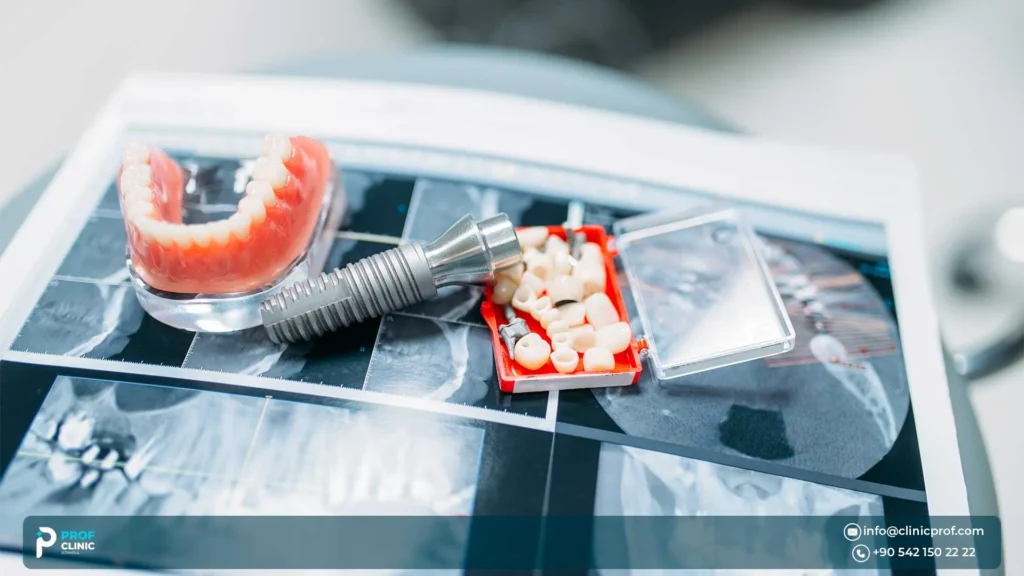
When patients search for implant-supported bridge vs traditional bridge, they usually want a clear and practical answer. A traditional bridge is supported by neighboring natural teeth, while a bridge on implants is anchored to dental implants placed in the jawbone.
A traditional bridge may be the quicker option at the start. An implant-supported bridge may be the better long-term choice when several teeth are missing in a row or when preserving nearby healthy teeth matters. The right option depends on your bone, gums, bite, and treatment goals.
If you are comparing treatment options in Turkey or planning dental care in Istanbul, a case-specific review is always more useful than a general online comparison.
If you are comparing bridge treatment options in Turkey, we can review your case, scans, or dental photos and help you understand whether an implant-supported bridge or a traditional bridge makes more sense for your situation in Istanbul.
Medical note: This content is for educational purposes only and does not replace a clinical examination, imaging, or advice from a qualified dentist or oral surgeon.
Implant-supported bridge vs traditional bridge in Turkey: How do they work?
Both options are fixed solutions used to replace missing teeth, but they are supported in different ways. In an implant-supported bridge, the restoration is attached to dental implants placed in the jawbone. In a traditional bridge, the restoration is supported by the natural teeth on each side of the gap.
This distinction is especially important when two or more teeth are missing next to each other. At that point, the decision is not only about filling the space. It is also about choosing the type of support behind the restoration and understanding how each treatment is planned.
An implant-supported bridge is built on implants that act as artificial tooth roots. After clinical evaluation and imaging, the implants are placed in the jaw and later used to support the final bridge. A bridge on implants does not depend on neighboring natural teeth for anchorage.
A traditional bridge works differently. It uses the teeth beside the gap as support, which usually means those teeth are prepared so crowns can hold the bridge in place. The false tooth or teeth sit between these supporting crowns to restore the missing area.
For patients comparing an implant bridge or tooth bridge in Turkey or Istanbul, this is the first point to understand before looking at treatment time, bone support, effect on nearby teeth, and long-term value.
Also read: Dental Implant vs Bridge
Implant-supported bridge vs traditional bridge in Turkey: Key differences that affect your decision
The clearest way to compare implant-supported bridge vs traditional bridge is to look at the treatment differences side by side. For patients considering care in Turkey or Istanbul, these differences often shape the final decision more than the headline price alone.
| Factor | Implant-Supported Bridge | Traditional Bridge |
| Support | Anchored to dental implants in the jaw | Supported by neighboring natural teeth |
| Effect on adjacent teeth | May avoid preparing healthy nearby teeth | Usually requires reshaping support teeth |
| Bone support | Replaces root function through implants | Restores the gap but does not replace the missing root |
| Treatment time | Usually longer because of surgery and healing | Often faster because no implant healing is needed |
| Invasiveness | Requires implant placement | No implant surgery, but tooth preparation is usually needed |
| Cleaning | Needs careful cleaning around and under the bridge | Also needs cleaning under the bridge and around abutment teeth |
| Repairs and maintenance | Depends on implant health, bridge design, and follow-up | Depends on tooth health, bridge condition, and gum support |
| Best-fit scenarios | Multiple adjacent missing teeth, healthy neighboring teeth, longer spans | Faster route, no surgery preference, adjacent teeth already need crowns |
The table gives a quick overview, but the real decision depends on how these differences apply to your teeth, bone support, treatment goals, and timeline.
Effect on neighboring teeth
For many patients, this is one of the most important parts of the comparison. A traditional bridge usually requires the teeth beside the gap to be reshaped so they can support crowns and hold the bridge in place. If those neighboring teeth are already heavily restored, that may feel acceptable. If they are healthy and untouched, some patients hesitate because that preparation is irreversible.
A bridge on implants may restore the missing area without using healthy adjacent teeth as anchors. That can make a meaningful difference when preserving natural tooth structure is a priority. For patients exploring treatment in Turkey or Istanbul, this is often one of the main reasons an implant-based plan is considered more carefully.
Support and stability
Support is at the center of the whole decision. An implant-supported bridge is anchored to implants placed in the jaw, while a traditional bridge relies on natural teeth for support.
This matters most in longer spans or when several teeth are missing next to each other. The issue is not simply which option is “stronger” in general, but how the restoration is supported and how chewing forces are managed in your specific case. Bite pattern, span length, and overall restorative design all influence which approach makes more clinical sense.
Bone support and long-term oral changes
Implants are discussed differently from traditional bridges because they replace the missing root as well as support the restoration above the gumline. A traditional bridge fills the visible gap, but it does not replace the root underneath.
That difference matters when planning treatment for multiple missing teeth and thinking beyond the immediate cosmetic result. It should not be exaggerated, but it is medically relevant when assessing long-term support and how the area may change over time. Patients who want to explore this side of treatment in more detail can continue to our Dental Implants in Turkey page.
Treatment Time and Recovery
A traditional bridge is often completed faster because it does not require implant placement or a healing period after surgery. In many cases, treatment moves from tooth preparation to impressions or scans and then to final fitting over a shorter timeline.
An implant-supported bridge usually takes longer because the implants need time to heal and integrate with the jaw before the final bridge is fitted. Depending on bone condition, case complexity, and treatment planning, this process may take several months rather than several weeks. For patients travelling for dental care in Istanbul, this timing can affect the number of visits and the overall treatment plan, so it is an important trade-off to understand early.
Cleaning, maintenance, and long-term expectations
Both options need daily cleaning and regular professional follow-up. Neither is maintenance-free. Patients often focus on the bridge itself and underestimate how important it is to clean under the restoration and around the surrounding gum tissue.
Depending on the design, your dentist may recommend floss threaders, interdental brushes, or other cleaning tools. Long-term performance depends less on marketing claims and more on hygiene, gum health, bite forces, and follow-up care. Instead of asking which option “lasts forever,” it is usually more useful to ask which one suits your oral condition and which one you are realistically prepared to maintain.
If preserving nearby teeth, treatment time, or long-term support is your main concern, you can request a dentist-reviewed comparison from Prof Clinic before deciding on treatment in Istanbul.
Also read: Dental Implant Procedure Time
When is a bridge on implants often the better choice in Turkey?
A bridge on implants is often the better choice when multiple missing teeth sit next to each other and the patient wants a fixed restoration without cutting down healthy neighboring teeth. It may also make more sense when there is no strong tooth on both sides of the gap, or when the span is long enough that support design becomes more important.
This option is commonly considered in cases such as:
- several adjacent missing teeth in one area
- healthy neighboring teeth that you want to preserve
- longer gaps where tooth-supported design may be less ideal
- cases where the treatment goal includes implant-based support rather than relying on natural abutment teeth
That said, preference alone is not enough. Bone quality, gum health, bite balance, medical history, and imaging findings all shape whether an implant-supported bridge is appropriate. If you already have an X-ray or recent photos, sending them to our doctors can help you get a more personalized bridge-versus-implant opinion. You can also review the Medical Team before taking the next step.
When may a traditional bridge still make sense in Turkey?
A traditional bridge may still be a practical choice for patients who want a faster fixed solution and prefer to avoid surgery. It can also make sense when the neighboring teeth already need crowns or significant restoration, because those teeth may already be part of the treatment plan.
In real life, patients do not choose treatment based on one factor alone. Some prioritize speed. Some want to avoid surgery. Some need to work within a treatment schedule or a staged budget. In those situations, a traditional bridge is not automatically a poor alternative. It may be a reasonable restorative choice for the right case.
Keeping this balance is important. An ethical comparison article should not push implants as the answer for everyone. If you want a wider overview of general trade-offs, our Dental Implant vs Bridge guide is a helpful companion page.
Implant-supported bridge vs Traditional bridge in Istanbul: Treatment timeline, healing, and aftercare
No two cases follow exactly the same path. Bone support, gum health, bite forces, the number of missing teeth, and the condition of the surrounding teeth all influence the treatment plan. Still, most patients feel more confident when they understand the general sequence before deciding between the two options.
With an implant-supported bridge, treatment usually begins with consultation, imaging, and case planning. The implants are then placed, followed by a healing period before the final bridge is fitted. Some patients may use a temporary solution during this stage, and some cases may require additional bone-related planning before treatment can move forward.
With a traditional bridge, the process is usually more direct. The supporting teeth are prepared, impressions or digital scans are taken, and the bridge is then made and fitted. Although this route is often faster, the supporting teeth still need long-term monitoring because they carry the bridge.
For patients comparing treatment in Turkey or planning care in Istanbul, this part of the decision often matters as much as the restoration itself. The question is not only which option replaces the missing teeth, but also which treatment pathway better fits your timeline, comfort level, and long-term plan.
For patients planning dental care in Istanbul, a pre-travel case review can help clarify how many visits may be needed, whether healing time affects the schedule, and which treatment route fits the case more realistically.
Implant-supported bridge timeline
An implant-supported bridge usually involves consultation, imaging, treatment planning, implant placement, healing, and then final bridge fitting. In some cases, the sequence also includes temporary restorations or extra planning related to bone support.
There is no single timetable that suits everyone. Healing response, bone condition, and case complexity can all affect how long the process takes. That is why patients should see the timeline as a personalized treatment pathway, not a fixed promise.
Traditional bridge timeline
A traditional bridge is usually completed over a shorter timeline. The common stages are examination, preparation of the supporting teeth, impressions or scans, a temporary bridge when needed, and final placement.
For many patients, this feels like the simpler route because it does not involve implant surgery or healing after implant placement. Even so, the trade-off should be clear from the start: the adjacent teeth usually need irreversible preparation to support the bridge.
Aftercare and daily maintenance
Whether you choose a bridge on implants or a tooth-supported bridge, aftercare remains part of the treatment commitment. Both options need daily cleaning, routine review visits, and attention to gum health over time.
Your dentist may recommend floss threaders, interdental brushes, or other cleaning tools depending on the bridge design. The exact routine should always be based on your own case, because good long-term results depend not only on the treatment itself, but also on how well the restoration is maintained.
Implant-supported bridge vs traditional bridge in Turkey: Cost factors and long-term value
When comparing implant-supported bridge vs traditional bridge, cost should not be reduced to a single online number. The real cost depends on the clinical design of the case, the number of missing teeth, the condition of the surrounding teeth and bone, and the type of restoration being planned.
A more useful way to look at cost is to separate upfront treatment cost from long-term restorative value. Some patients focus on what treatment costs at the beginning. Others also want to know how the chosen option may affect nearby teeth, maintenance needs, and future treatment planning over time.
| Cost driver | Why it matters |
| Number of missing teeth | A longer span changes the restoration design and complexity |
| Number of implants needed | Implant-supported bridges vary depending on support requirements |
| Bone condition | Some cases need additional planning before implant treatment |
| Material choice | Restorative materials affect lab work, durability, and appearance |
| Bridge design complexity | More complex cases require more planning and customization |
| Future maintenance needs | Cleaning difficulty, repairs, and follow-up can affect long-term value |
A traditional bridge may involve a lower upfront treatment burden in some situations, especially when speed and simplicity matter. An implant-supported bridge may offer stronger long-term value in other cases, particularly when preserving healthy neighboring teeth is part of the treatment goal.
That does not mean one option is automatically more cost-effective for everyone. The better value depends on the design of the case, your oral condition, and what you want from treatment in the short and long term.
For patients considering care in Turkey or planning treatment in Istanbul, the most useful next step is not relying on generic online estimates, but getting a personalized treatment review based on scans, missing-teeth pattern, and restorative goals. If you want a more realistic cost estimate than generic online numbers, Our experts can review your scans, treatment goals, and missing-teeth pattern to suggest whether a traditional bridge or a bridge on implants is likely to offer better value in your case. Patients who need broader restorative planning can also explore related dental implant solutions and all-inclusive dental-treatment options in Istanbul.
Implant-supported bridge vs traditional bridge in Istanbul: Which option fits your case?
A practical decision usually starts with four questions:
- How many teeth are missing in a row?
- Are the neighboring teeth healthy, or do they already need crowns or major restoration?
- Is there enough bone for implants, based on examination and imaging?
- Is your priority faster treatment, preserving nearby teeth, or long-term implant-based support?
These questions help turn a confusing online comparison into a clinically meaningful discussion. A dentist can evaluate the missing area, your bite, your gum condition, and your imaging before recommending the safer and more logical route.
If you are close to making a decision, the most useful next step is to send your scans or recent dental photos to us and get a case-based opinion from the team in Istanbul. You can also review our Medical Team, browse our Patient Testimonials, and follow the consultation pathway before deciding.
Why Can Prof Clinic Istanbul help you compare bridge and implant treatment more clearly
Our role in this decision should be practical, not promotional. Patients comparing a traditional bridge with a bridge on implants usually need three things: a dentist-led assessment, a realistic treatment plan, and clear communication about what suits their specific case in Istanbul.
At Prof Clinic, we offer a consultation-driven path for patients considering Dental Implants in Turkey, along with access to the Medical Team, patient reassurance through Testimonials, and a direct Contact route for next steps. Patients who need broader restorative planning can also review the Dental Treatment pathway and related all-inclusive options. For international patients, that kind of organized planning can make the treatment journey feel clearer and less overwhelming.
If you are deciding between an implant-supported bridge and a traditional bridge, the most useful next step is not guessing. It is getting your case reviewed with imaging, treatment goals, and a realistic discussion of timeline, maintenance, and long-term expectations.
In the end, implant supported bridge vs traditional bridge is not a one-size-fits-all choice. A traditional bridge may suit patients who want a faster, non-surgical path, while a bridge on implants may be more appropriate when several teeth are missing in a row and preserving adjacent teeth matters. The safest next step is to book a consultation with ClinicProf, share your scans or photos, and get a treatment recommendation built around your case rather than a generic internet answer.
FAQs about implant supported bridge vs traditional
Can an implant-supported bridge replace several missing teeth?
Yes. An implant-supported bridge is commonly used when multiple adjacent teeth are missing because the bridge is anchored to implants instead of relying only on neighboring natural teeth. Suitability still depends on the span, bite forces, bone quality, and your overall oral health.
Is a bridge on implants better than a traditional tooth bridge?
Not automatically. A bridge on implants may be preferable when preserving healthy neighboring teeth matters or when several teeth are missing in a row. A traditional bridge may still suit patients who want a quicker, non-surgical route. The better choice depends on your case.
Do I need healthy teeth on both sides for a traditional bridge?
In many traditional bridge cases, the nearby teeth act as support and typically need preparation to hold the bridge. If there is no suitable support tooth, or the neighboring teeth are not ideal, other options may need to be considered.
Which option usually takes longer?
Implant-supported treatment usually takes longer because the implants need healing and integration before the final bridge is attached. Traditional bridges are often completed more quickly because they do not require implant surgery and bone healing.
Can an implant-supported bridge help preserve the jawbone?
Implants replace the missing root function in the jaw, which is why they are often discussed in relation to supporting bone after tooth loss. A traditional bridge restores the visible gap but does not replace the root itself.
How do I clean an implant bridge or a traditional bridge?
Both need careful daily cleaning and regular professional reviews. Depending on the bridge design, your dentist may recommend tools such as floss threaders or interdental brushes to help clean around and underneath the restoration.