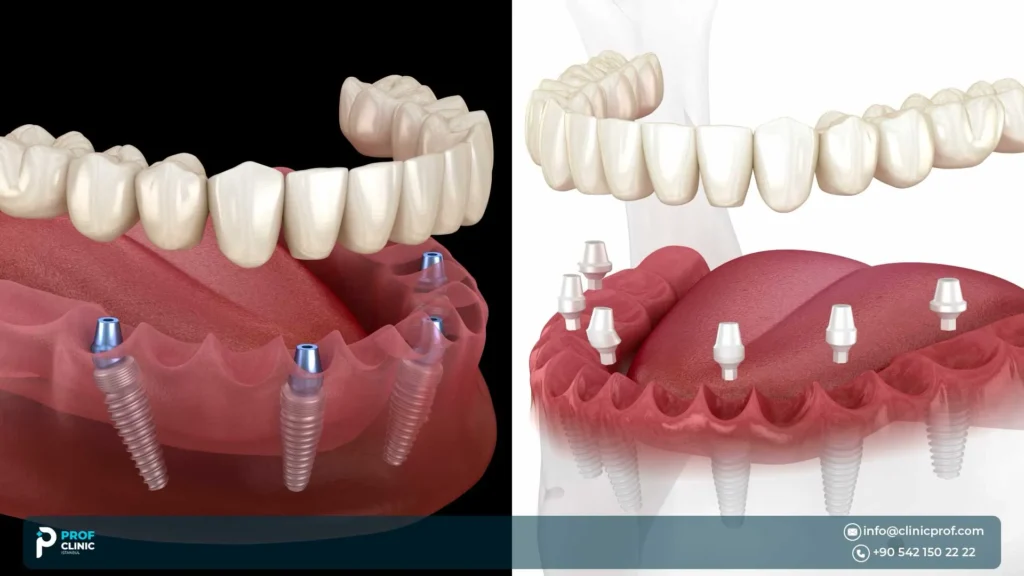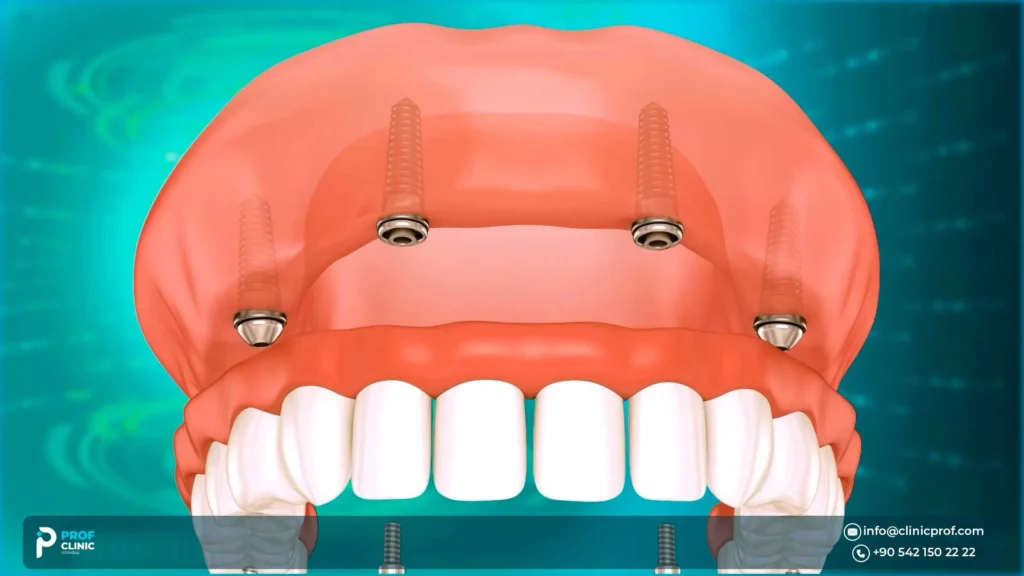
If you’re missing a tooth, you’ve probably seen terms like flapless dental implant surgery, minimally invasive implants, or even “no cut implants.” They all point to the same idea: placing an implant without lifting a large gum flap, which can make the experience feel easier for the right patient.
This guide by Prof Clinic explains what flapless really means, how it compares to traditional flap implant surgery, who it’s best for, what recovery is like, and why 3D imaging and digital planning are so important, so you can walk into your consultation knowing exactly what to ask.
What is the difference between flap and flapless surgery?
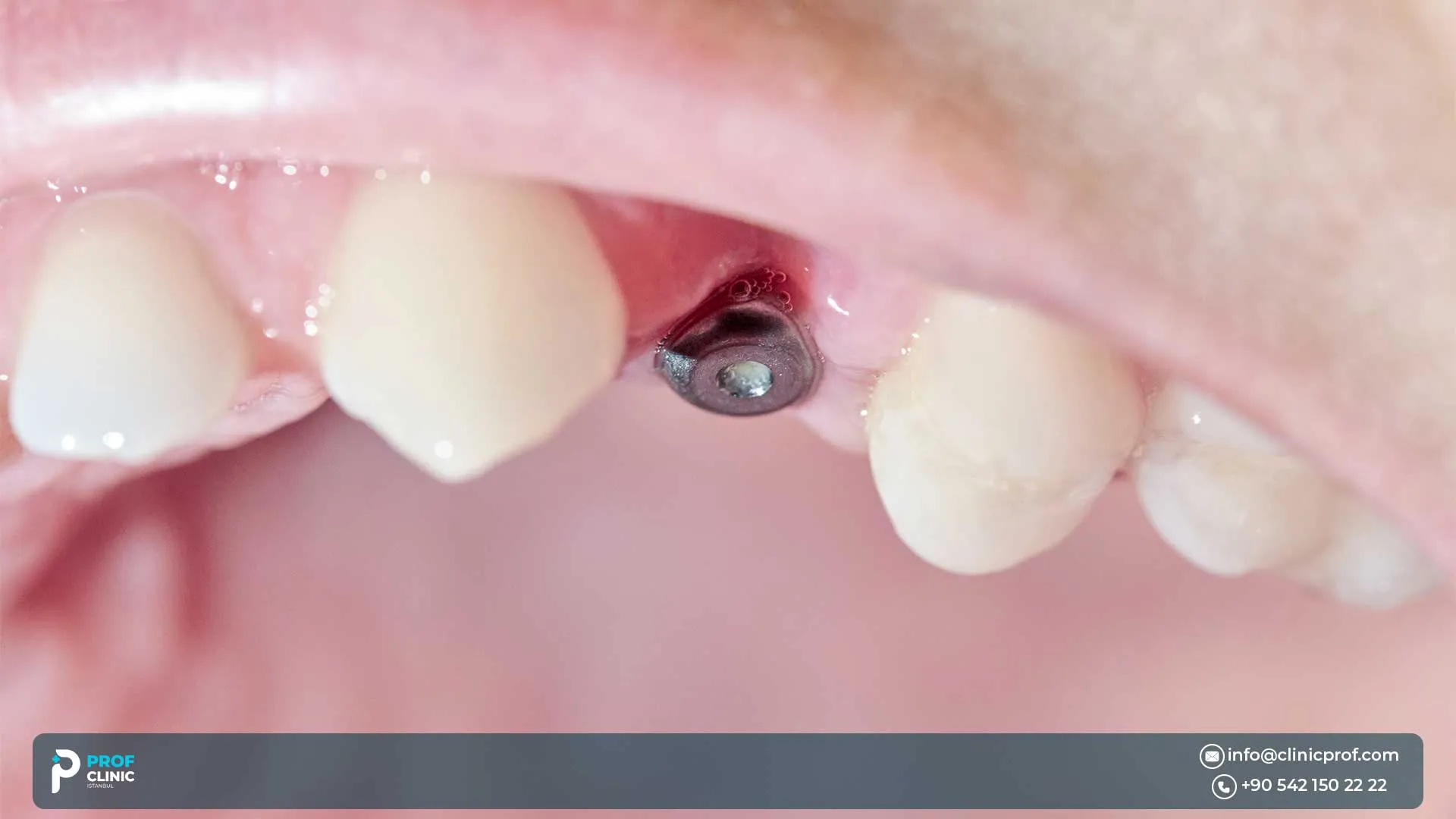
Flapless dental implant surgery places the implant through a small opening in the gum, instead of making a longer cut and lifting the gum tissue to expose the bone. That’s why many people describe it as minimally invasive implants.
You’ll also see “no cut implants,” but here’s the honest version: it usually means no big incision and no flap, not “zero opening.” The goal is less tissue disruption—not a shortcut that ignores safety.
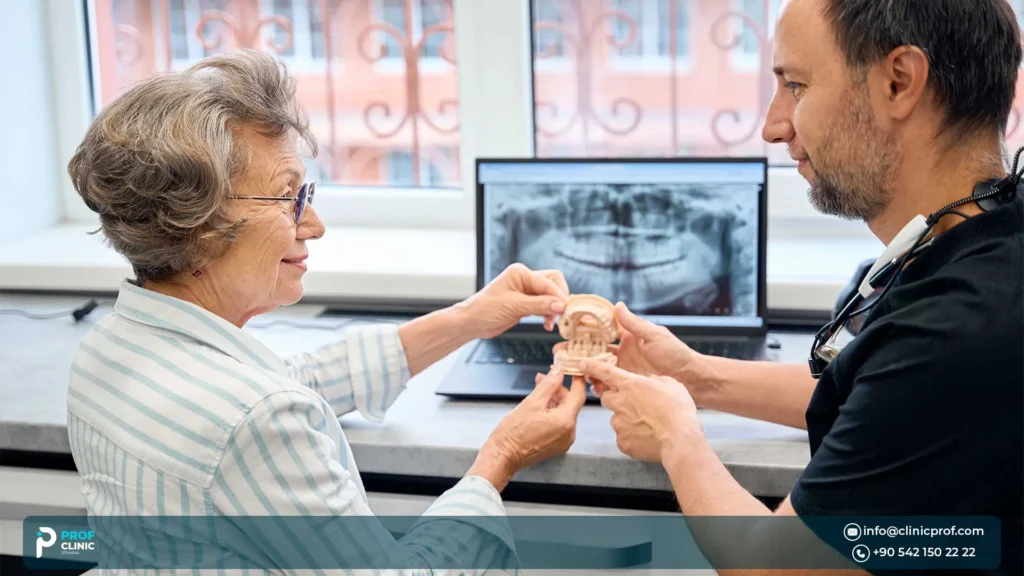
Ask for a scan-based suitability check: “Based on my CBCT, is flapless safe and predictable for my anatomy, or would flap access be better?” Our workflow highlights digital planning and 3D imaging for implant precision.
Flap vs flapless: what’s the difference?
The key difference is visibility vs minimal tissue disturbance:
- Traditional flap surgery: the dentist makes an incision and gently lifts the gum to see the bone directly.
- Flapless surgery: the implant is placed with minimal access, so there’s less direct visibility, meaning planning and precision matter even more.
So, is flapless “better”?
In well-selected cases, research often finds similar overall success between flapless and flap approaches, but outcomes depend heavily on case selection and planning. In other words: flapless can be excellent—when your anatomy and treatment plan make it a good fit.
If you want a clear answer without guessing, request a written treatment plan that states:
- Why flapless is (or isn’t) recommended for you, and
- What technology will be used.
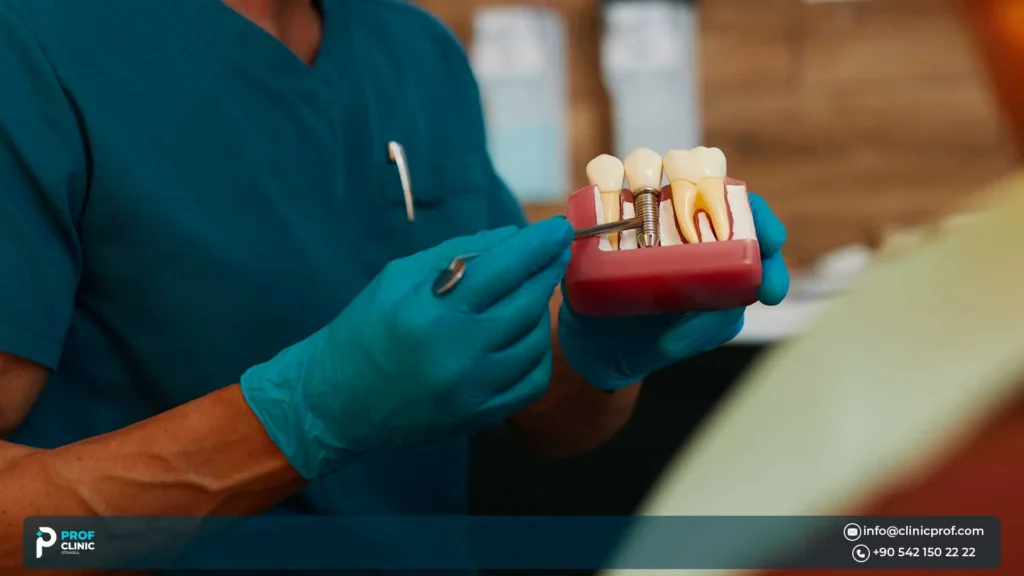
Benefits of Flapless Implant Surgery
When you’re a suitable candidate, flapless implant surgery may offer:
- Less swelling and bleeding (because the gum isn’t lifted widely)
- More comfortable early recovery for many patients
- Potentially fewer stitches and a “lighter” surgical feel (case-dependent)
- Good soft-tissue handling in certain esthetic situations (again: case selection matters)
If you’re looking for comfort-focused options, ask the team to explain whether your case qualifies for minimally invasive implants and what recovery usually looks like for your specific implant location.
Who is a good candidate for flapless implant surgery?
A good candidate usually has a site that’s predictable on imaging and doesn’t require major “on-the-spot” surgical changes.
Good candidates often include people who have:
- Enough bone volume in the right place for the implant
- Healthy gums (or gum issues treated first)
- A plan that doesn’t depend on wide flap access for visibility
- A surgeon using thorough pre-planning (ideally with 3D imaging)
Flapless may not be the best choice if:
- The case likely needs significant bone grafting or complex reshaping at the same time
- Your anatomy is hard to “predict” without direct visibility
- There’s active infection or uncontrolled gum disease at the site
- The clinician needs full access to manage the bone and soft tissue precisely
Use our free consultation to confirm candidacy before making decisions.
Also read: Mini Dental Implants in Turkey: Small but Mighty

What is a flapless procedure and Technology
A flapless procedure in flapless dental implant surgery means the implant is placed through a small opening in the gum without lifting a large gum flap. That’s why patients often search for it as minimally invasive implants or even no cut implants, but the accurate meaning is usually “no big incision/flap,” not “zero opening.”
The technology part matters because flapless surgery gives the clinician less direct visibility of the bone during placement, so accuracy relies more on 3D imaging (CBCT), digital planning software, and sometimes a surgical guide or navigation to transfer the plan to the mouth.
If you’re curious whether flapless is realistic for your case, ask for a CBCT-based suitability check and a written plan that explains why flapless vs flap access is safer for your anatomy.
What are the recovery benefits of flapless implant surgery compared to traditional methods؟
In well-selected cases, flapless approaches are often linked to a more comfortable early recovery—mainly because there’s typically less tissue manipulation than when a flap is raised.
With lots of cases we have worked on, we see lower early postoperative pain and smoother soft-tissue healing with flapless compared to flap techniques, while longer-term outcomes can be similar when case selection is appropriate.
What patients most often notice in real life:
- Less swelling and bleeding in the first days (often, not always).
- Fewer stitches in many flapless workflows (case-dependent).
- Faster return to routine for some patients—especially when no grafting is needed.
To avoid surprises, request a recovery plan that includes: expected downtime, pain control basics, and what would change the plan
Also read: Dental Implant Pain: Causes, Period, & Solutions
How does advanced imaging technology improve the precision and outcomes of flapless implant surgery?
Flapless implant placement depends heavily on planning before surgery. Advanced imaging, especially CBCT—lets the clinician see the bone in 3D and plan implant position relative to key anatomy. That pre-planning is a core reason flapless surgery has grown in popularity.
How tech improves precision in simple terms:
- 3D mapping (CBCT): helps plan the depth, angle, and location more safely than relying on 2D images alone.
- Digital planning software: creates a “virtual plan” of the final implant position.
- Guided surgery (static guides) or dynamic navigation: helps transfer that plan into the mouth with measurable accuracy improvements compared with freehand placement in many settings.
International Team for Implantology (ITI) consensus guidance emphasizes that flapless placement is best reserved for clinicians using comprehensive 3D planning, because good planning is what keeps it predictable.
If you’re considering flapless, ask: “Will you use CBCT-based digital planning—and if needed, a guide or navigation—to confirm safe space and ideal positioning?”
What is the newest technology in dental implants?
“Newest technology” in implant dentistry today is less about a brand-new implant shape and more about digital precision and workflow—tools that help plan and place implants more accurately and restore them more efficiently.
Common “modern tech” you’ll hear about:
- CBCT and 3D digital planning (the foundation for predictable placement).
- Static guided surgery for plan-to-mouth accuracy.
- Dynamic navigation.
- Robot-assisted implant placement
- Intraoral scanners and CAD/CAM for highly precise crowns/bridges.
If you’re planning treatment travel, Prof Clinic promotes 3D CBCT imaging and digital workflows as part of implant planning, so a strong next step is to request a scan-based plan
Also read: Immediate Load Dental Implants: Pros, Cons & Candidacy
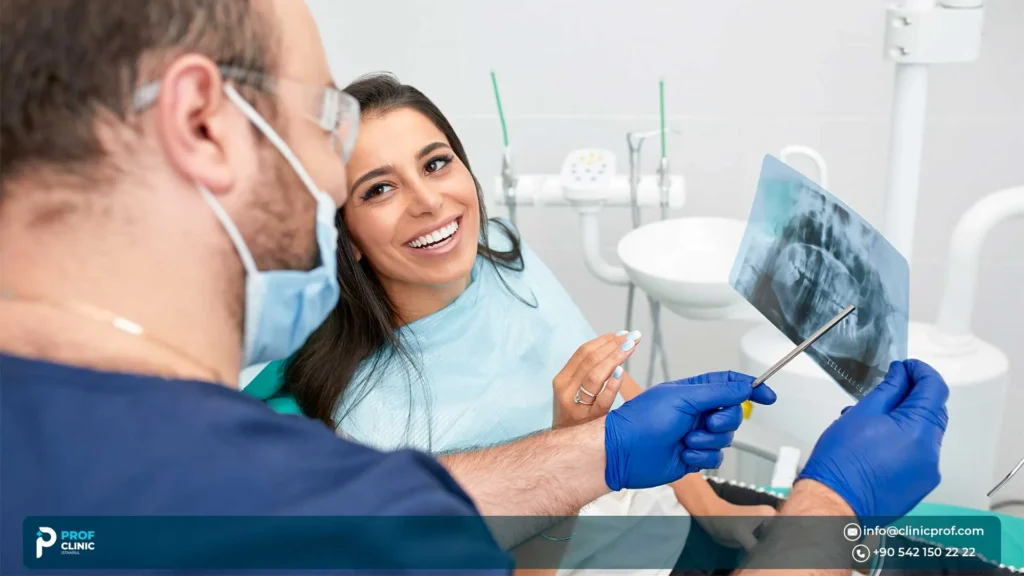
Why choose Prof Clinic for dental implant surgery in Turkey
If you’re researching flapless dental implant surgery or no cut implants, the most important thing to choose isn’t a buzzword. It’s a clinic that can prove your suitability with planning and then deliver the placement with a predictable workflow.
That’s exactly the angle Prof Clinic in Turkey emphasizes across its implant services: 3D imaging, digital planning, and guided placement when appropriate.
1) Digital-first planning
Flapless-style approaches depend on “measure twice, place once.” We explain guided dental implant surgery as planning the implant before treatment using 3D imaging (often CBCT) and transferring that plan using a digital workflow—commonly a 3D-printed surgical guide. That planning-driven approach is what makes minimally invasive protocols safer and more predictable when you’re a good candidate.
Ask us via WhatsApp to review your scan and answer one question in writing: “Am I a candidate for flapless placement, and what makes it safe in my case (bone volume, anatomy, guide use)?”
2) Clear implant pathways
Our dental implant page describes both immediate (same-day) and delayed loading as options depending on your case, which is the right way to frame it, because stability and bite forces decide what’s safe.
Request a timeline that’s specific to you.
3) One clinic that covers implants & the restoration
Implant surgery is only half the outcome—the crown/bridge is what you see every day. Prof Clinic presents implant care within a broader dental department that includes cosmetic dentistry options (implants, veneers/crowns, whitening) so your final result is functional and looks natural.
If you care about aesthetics, ask for a final smile plan not just the implant placement plan.
4) International-patient workflow
For patients traveling to Istanbul in Turkey, we highlight a medical-travel setup that includes online consultation, English-speaking coordinators, WhatsApp follow-up support, and travel logistics like VIP transfers and hotel accommodation options.
Before you book flights, use our free consultation form and ask for: treatment days required, what’s included (transfers/hotel options), and aftercare follow-up plan.
5) free consultation & scan-based recommendation
At Prof Clinic, we offer a free consultation request flow where you can choose dental treatment and share details (including your WhatsApp number for coordination). That’s ideal for consideration-stage patients who want a real recommendation rather than generic advice.
If you’re considering flapless dental implant surgery, submit your case for a scan-based review and ask our team for a simple answer: Flapless vs flap: what’s safer for me, and why?
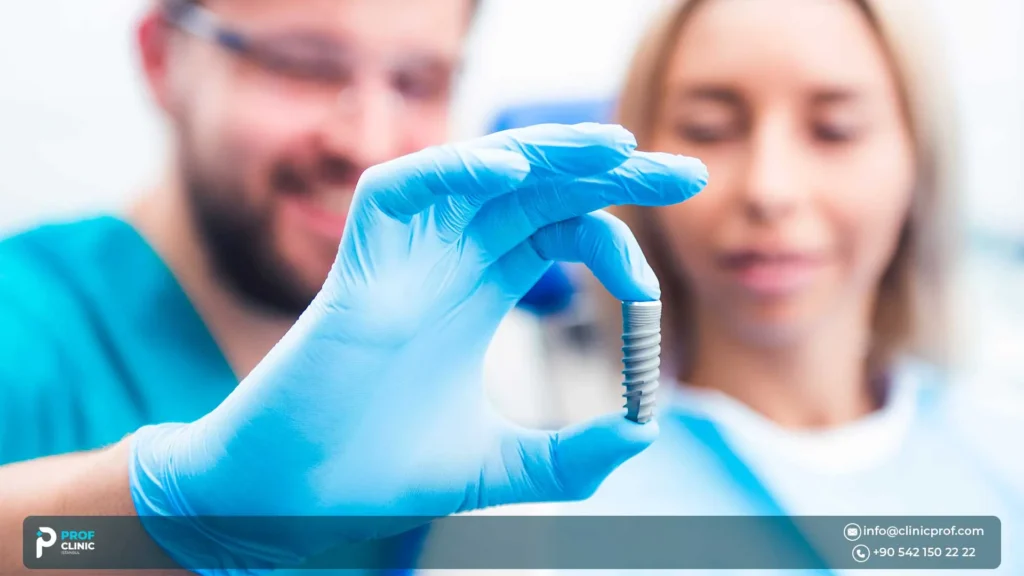
FAQ about flapless dental implant surgery
What is a flapless dental implant?
A flapless dental implant is placed using flapless dental implant surgery, where the dentist makes a small opening in the gum instead of cutting and lifting a larger gum flap. Many patients look for this as minimally invasive implants or “no cut implants,” meaning less gum disruption—not literally zero opening. The idea is to place the implant accurately while keeping the procedure gentler on the soft tissue when the case is suitable.
What is the difference between flap and flapless?
With a traditional flap approach, the dentist makes an incision and lifts the gum to see the bone directly. With flapless dental implant surgery, the implant is placed through a small access point, which often means less swelling and faster early comfort, but also less direct visibility during placement. That’s why flapless (often grouped under minimally invasive implants) depends more on careful planning and imaging to keep it safe and predictable.
Who Is a Candidate for Flapless Implant Surgery?
A good candidate for flapless dental implant surgery typically has enough bone in the right location, healthy gum conditions, and a site that looks predictable on imaging. It’s often better when the plan doesn’t require major reshaping or complex grafting during surgery. People searching for “no cut implants” usually want an easier experience, but the decision should be based on a scan-based assessment to confirm the implant can be placed safely and in the ideal position.
What are the recovery benefits of flapless implant surgery compared to traditional methods؟
In many well-selected cases, flapless dental implant surgery can lead to a smoother early recovery because the gum isn’t widely opened and lifted. Patients often notice less swelling, less bleeding, and quicker return to routine, especially when no additional procedures are needed. However, recovery varies. If grafting is required or bite forces are high, the difference may be smaller. Flapless can feel easier, but only when it fits your case.
How does advanced imaging technology improve the precision and outcomes of flapless implant surgery?
Because the dentist has less direct visibility in flapless dental implant surgery, advanced imaging, especially CBCT (3D scanning), plays a key role. It helps plan the implant position, depth, and angle around important anatomy before surgery. In many minimally invasive implants cases, a guided workflow is used to transfer that plan accurately. This planning is what makes “no cut implants” more predictable when you’re a suitable candidate.