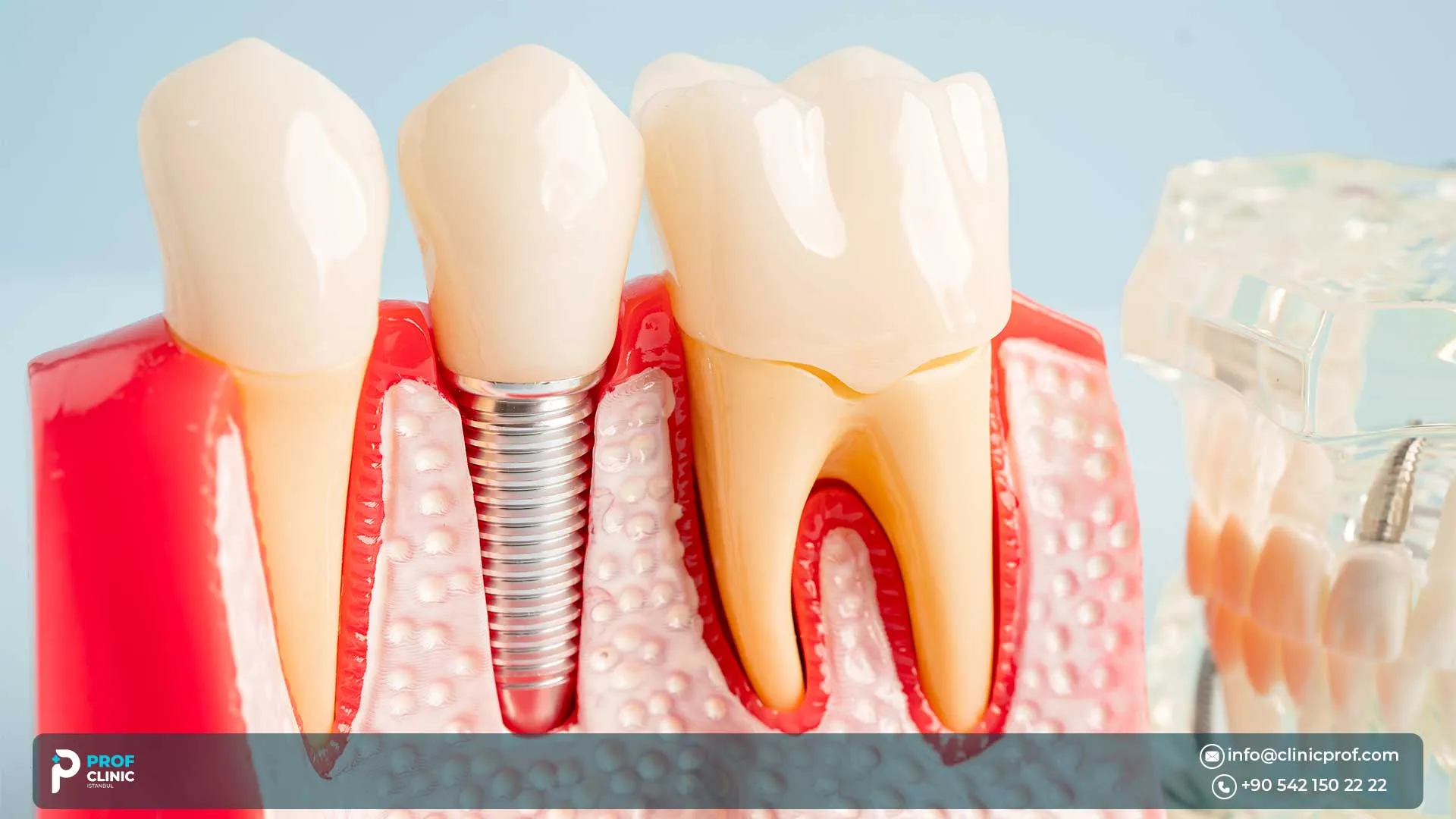
Many patients think dental implant surgery is the final step, then feel confused when the dentist says they may need to wait before the permanent crown. That waiting period is not a delay without purpose. It is the time your jawbone needs to heal around the implant and create the stability that will support your future tooth.
In this guide from Prof Clinic in Istanbul, you will learn what dental implant osseointegration means, how implant bone fusion works, why initial stability is different from full integration, what can affect healing, and when a dentist may decide that the implant is ready for the final crown, bridge, or denture.
What is dental implant osseointegration?
Dental implant osseointegration is the healing process where the living jawbone grows closely around the surface of a dental implant. The implant does not work by being glued to the bone. It becomes stable as the bone heals around it and creates a strong foundation for a future crown, bridge, or denture.
A simple way to understand implant bone fusion is this: the implant post is placed into the jawbone, then the body gradually builds bone around it. Once the dentist confirms that healing and stability are suitable, the visible restoration can be planned.
| Implant part | Patient-friendly explanation |
| Implant post | The part is placed in the jawbone; it works like an artificial tooth root. |
| Abutment | The connector between the implant and the visible replacement tooth. |
| Crown, bridge, or denture | The visible restoration used for chewing, speaking, and smile appearance. |
If you are comparing dental implants in Turkey and want to know whether your jawbone is suitable, start with a personalized implant assessment before deciding on timing.
Initial stability vs implant bone fusion
Initial stability and implant bone fusion are related, but they are not the same. Initial stability is the mechanical grip the implant has on the day of surgery. Osseointegration is the biological healing that happens afterward.
| Concept | What it means | When it happens | Why it matters |
| Initial stability | The implant grips the bone mechanically. | During surgery. | Helps the implant stay still at placement. |
| Osseointegration | Bone heals and integrates around the implant surface. | Over weeks and months. | Creates long-term support for the final crown, bridge, or denture. |
This difference explains why a dentist may not place the final crown immediately even when implant surgery goes well. The implant may feel secure at placement, but the bone still needs time to heal. In selected cases, temporary teeth may be possible, but they should not overload the healing implant.
We explain this distinction clearly because it affects patient expectations. One-stage vs two-stage implant planning and immediate loading decisions depend on bone quality, bite forces, stability, grafting needs, and whether the implant should heal in a more protected way.
How does Prof Clinic Plan implant bone integration?
At Prof Clinic in Istanbul, we do not look at dental implant osseointegration as a single surgical step. We treat it as a complete healing journey that starts with careful planning and continues until the implant is stable enough for the next restorative stage.
- Before treatment, our dental team reviews your jawbone condition, gum health, missing tooth area, medical history, and available X-rays or CBCT scans. This helps us understand whether the implant site has enough bone support or whether additional procedures may be needed before placing the implant.
- During the procedure, we place the implant post into the prepared jawbone according to your personalized treatment plan. In some suitable cases, immediate loading may be possible. In other cases, we may recommend waiting until implant bone fusion becomes stronger before attaching the final restoration.
- After implant placement, healing continues under the gum even when your mouth starts to feel comfortable. Bone-forming cells gradually work around the implant surface, helping the implant gain biological support over time. This is why the appointment duration is different from the full healing period.
- Before moving to the abutment or final crown, we check whether the implant has reached the right level of stability. For international patients travelling to Istanbul, this step is especially important because treatment timing should follow biological healing, not only travel dates.
Planning dental implants in Istanbul? Contact us before booking your trip. Send us your X-ray, CBCT scan if available, photos, and treatment goals to receive a personalized implant evaluation.
Also read: Dental implant surgery duration
How long does dental implant osseointegration take?
Dental implant osseointegration usually takes months, not days. Many sources describe jawbone fusion as a process that can take several months. The exact timeline depends on the patient, the implant site, and the treatment plan.
Your healing timeline may be affected by:
- Bone density and bone volume.
- Upper jaw versus lower jaw.
- Front tooth versus back tooth location.
- Whether bone grafting or sinus lift was needed.
- Number of implants.
- Gum health.
- Smoking or vaping.
- Diabetes control or other medical conditions.
- Bite pressure or teeth grinding.
- Whether the implant is protected during healing.
When patients ask us how long they need to stay in Turkey for implants, we separate short recovery from full integration. A patient may feel better within days or weeks, but the deeper bone-healing phase can continue for months before the final crown or bridge is confirmed.
Before booking travel around implant treatment, ask us whether your case may need immediate loading, delayed loading,a temporary or permanent implant crown plan, or a second visit after healing.
What does help implant bone fusion?
You cannot control every biological factor, but you can protect the healing implant by following the plan your dentist gives you. The goal is to keep the implant area clean, stable, and free from unnecessary pressure while bone healing continues.
| Helpful habit | Why it matters |
| Follow your aftercare instructions | Protects the surgical site during the early healing phase. |
| Keep the mouth clean as instructed | Reduces plaque and inflammation around healing tissues. |
| Avoid smoking or vaping during healing | Smoking can affect gum and bone healing and may increase risk. |
| Do not chew hard foods on the healing implant | Reduces pressure before integration is confirmed. |
| Attend follow-up checks | Allows the dentist to monitor healing and timing. |
| Control diabetes or medical conditions with your physician | General health can affect healing expectations. |
| Report unusual symptoms early | Pain, pus, fever, swelling, or movement should be reviewed promptly. |
This is why implant aftercare should not be treated as a generic checklist only. We connect dental implant aftercare to the patient’s case: number of implants, whether grafting was done, whether temporary teeth were placed, and how much pressure the implant may face during healing.
What can harm how implants integrate?
Some factors can make osseointegration more difficult or require extra planning. They do not automatically mean implants are impossible, but they should be discussed before treatment.
- Poor oral hygiene.
- Smoking or vaping.
- Missed follow-up visits.
- Active or untreated gum disease.
- Strong bite pressure or teeth grinding.
- Poor bone quality or severe jawbone loss.
- Pressure from temporary dentures or temporary teeth.
- Uncontrolled diabetes or medical conditions that affect healing.
- Trying to adjust the implant, healing cap, or temporary tooth at home.
For patients with medical conditions, the question is not always “Can I have implants?” but “How should my case be planned?” The medical conditions and dental implants guide is a useful next read before travelling to Istanbul, especially if you have diabetes, heart-related risks, immune conditions, or medications that may affect healing.
When is the implant ready for the final crown?
The implant is ready for the final crown, bridge, or denture only when the dentist confirms that healing and stability are suitable. The timing is not based on a fixed calendar for every patient.
Your dentist may check:
- Whether the implant feels stable.
- Whether the gum has healed well.
- Whether there is pain, swelling, infection, or mobility.
- Whether bone grafting or sinus lift healing needs more time.
- Whether the bite can be restored without overloading the implant.
- Whether the planned crown, bridge, or denture can be fitted safely.
Temporary teeth can be helpful in selected cases, but they are not the same as the final restoration. At Prof Clinic, the decision between temporary teeth, delayed restoration, one-stage planning, or two-stage planning is based on implant stability, bone quality, gum condition, and bite forces. Read more about temporary vs permanent implant crowns if you want to understand why crown timing varies from case to case.
How does Prof Clinic plan implants around osseointegration in Istanbul?
At Prof Clinic, we plan dental implants around case-based assessment rather than one fixed timeline for every patient. This approach is especially important for international patients who need to understand what can happen during the first visit and what may need to wait until healing is complete.
The wider our dental treatment in Turkey service explains how consultation, planning, arrival support, treatment, and aftercare fit into the patient journey.
| Step | What happens | Why it matters |
| Case review | Photos, X-rays if available, medical history, and treatment goals are reviewed. | Helps estimate suitability and identify questions before travel. |
| Clinical examination in Istanbul | The dentist checks gums, bite, missing tooth area, existing restorations, and imaging. | Confirms the final plan after direct examination. |
| Implant placement | The implant is placed according to the treatment plan. | Creates the foundation for the future restoration. |
| Healing phase | Osseointegration takes place over time. | The implant gains biological support from the jawbone. |
| Restoration decision | The dentist decides when abutment and crown, bridge, or denture placement is appropriate. | Helps avoid rushing the implant before it is ready. |
| Maintenance | Cleaning and checkups continue after restoration. | Supports long-term implant health. |
The next step is not to book surgery immediately. The safer next step is to understand whether your case is straightforward, whether imaging is needed, and whether your healing timeline may affect travel or crown timing.
So, contact us before starting implant treatment in Istanbul with your photos, X-ray if available, medical history, and treatment goals so we can explain what may affect your implant healing timeline.
FAQs about dental implant osseointegration
What does dental implant osseointegration mean?
Dental implant osseointegration means the jawbone heals around and connects closely with the implant surface. This process helps the implant become stable enough to support a crown, bridge, or denture.
Is implant bone fusion painful?
The fusion itself happens gradually under the gum and is not something patients usually feel directly. Soreness, swelling, or tenderness can occur after implant surgery, especially during the first few days.
How long does it take for implants to integrate with bone?
The timeline varies. Many patients need several months for full integration, but timing depends on bone quality, implant location, grafting, gum health, medical history, and bite forces.
Can osseointegration fail?
Yes, osseointegration can fail in some cases. Possible risk factors include smoking, poor oral hygiene, untreated gum disease, poor bone quality, excessive bite pressure, missed follow-ups, or certain medical conditions.
Can I get the crown before osseointegration is complete?
Sometimes temporary teeth or immediate loading may be possible in selected cases, but not everyone is a candidate. The dentist must check implant stability, bone condition, gum health, and bite forces before deciding.
How can I help my implant integrate properly?
Follow your dentist’s aftercare instructions, keep the area clean, avoid smoking, avoid pressure on the healing implant, attend follow-ups, and report unusual symptoms early.
Does Prof Clinic offer osseointegration as a separate service?
No. Osseointegration is not a separate service; it is the natural healing phase that supports dental implant stability. Prof Clinic addresses it through implant planning, surgical timing, aftercare, and restoration decisions.