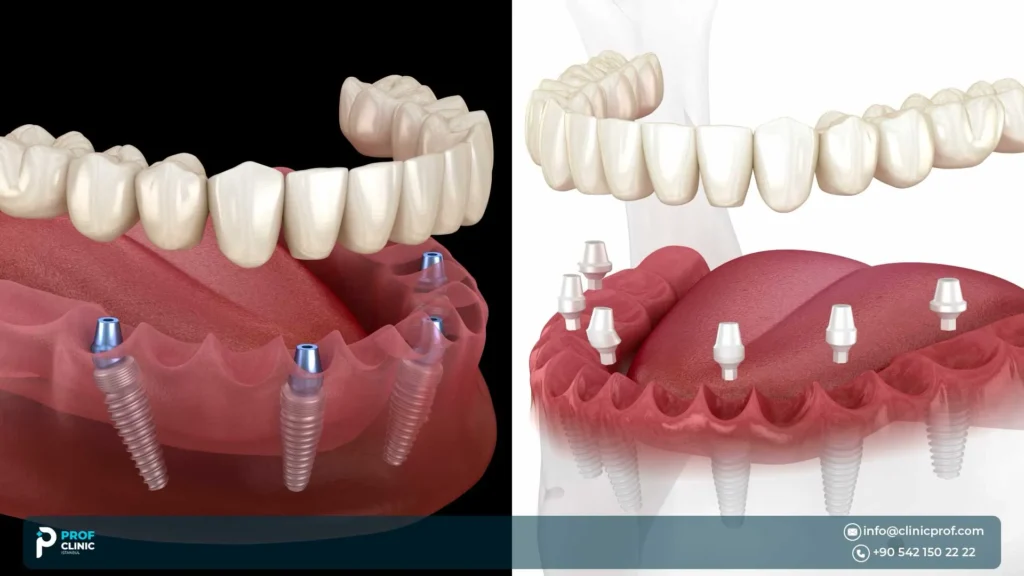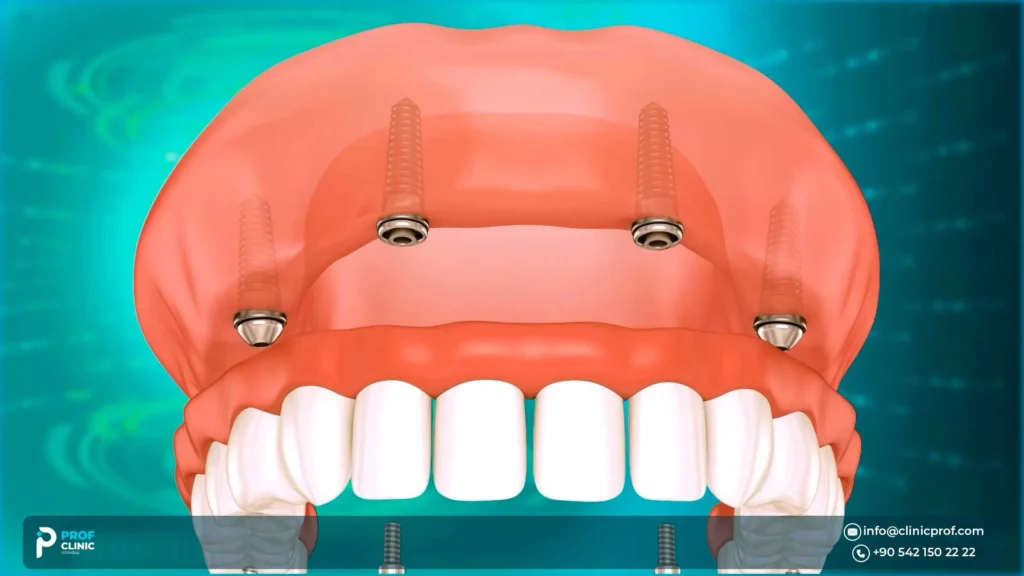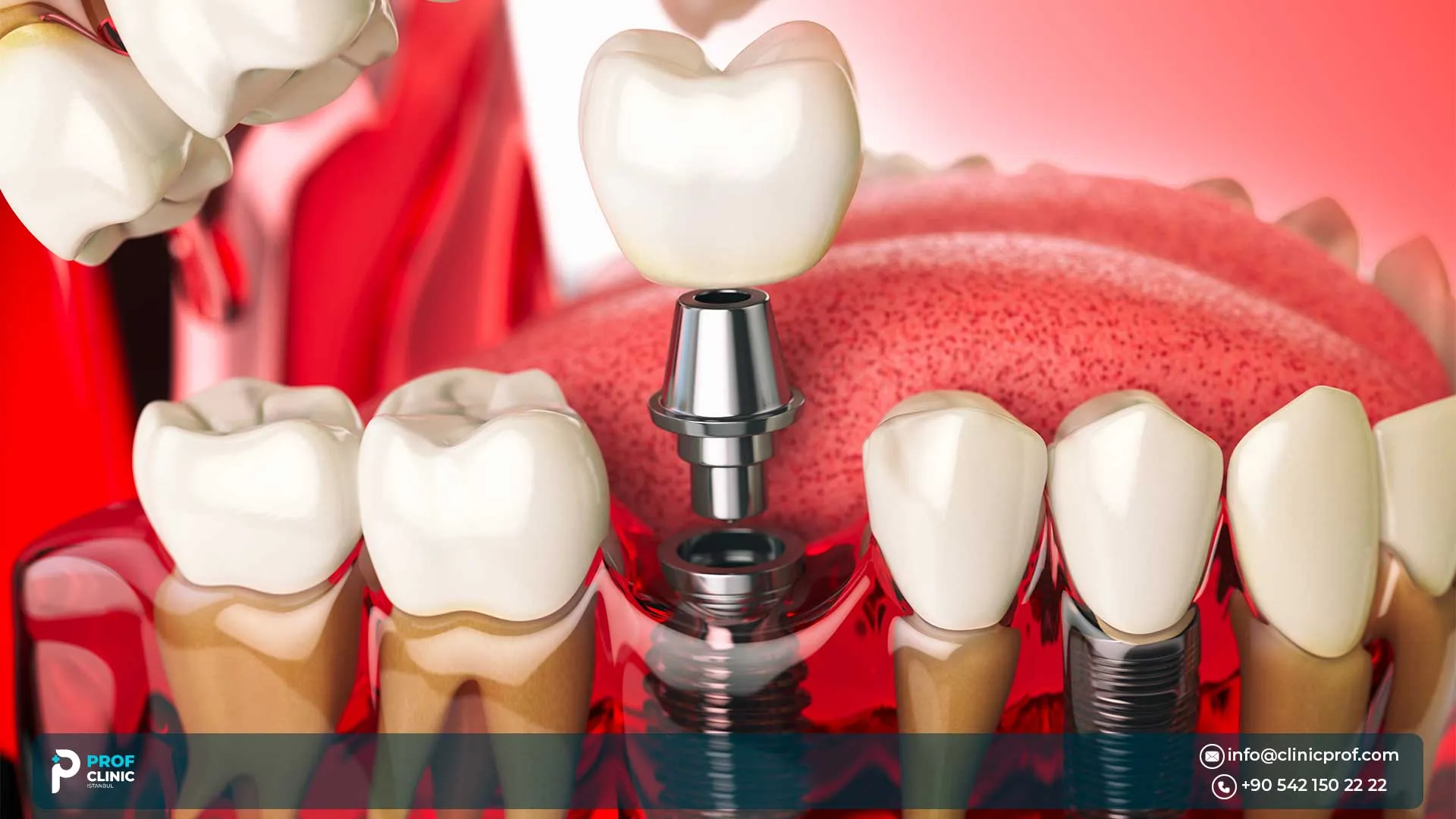
Being told you “don’t have enough bone” for implants can feel like the end of the road—unless you understand that some implant concepts are designed to anchor in dense cortical bone rather than relying on grafted volume. That’s why so many patients researching basal implants ask the same question: Can I get fixed teeth faster—without a bone graft?
In this guide by Prof Clinic, you’ll learn what basal dental implants are (and why they’re often discussed as cortical implants or BOI implants, how immediate loading can be possible in selected cases, and who is—and isn’t—a good candidate. We’ll also cover the real pros and cons, a simple comparison with conventional implants, and how to choose the right clinic in Turkey so you can evaluate your options with fewer unknowns before you commit.
What are basal dental implants?
Basal implants are a category of implants designed to anchor primarily in the cortical (dense) bone—the stronger outer layer of jawbone—rather than relying mainly on softer “spongy” bone. You’ll also see them described as cortical implants or BOI implants (Basal Osseointegrated Implants), depending on the system and clinical approach.
Because cortical bone is denser and often more stable, basal/cortical implant concepts are sometimes used for patients with reduced bone volume, especially when the goal is to avoid or minimize bone grafting and, in selected cases, move faster toward function. That said, “immediate loading” is case-dependent (bone quality, stability, bite forces, and the restorative plan all matter), so it should never be presented as automatic.
Why is immediate loading possible without bone graft?
Immediate loading can be possible with basal dental implants because the concept targets dense cortical bone for primary stability.
Immediate loading depends more on stability at placement than on how much soft bone you have. When an implant achieves strong initial fixation, especially in cortical bone. It may be able to support a temporary restoration sooner, sometimes without the delays and volume requirements associated with bone graft healing.
Here’s the explaination
1) Cortical anchorage can create stronger initial fixation
Cortical bone is denser and less compressible than soft (trabecular) bone. When an implant engages the cortical layer effectively, it often achieves higher primary stability—the main prerequisite for early loading.
2) Bone grafting mainly adds volume, not instant stability
A bone graft typically needs months to integrate and mature. Basal/cortical approaches aim to use existing stable cortical areas instead of waiting for grafted bone to heal, so treatment can be more direct in selected cases.
3) Stability must be verified, not assumed
Safe immediate loading depends on objective criteria, such as insertion torque, stability measurements, and proper implant distribution across the arch—plus an occlusion plan that protects the implants during healing. If these conditions aren’t
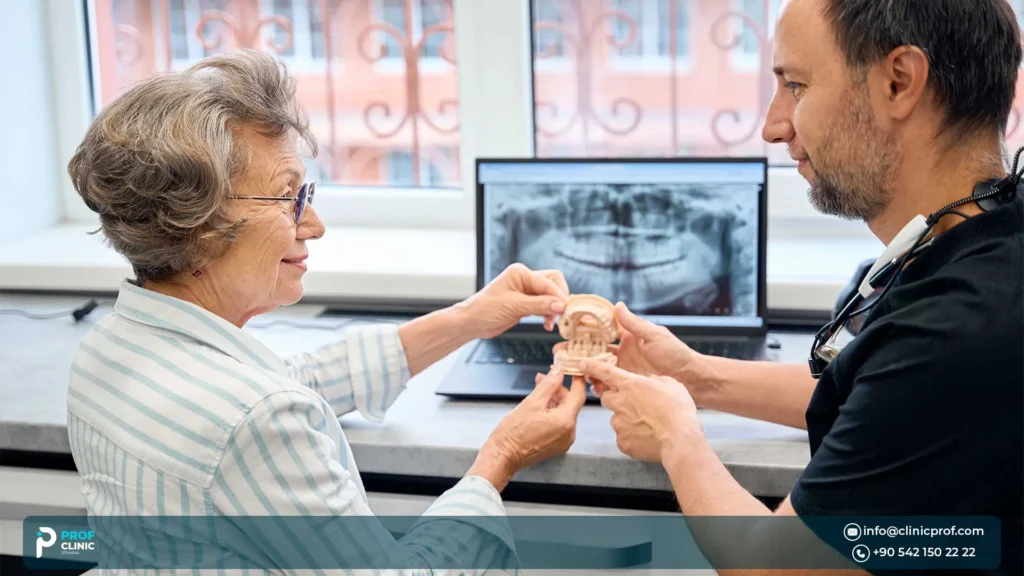
The right clinic, such as Prof Clinic Istanbul, will confirm candidacy with CBCT imaging, explain the biomechanical plan, and tell you when immediate loading is not the best decision.
Also read: Immediate Load Dental Implants: Pros, Cons & Candidacy
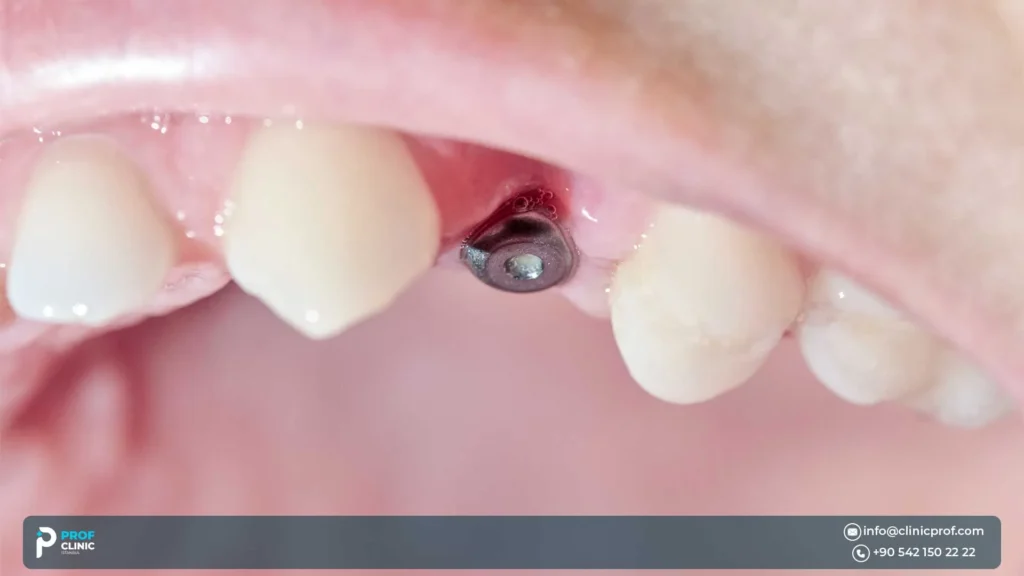
Who is a good candidate for basal dental implants?
A good candidate for basal dental implants—often described as cortical implants or BOI implants—is usually someone who needs a graft-avoiding solution and can still achieve strong stability at placement.
In practice, people look into this option when they’ve been told they don’t have enough bone for conventional implants without grafting, or when they want a more direct treatment pathway (sometimes with faster function). The key is that basal/cortical concepts rely on anchoring in dense cortical bone, so the case has to offer the right anatomy and the right biomechanical plan—especially if immediate loading is being considered.
That said, candidacy is never decided by a label. A responsible clinic will confirm:
- CBCT-based diagnosis (to map cortical bone and anatomy)
- The ability to reach high primary stability
- A bite/load plan that protects the implants during healing (often with a controlled temporary restoration)
- Healthy gums and infection control, plus realistic expectations
You’re typically not an ideal candidate if healing risks are uncontrolled, if there’s active gum disease that hasn’t been stabilized, or if severe clenching/bruxism isn’t managed with a protection plan, because these factors can overload implants early.
Request a case-specific answer—“Do I qualify for basal dental implants (cortical/BOI), and if not, what graftless alternative fits my anatomy and timeline?”
What are the pros and cons of basal implants?
Basal dental implants are mainly considered when the goal is to restore function with less reliance on bone grafting. Like any implant concept, they come with clear upsides—and real trade-offs.
Pros
- Reduced bone volume cases: Often considered when bone is limited and avoiding bone grafting is a priority.
- Primary stability in cortical bone: Can engage dense cortical bone, which may support immediate loading in selected cases.
- Fewer staged procedures: May reduce the number of treatment stages, which can help when time and travel logistics matter.
- More direct pathway: Can offer a clearer route when anatomy and the bite plan allow it.
Cons
- Provider- and protocol-dependent: Outcomes rely heavily on case selection, surgical skill, and prosthetic (bite) design.
- Immediate loading is not automatic: It’s case-dependent; pushing speed without stability and load-control increases risk.
- Less standardization across clinics: Techniques and systems vary, so quality can differ significantly by provider.
- Not suitable for everyone: Some patients may still need alternative graftless options or staged approaches based on anatomy and occlusion.
Also read: Pterygoid Implants: Advanced Implant Solution
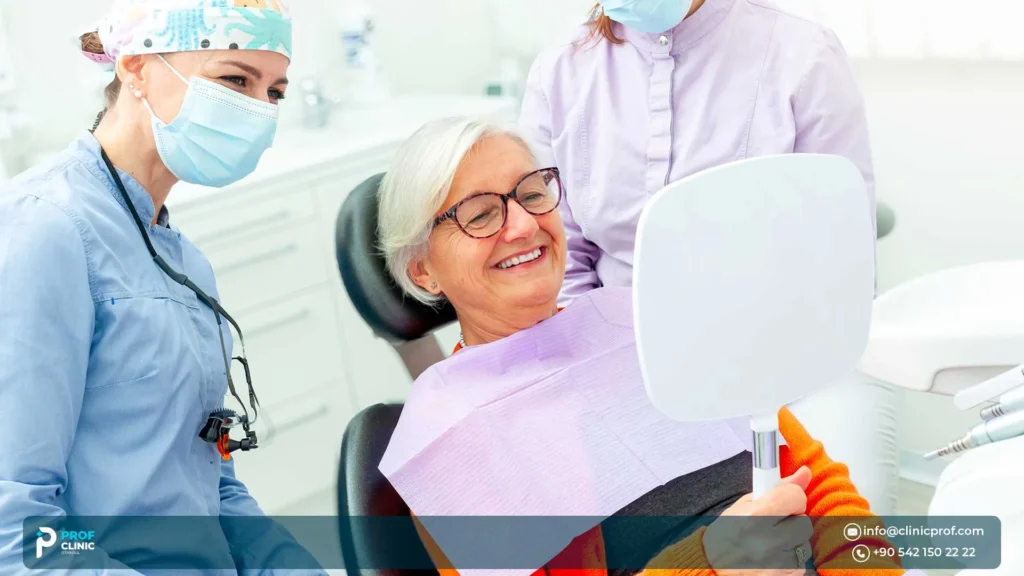
Most common comparison points for basal implants
Basal implants are most commonly compared to conventional (normal) implants around a few decision-driving factors: where they anchor, whether grafting is likely, how fast loading can happen, who they fit best, and how provider-dependent the protocol is.
Basal implants vs conventional (normal) implants
| Aspect | Basal implants | Conventional (normal) implants |
| Where it grips bone | Focus on cortical (dense) bone | Mostly within alveolar bone (often less dense) |
| Bone graft need | Often used to avoid/minimize grafting in selected cases | Grafting is more likely if bone is insufficient |
| Loading timeline | Immediate loading may be possible when stability & bite plan allow (often temporary first) | Immediate loading can be possible, but more commonly staged |
| Best-fit cases | Low-bone cases seeking a graftless path (case-dependent) | Broad range of standard cases with well-established protocols |
| Provider dependence | More protocol/experience dependent | More standardized across clinics |
How to Choose a Basal Implants Clinic in Turkey
If you’re looking into basal implants, don’t pick a clinic because it promises “no grafts” or “same-day teeth.” Pick it because it can show you a safe, consistent protocol for basal dental implants—often marketed as cortical implants or BOI implants.
- Start with CBCT and a written plan: A reliable clinic won’t approve basal implants from photos alone. Ask for a CBCT-based diagnosis and a clear treatment plan that explains why this approach fits your anatomy.
- Ask what they mean by basal / cortical / BOI: These terms are sometimes used interchangeably, but techniques and systems can differ. The clinic should explain the exact implant concept they use and why it’s the right match for you.
- Confirm the loading rules (avoid blanket promises: Immediate loading is case-dependent. Ask what stability criteria they require and how they design the temporary teeth to control bite forces during healing.
- Check who designs the prosthetics: With basal dental implants, early success depends heavily on the bridge/teeth design. Ask who makes it, how adjustments are handled during your stay, and what the plan is for the final restoration.
- Get the follow-up plan for international patients: Before you travel, ask what happens after you fly home: follow-up timing, emergency support, and whether they coordinate with your local dentist if needed.
Before you book flights, book a consultation and ask for two things in writing: your CBCT-based plan and your loading timeline.
Also read: Computer-Guided Implant Surgery: Precision Placement
Where Does Prof Clinic in Turkey Fit for Basal Dental Implants?
At Prof Clinic in Turkey, we support patients who are exploring basal dental implants (often discussed as cortical implants or BOI implants) because they’re looking for the same outcome we focus on: a graftless, cortical-bone–anchored path to fixed teeth when bone volume is limited.
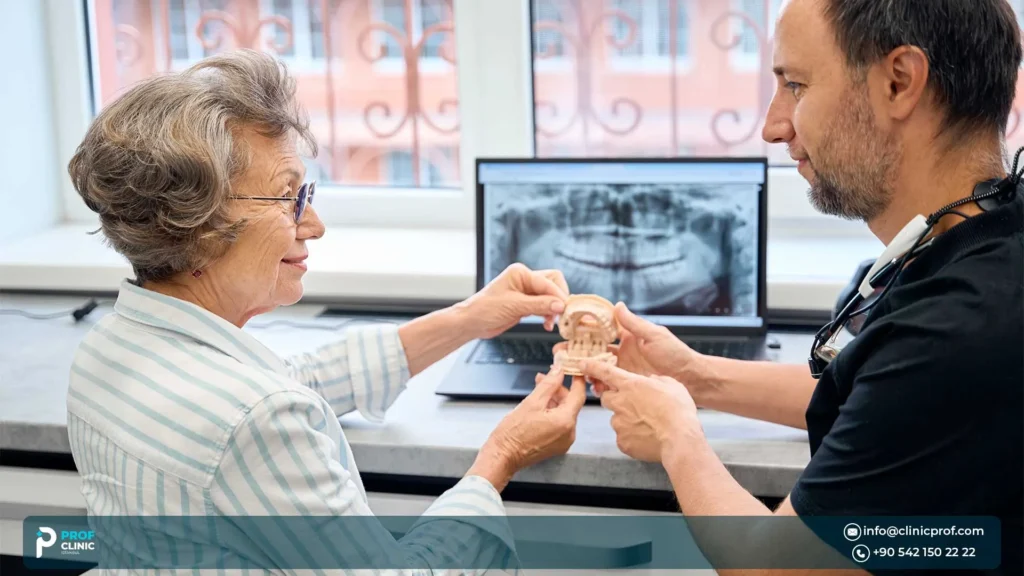
We routinely plan these advanced cases with CBCT-based evaluation and match each patient to the most appropriate graftless solution based on anatomy and loading goals.
On our website, you can see two core graftless options we provide for low-bone cases:
- Pterygoid implants that anchor in dense cortical bone and are designed to avoid sinus lift/bone graft delays.
- Subperiosteal implants for advanced bone loss, designed from CT data using modern CAD workflows.
Book a free consultation and ask us for two things: your CBCT-based plan and your loading timeline
FAQs about basal implants
Are basal implants more expensive?
Sometimes. Basal implants can cost more upfront because they’re technique-sensitive and often include immediate prosthetic work—but the total cost may be similar if they help avoid bone grafting. Ask for a written, itemized quote (surgery + prosthetics + imaging + follow-up).
What is the life of basal implant?
There’s no guaranteed number. The lifespan depends on case selection, stability, bite forces, prosthetic design, hygiene, and follow-up. A good clinic will explain your personal risk factors and maintenance plan.