If you are weighing a hair transplant in Turkey vs Iran and Egypt, the honest answer is that no country wins on its own. All three have skilled doctors, and all three have operators who should never hold a blade, so the country matters less than who plans and performs your surgery. What does change from one country to the next is the price, the way a package is built, how easy the trip is from your city, and who looks after you once you are home.
In this guide by Prof Clinic, we compare the three on cost, quality, safety rules, travel and aftercare, using medical sources rather than clinic claims. We do not rank countries, and we do not print prices for Iran and Egypt, because we found no independent price data for them. By the end, you will have a checklist that works in any country.
Turkey, Iran and Egypt at a Glance
The biology and the surgical techniques are the same in all three countries, so the real differences sit around the operating room: the price, the packaging, the rules for foreign patients, the journey and the follow-up. The table sets out what changes and what does not, and it avoids numbers we cannot source.
| What you compare | Turkey (Istanbul) | Iran and Egypt |
|---|---|---|
| Typical price | About €1,800–€3,500 for a scalp package (approximate 2026 range) | Often advertised lower, but quotes vary widely and we found no independent price statistics |
| How it is priced | Most often an all-inclusive package with hotel and transfers | Differs by clinic or agency, so check what is inside the quote |
| Rules for foreign patients | A 2025 regulation requires authorisation for facilities and intermediaries that serve international patients | Check the health ministry’s rules and the doctor’s registration with the national medical body |
| Travel from the Arab world | Frequent flights from many Gulf, Levant and North African cities | Egypt is a short flight for many Arab travellers; for Iran, flight availability and travel advice can change quickly |
| Language | Turkish and English; ask which language your consent forms and aftercare are in | Arabic is the everyday language in Egypt; Persian is the main language in Iran |
| Growth timeline | New hair from about month 4; final result at 10–18 months | The same biology and the same timeline |
What it means in real life: you are not choosing between three kinds of surgery. You are choosing between three sets of logistics, three regulatory environments and three price levels, and then, inside whichever you pick, one surgeon and one team.
Hair Transplant Cost: Turkey vs Iran and Egypt
A hair transplant in Turkey usually costs a fraction of a Western price, and quotes in Iran and Egypt are often advertised lower still. The useful comparison, though, is not the headline number but what each quote includes and what the whole trip costs you.
What You Pay in Turkey
The cost of a hair transplant in Turkey for a scalp procedure in Istanbul is about €1,800–€3,500 as a package using FUE, DHI or Sapphire FUE. Packages usually include the procedure, pre-op blood tests, medication and an aftercare kit, the hotel, and VIP airport and hotel transfers. Other cases sit in different ranges:
- Afro or curly hair transplant: about €2,500–€4,500, because extraction is slower and takes more time.
- Female hair transplant: about €2,000–€3,800.
- FUT (strip method): about €1,500–€3,000, although it is less commonly chosen today.
These are approximate 2026 ranges, not final prices. Your price depends on your case after assessment and is confirmed in a written quote. For a fuller breakdown, see our guide to the cost of a hair transplant in Turkey.
What You Can and Cannot Compare in Iran and Egypt
We do not publish prices for Iran or Egypt, because the figures that circulate online mostly come from agencies and clinics advertising themselves, and we found no independent source that compares them fairly. What can be said honestly is that operating costs, wages and exchange rates differ between countries, and these can lower the headline price. They can also move quickly, so a quote in a local currency may not mean the same thing a few months later.
When you collect quotes for a hair transplant in Egypt vs Turkey, or in Iran vs Turkey, ask these questions in writing:
- Unit of pricing: is the price per graft, per session or a fixed package?
- Currency: is it quoted in a stable currency, and is the price fixed once you pay a deposit?
- Inclusions: are tests, medication, the hotel, transfers and follow-up inside the price?
- Extras: is PRP, a second session or a touch-up included or billed separately?
- Refunds: what happens to your deposit if the surgeon advises against surgery after seeing you?
The Real Total Cost
The cheapest quote is not always the cheapest outcome. Add flights, nights in a hotel, time off work, and the cost of care at home if something goes wrong. The US Centers for Disease Control and Prevention (CDC) warns that follow-up care for complications after treatment abroad can be expensive and might not be covered by your health insurance. The International Society of Hair Restoration Surgery (ISHRS) reports that repairs of black-market procedures now make up about 10% of its members’ cases, and a repair is a second bill on top of the first.
Comparing quotes right now? Ask Prof Clinic for an itemised quote so you can set it next to any other offer line by line. For the full list of what a package should contain, read our guide to what is included in a hair transplant package in Turkey.
Quality: Does the Country Decide the Result?
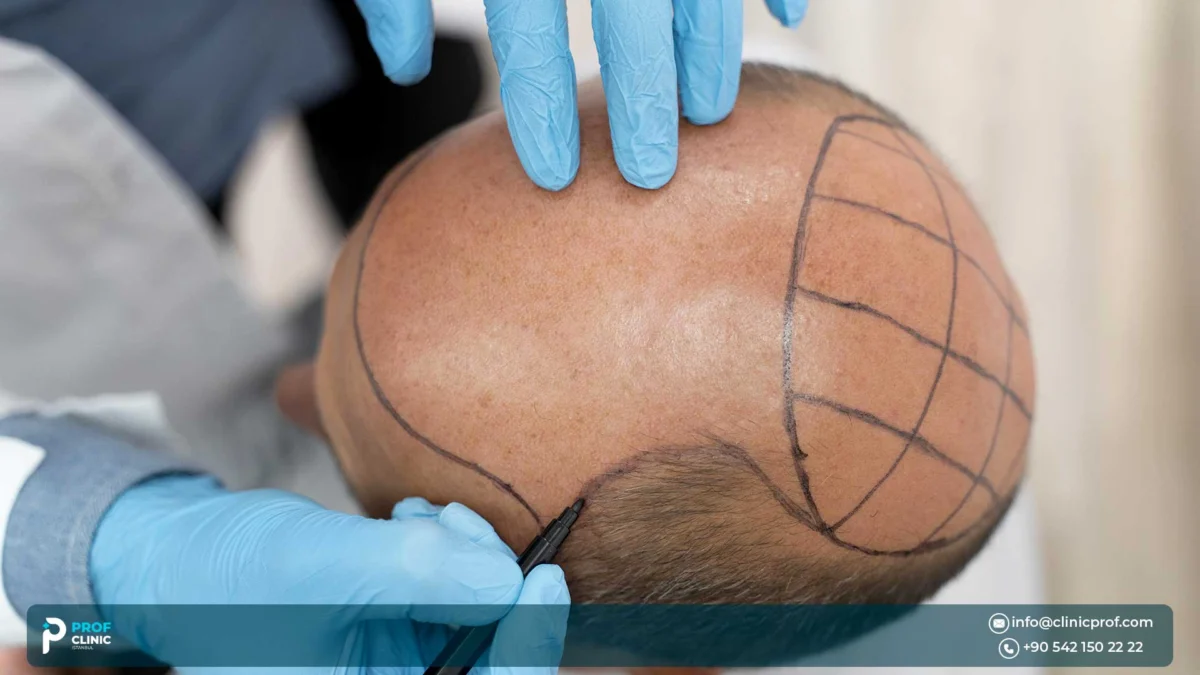
No. The result depends on the surgeon’s planning, the care taken with your donor area and the team that does the work, and each of those can be excellent or poor in any country. The NHS describes the same two main methods everywhere: FUT removes a strip of skin and leaves a linear scar, while FUE removes grafts one by one and leaves many tiny scars that are usually not very noticeable. DHI and Sapphire FUE are variations of FUE, and neither is universally better.
Skilled Doctors Exist in All Three Countries
Physician-led hair restoration is practised and studied in Iran and Egypt as well as in Turkey. A study from the dermatology department of Fayoum University in Egypt evaluated FUE in 20 patients with androgenetic, traction and scarring alopecia and reported good patient satisfaction. A study from Shiraz in Iran followed 56 patients with scar alopecia of the scalp, beard, eyebrows and moustache, most of them treated with FUE. These are small, single-centre reports, so they show that expertise exists rather than ranking the countries.
Poorly Run Clinics Exist in All Three Too
The ISHRS 2025 Practice Census found that 59% of its members see black-market hair transplant clinics in their cities, up from 51% in 2021, and links the rise in complications to surgery delegated to unlicensed, untrained people. A 2025 review in Aesthetic Plastic Surgery uses Turkey as its case study. It describes an industry worth about US$1 billion a year, driven by lower costs and all-inclusive packages, that can deliver high graft survival in some centres. The same review says it operates in a permissive regulatory environment with little standardisation, and it warns that large price differences may reflect differences in resources, surgeon experience and safety protocols.
So a high volume of foreign patients in one country is not proof of quality. It is a reason to check the clinic harder.
What Really Separates a Good Clinic From a Poor One
Whatever the country, look for these four things:
- A named, licensed physician: the ISHRS says any procedure that cuts the scalp is a surgical act, and the surgeon should be licensed, registered and reachable from the first consultation to the final result.
- Technicians in a supporting role only: ask exactly who makes the incisions and who places the grafts.
- A plan based on your donor area: a fixed graft number promised before anyone has seen your photos is a warning sign.
- An honest assessment: a real physician reviews your medical history and may advise you to wait or not to operate.
Also read: How to Choose a Hair Transplant Clinic in Turkey: What to Check
Safety and Regulation: How to Check a Clinic in Each Country
Each of the three countries has its own licensing system, and in all of them the safest habit is to verify rather than trust a website. Online, even clinics that operate illegally can look convincing, which is why the ISHRS tells patients to ask for the surgeon’s name, medical licence number and credentials before booking.
In Turkey
Turkey’s Regulation on International Health Tourism and Tourist Health, published in the Official Gazette (Resmî Gazete) on 26 April 2025, requires health facilities that serve international patients to hold an international health tourism authorisation certificate (yetki belgesi) issued by the Ministry of Health. Intermediary agencies need their own certificate, issued by USHAŞ. Facilities must attach an itemised breakdown with unit prices to the invoice and, if you ask, give you free of charge your laboratory results and a list of the drugs and supplies you were charged for. A regulation only helps if it is checked, so ask any clinic to show its authorisation and your surgeon’s registration, and compare the names with what you were promised. The 2025 review above still describes the wider sector as permissively regulated.
In Iran and Egypt
We have not compared the three regulatory systems line by line, and we will not pretend to. The practical approach is the same: ask for the facility’s licence from the health ministry, and ask for the doctor’s name and registration number so that you can confirm it with the national medical body, such as the Egyptian Medical Syndicate or the Medical Council of Iran. If a clinic or agency cannot or will not give these details, treat that as an answer.
The Three-Name Rule
Before you pay a deposit anywhere, get three names in writing. First, the surgeon who will perform your procedure. Second, the licensed facility where it will happen. Third, the person who will answer your messages after you fly home. The CDC gives similar advice: check the qualifications of the clinician, confirm the facility’s credentials, and make sure you can get any follow-up care you need. It also notes that accreditation is no promise of a good outcome.
Not sure how to read a quote or a licence? Send your questions to our team on WhatsApp and we will tell you which documents to ask for.
Travel, Language and Money: The Practical Side
For most patients, the journey and the paperwork decide more than the price gap does. Entry rules, flights, language and payment methods differ between the three countries, and they are worth checking before anything is booked.
Flights, Entry and Travel Advice
Entry rules depend on your passport, so confirm visa requirements with the embassy of your destination. Also check your own government’s travel advice for each country. As an example, at the time of this update the UK Foreign Office advises against all travel to Iran, says UK government support there is extremely limited, and warns that Iranian airspace may close at short notice. For Egypt, it advises against travel to specific areas such as North Sinai and parts of the Libyan border and the Western Desert, and the main cities are not among the areas it lists. It also warns that travel insurance could be invalid if you travel against official advice. Advice changes, so read the current version for your own country.
Language and Communication
Language is a real advantage in Egypt, where Arabic is spoken everywhere, so an Arabic speaker needs no interpreter for consent forms or aftercare instructions. In Turkey and Iran, ask which language your documents and your follow-up messages will be in, and whether your consultation will be in a language you fully understand. Do not sign a consent form you cannot read.
Payment and Deposits
Ask how a deposit and the final payment are made, in which currency, and how a refund would work. Payment routes between countries can be restricted or slow, so confirm with your bank that a transfer is possible before you commit. Keep every invoice itemised and in writing.
After You Fly Home: Follow-Up and Complications
The surgery takes a day, but the result takes up to 18 months, so what matters is who answers during those months. The NHS says transplanted hair often falls out after a few weeks, new hair usually starts to appear after about 4 months, and the full result should be seen after 10 to 18 months. A reliable clinic stays reachable through all of it.
Plan your follow-up before you book:
- Photo checks: agree when you will send photos, for example at one week, one month, three months, six months and twelve months.
- A named contact: know who replies, in which language, and how quickly.
- Emergency plan: know which doctor near your home can look at a problem, since the CDC warns that follow-up care can be costly and may not be insured.
- Records: keep the operative report, graft count, medication list and photos, as another surgeon may need them for a repair.
Here, distance is an honest trade-off. A patient living in Egypt who has surgery in Egypt can return in person for a check, which a patient flying to Istanbul cannot. That is a genuine advantage, but only if the local clinic is reliable. If something does go wrong, read our guide on failed hair transplant signs, causes and repair before deciding on a second procedure.
Curious how results develop over the months? Browse our before-and-after gallery and judge the progress month by month.
Which Option Suits Which Patient?
There is no universal winner. The table shows who each choice usually suits, based on the factors above rather than on any ranking of countries.
| Your situation | What usually suits | Why |
|---|---|---|
| You live in Egypt and value in-person check-ups | A licensed surgeon near home, if you can verify the credentials | Easy return visits and a shared language |
| You live in the Gulf, the Levant or North Africa and want one organised trip | An all-inclusive package in Istanbul from a verified clinic | Frequent flights and bundled hotel and transfers |
| Budget is the main limit | The quote that is itemised in writing, in any country | The total cost matters more than the headline price |
| You have a complex case: afro hair, scars, a repair or a very large area | A surgeon with documented experience of your exact situation | Skill and time matter more than the destination |
Also read: Why Do People Go to Turkey for Hair Transplants? Cost, Skill & Risks
Prof Clinic for a Hair Transplant in Istanbul: What You Can Verify
If you decide on Istanbul, Prof Clinic offers a hair transplant in Istanbul for scalp, afro and curly hair, eyebrows and beard, using FUE, DHI and Sapphire FUE. Our medical lead for hair restoration is Spc. Dr. Lütfi Öztürk, an internal-medicine specialist who carries out the medical assessment and treatment planning and coordinates follow-up; you can read his background on his doctor page. You do not need to take that on trust. Ask us the same questions we recommend above, including who performs each stage of your procedure.
What we can state plainly is this: we run pre-op tests before surgery (blood count, ECG, kidney and liver function, electrolytes, blood sugar, hepatitis and HIV screening), our packages include accommodation, airport and hotel transfers and post-op care, and we send a written price offer after assessing your photos. Our coordination team follows up after the procedure and advises over WhatsApp. Expected density is discussed individually and cannot be promised in advance. If you are a man weighing options, our page on male hair transplant explains the process in more detail.
Ready to compare an Istanbul plan with your other offers? Book a free online consultation and bring every quote you have.
FAQs About Hair Transplant in Turkey vs Iran and Egypt
Is a hair transplant cheaper in Egypt or Iran than in Turkey?
Quotes in both countries are often advertised lower, but we found no independent data to confirm the gap, and the total depends on what is included. Compare itemised written quotes, then add flights, hotel, time off work and follow-up. The cheapest headline price is not always the cheapest result.
Is a hair transplant in Turkey better than in Egypt?
Not automatically. The result depends on the surgeon, the plan and the aftercare, and good and poor clinics exist in both countries. Turkey offers bundled packages and frequent flights, while Egypt offers an easy return for check-ups and a shared language. Choose by verified credentials, not by country.
Is it safe to have a hair transplant in Iran?
Safety depends on the licensed surgeon and facility, as it does anywhere, but travel conditions also matter. At the time of this update, the UK Foreign Office advises against all travel to Iran and warns that airspace may close at short notice. Check your own government’s advice, and your insurance, before you book.
Which country is best for a hair transplant?
There is no single best country for a hair transplant. Each has skilled surgeons and poorly run clinics, so the country matters less than who operates on you. Judge any clinic by its named licensed physician, an itemised written quote and a clear follow-up plan, not by its location.
How can I check a hair transplant clinic abroad?
Ask for the surgeon’s name, medical licence number and credentials, then confirm them with the national medical body. Ask for the facility’s licence from the health ministry, an itemised quote, and who answers after you go home. A clinic that avoids these questions has answered yours.
Can a bad hair transplant done abroad be repaired?
Often it can be improved, but not always completely. A repair depends on the damage, the remaining donor hair and how long ago the surgery was. Keep your records and photos, and ask an experienced surgeon for an assessment before choosing a second procedure.
Final Thoughts
When you compare a hair transplant in Turkey vs Iran and Egypt, the decisive factor is not the flag on the clinic’s website but whether a named, licensed surgeon will operate on you and stay reachable for the next 12 months. Use price as a reason to compare quotes, not as the only one, and apply the three-name rule before you pay anything. If you would like a written plan to compare, contact Prof Clinic with your photos and your questions.
Sources
- NHS — Hair transplant
- ISHRS — Safe Hair Transplant Surgery Starts Here (Fight the FIGHT)
- ISHRS — New Survey Finds Younger Adults, More Women Seeking Treatment for Hair Loss (2025 Practice Census)
- Aesthetic Plastic Surgery — The Allures and the Alarms of the Hair Transplant Tourism Industry (Haider et al., 2025)
- CDC — Medical Tourism: Travel to Another Country for Medical Care
- GOV.UK — Foreign travel advice: Iran
- GOV.UK — Foreign travel advice: Egypt
- International Journal of Trichology — Evaluation of Follicular Unit Extraction Technique as a Method for Hair Restoration Problems (Abdelwahab et al., 2024)
- World Journal of Plastic Surgery — Head and Neck Restoration in Scar Alopecia: Hair Transplantation in Scalp, Eyebrows, Beard and Mustache (Noori et al., 2021)
- Resmî Gazete (Official Gazette of Türkiye), 26 April 2025, No. 32882 — Uluslararası Sağlık Turizmi ve Turistin Sağlığı Hakkında Yönetmelik (Regulation on International Health Tourism and Tourist Health)