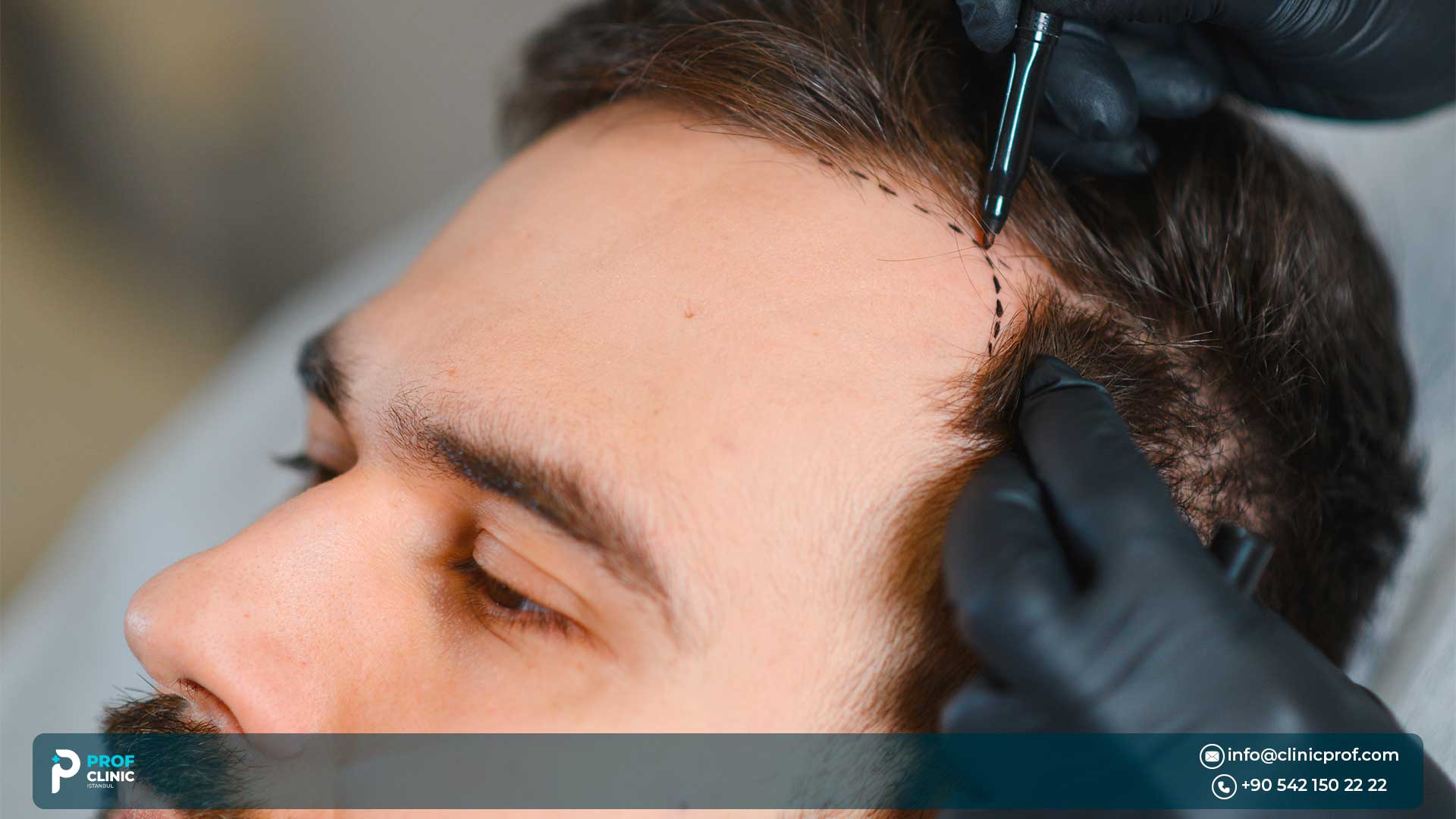
Is a hair transplant permanent? For most people, the transplanted hair itself is: follicles moved from the back and sides of the scalp keep their resistance to pattern hair loss and usually go on growing for decades. What isn’t permanent is the rest of your hair. The native hair around the grafts can keep thinning, so a result that looks right at year one may look different 10 or 20 years later.
In this guide by Prof Clinic, you’ll learn why donor hair lasts, what long-term research actually shows, how long a hair transplant lasts at different stages of life, whether you need finasteride afterwards, and when a second procedure makes sense. By the end, you’ll know which questions decide whether your result still looks natural in a decade.

Why Transplanted Hair Is Permanent: The Donor Dominance Principle
Transplanted hair lasts because it keeps the behaviour of the place it came from. In men with pattern hair loss, follicles on the front and top of the scalp are sensitive to dihydrotestosterone (DHT) and gradually become finer, while hair at the back and sides is usually spared. A review in the Indian Journal of Plastic Surgery calls this the theory of donor dominance: a graft taken from an area destined to stay hair-bearing will, after an initial shedding phase, grow hair in its new site for as long as it would have grown at its original site.
That last phrase is the honest definition of “permanent”. It doesn’t mean the hair is frozen in time; it means the grafts follow the life of your donor hair, which for most men lasts for decades and often for life.
All of this applies to your own hair. Synthetic fibre implants are a different procedure and don’t follow donor dominance, as we explain in Hair Implant vs Hair Transplant: Synthetic Fibres or Your Own Hair?
The Safe Donor Area and Why It Matters
Not every follicle at the back of the head is equally reliable. Surgeons speak of a “safe donor area”, the central part of the back and sides where hair is least likely to be lost over a lifetime. Grafts taken from the outer edges of that zone can thin later, much like the hair they were meant to replace. This is one reason careful extraction matters as much as the technique name, whether the surgeon uses FUE, DHI or Sapphire FUE.
Permanent and Not Permanent at a Glance
The table separates what a transplant usually changes for good from what keeps changing after surgery.
| Part of the result | Usually permanent? | What to expect over time |
|---|---|---|
| Transplanted follicles | Yes, in most cases | They keep growing for as long as donor hair would, and age the way donor hair ages |
| Native hair around the grafts | No | Pattern hair loss can keep thinning it, especially behind the hairline and at the crown |
| Shedding after surgery | No, it’s temporary | Transplanted hairs often fall out after a few weeks, then regrow from the same follicles |
| Donor area supply | Limited | Extracted follicles don’t grow back, so every session uses part of a lifetime budget |
| Benefits of finasteride or minoxidil | No | They last only while you keep using the medicine |
What Is Not Permanent: Native Hair Loss Around the Grafts
The hair you had before surgery is the part that keeps changing. The NHS puts it plainly: your hair might continue to thin around the transplant. Pattern hair loss is driven by the effect of DHT on susceptible follicles, and surgery doesn’t change that. A transplant moves hair to where it’s needed; it doesn’t switch off the process that caused the loss.
In practice, this creates the most common long-term disappointment. The hairline that was rebuilt years ago is still there, but the native hair behind it has receded, leaving a band of thinner hair or an isolated “island” at the front. Nothing has failed, because the grafts are doing exactly what they should. The pattern of loss has simply moved on, and the plan didn’t allow for it.
Why Your Age at Surgery Changes the Picture
The younger you are, the harder your future pattern is to predict. The ISHRS warns that the risk of transplanting a young patient is that future hair loss is still a factor, and that it’s extremely difficult to judge the pattern at a young age. The Indian Journal of Plastic Surgery review advises that patients between 20 and 30 should have a stabilised rate of hair loss before surgery is considered, and that family history helps when planning a new hairline.
What it means in real life: a 25-year-old with a receding hairline may have much less native hair at 45. A low, dense hairline that suits him today could look out of place once the hair behind it thins. A conservative, mature hairline usually ages far better than an ambitious one.

Not sure whether your hair loss has stabilised? Send photos of your hairline and crown to our team on WhatsApp and ask how your pattern is likely to develop before you plan surgery.
How Long Does a Hair Transplant Last? Results Year by Year
For most people, the transplanted hair lasts for decades. What changes is the overall look, which depends on how much native hair you keep, how your hair ages and whether you use medication. The timeline below shows what is typical; it isn’t a fixed schedule.
| Time after surgery | What you usually see | What’s happening |
|---|---|---|
| First few weeks | Many transplanted hairs fall out | The follicles rest after the move; the roots stay in the skin |
| Around 4 months | New hair starts to appear | The grafts begin a new growth cycle |
| 10–18 months | The full result can be judged | Hairs thicken and settle into their final direction |
| Years 2–5 | Transplanted hair is usually stable | Native hair may keep thinning if loss is still active |
| Hair transplant 10 years later | Grafted areas usually still have hair | The overall look depends on native loss; some people plan a second session |
| Hair transplant after 20 years | Hair may be greyer and finer | Grafts age like donor hair; the donor area itself may have thinned |
The early milestones come from NHS guidance; the later rows describe the general pattern rather than measured averages, because very few studies follow patients for 10 or 20 years.
Do Transplanted Hairs Fall Out?
Yes, at first, and that’s expected. The NHS explains that the transplanted hair often falls out after a few weeks and later starts to grow back, with new hair usually appearing after about 4 months. This early shedding is the follicle resting, not the graft being lost. Years later, most transplanted hairs remain, although some loss of density is possible, as the research below shows.
What Long-Term Research Shows
The evidence is reassuring but less absolute than marketing suggests. A study in the Journal of Cutaneous and Aesthetic Surgery compared photos of 112 men, all Norwood grade 4 or higher, at 1 year and 4 years after a single FUT session. A blinded observer found no change in transplanted hair density in 8.92% of them, a slight reduction in 27.67%, a moderate reduction in 55.35% and a marked reduction in 8.03%.
The authors concluded that transplanted grafts may not last permanently for everyone, and that the recipient scalp may influence long-term survival. The study has limits: one clinic, one technique, photo-based grading and no separate count of individual hairs. Still, it’s a useful corrective. “Permanent” describes the follicle’s resistance to pattern hair loss, not a promise that density will never change.
Also read: Failed Hair Transplant: Signs, Causes and How to Repair It
Want to see how results look once they’ve matured? Browse our before-and-after gallery and pay attention to the hairline design, not only the density.
Do You Need Finasteride or Minoxidil After a Hair Transplant?
You don’t need medication to keep the transplanted hairs, but many doctors recommend it to protect the native hair around them. Grafts from the safe donor area don’t rely on it. The hair that is still at risk does, and that hair decides how full the whole scalp looks in 10 years. The ISHRS describes medical therapy as a complement to surgery, because it can slow ongoing loss and add some fullness around a transplanted area.
Finasteride is a tablet that targets the hormonal cause of male pattern hair loss, while minoxidil is applied to the scalp. The American Academy of Dermatology notes that both work only while you use them: once you stop finasteride, you start losing hair again, and if you stop minoxidil, you lose its benefits and gradually notice more shedding.
Is It Medication for Life?
Only for as long as you want its effect on your native hair. The American Academy of Dermatology says you need to keep taking finasteride to continue getting results, and to keep using minoxidil every day. That is a choice, not a condition for the grafts to survive.
Whether it’s worth it depends on a few practical factors:
- Your age: younger patients usually have more native hair at risk and more years of loss ahead.
- Your pattern: active thinning behind the hairline or at the crown makes medication more relevant.
- Your plans: keeping native hair can reduce how many grafts a future session would need.
- Your tolerance: side effects and daily routine matter, because a medicine you stop after six months changes little.
Side Effects and Who Should Ask First
Finasteride isn’t for everyone. The NHS lists erection problems, lower sex drive and ejaculation problems as common side effects, and says they can sometimes carry on even after you stop the medicine. It also lists low mood as a rare but serious side effect that needs prompt medical advice. Discuss these risks with a doctor before you start, and don’t change your dose on your own.
Finasteride is used for hair loss in men. Women with female pattern hair loss need a different plan, which we cover in Hair Transplant for Women in Turkey: Candidates, Methods & Cost.
Also read: PRP After a Hair Transplant: Is It Necessary? Timing and Sessions
Wondering whether you’d need medication after surgery? Ask our team about your case and get an answer based on your pattern rather than a general rule.
Ageing, Greying and Thinning of Transplanted Hair
Transplanted hair ages like donor hair. Because grafts keep the character of the area they came from, they usually go grey on roughly the same timetable as the hair at the back and sides of your head, and they can become finer with age. The study above also notes that miniaturisation can affect the donor hair at the back of the scalp, which helps explain why some density loss happens over the years.
Colour also changes how full hair looks. The Indian Journal of Plastic Surgery review notes that the less contrast there is between hair and skin colour, the better the result tends to look. So greying can make a transplant look fuller on some people and a thin crown look sparser on others, with the same number of hairs.

Hair Transplant After 20 Years: Realistic Expectations
There is little published data that follows patients for 20 years, so be wary of anyone who quotes exact figures. What can be said is this: grafts taken from the safe donor area are usually still growing, the overall look depends on how much native hair has been lost, and conservative hairlines tend to age better than low ones. The donor area itself may be thinner by then, which limits what any later session can achieve.
When a Second Hair Transplant Years Later Makes Sense
A second hair transplant usually makes sense when native hair has receded behind the first result, or when the first session couldn’t cover every area. The NHS notes that a large area may need 2 or more sessions, and the ISHRS treats ongoing loss as something to plan for over decades. That isn’t a sign the first procedure failed; it’s how progressive hair loss is managed over a lifetime.
The limit is the donor area. Extracted follicles don’t grow back, so each session uses part of a finite supply. The ISHRS advises keeping donor hair in reserve for future transplantation that keeps pace with hair loss, and warns that transplanting too early may not address future needs. A good first plan leaves room for a second one.
As a general guide, a scalp hair transplant package in Istanbul costs about €1,800–€3,500. This is an approximate range as of October 2026, not a final price; your price depends on your case after assessment. For what drives the number, see Hair Transplant Cost in Turkey 2026: Prices, Packages & Grafts.
14 Things to Check Before a Hair Transplant That Has to Last
Use this list in your consultation. Each point affects how your result looks in 10 years, not just in 12 months.
- Family history: how your father, grandfathers and brothers lost their hair is a useful clue to your own pattern.
- Stability of loss: ask whether your loss is still active, especially if you’re under 30.
- Current and likely stage: know your Norwood stage today and the stage you may reach.
- Donor density: ask how dense your safe donor area is and how many grafts it can spare.
- Lifetime graft budget: ask how many grafts would be left for a future session.
- Hairline height: make sure the design suits the face you’ll have at 50, not only at 25.
- Crown strategy: ask whether the crown is treated now or kept for later.
- Medication plan: discuss whether finasteride or minoxidil suits you, and for how long.
- Side effects: understand the possible effects before you agree to any medicine.
- Hair calibre and colour: thick hair and low contrast with your skin usually look fuller.
- Scalp diagnosis: confirm that your loss is pattern hair loss and not a condition needing other treatment.
- Written plan: ask for the graft count, areas and hairline design in writing.
- Who does what: ask who assesses you, who extracts the grafts and who places them.
- Follow-up: confirm how the team checks your progress after you fly home.
The more of these you settle before surgery, the less likely you are to be surprised by your result a decade from now.
Prof Clinic: Planning a Hair Transplant in Istanbul Around Future Loss
At Prof Clinic, a hair transplant in Istanbul starts with an assessment rather than a booking. The clinic’s own male hair transplant in Turkey page says it plainly: results are permanent, but untreated areas may continue to thin over the years, so planning and follow-up matter. The medical lead for hair restoration, Spc. Dr. Lütfi Öztürk, is an internal-medicine specialist who carries out the medical assessment and treatment planning and coordinates follow-up.
Here is what you can check before you travel:
- Pre-op tests: blood count, ECG, kidney and liver function, electrolytes, blood sugar, and hepatitis and HIV screening before surgery.
- Techniques: FUE, DHI, Sapphire FUE and Micro FUE, chosen for your hair and scalp rather than by name.
- Honest expectations: expected density is discussed individually and isn’t promised in advance.
- A written quote: sent after the team reviews your photos. Packages include the procedure, accommodation, airport and hotel transfers, and post-op care.
- Follow-up after you fly home: the coordination team stays in touch and gives advice over WhatsApp.
Planning for a result that still looks right in 10 years? Book a free online consultation and ask for a plan that includes your donor reserve.
FAQs About Whether a Hair Transplant Is Permanent
Can transplanted hair fall out years later?
Most transplanted hair keeps growing for decades, but some thinning is possible. In one 4-year study, most men showed at least some reduction in transplanted density, often moderate. Grafts taken from outside the safe donor area, ageing and the condition of the recipient scalp can all play a part. Loss of native hair around the grafts is far more common than loss of the grafts themselves.
How long does a hair transplant last?
The transplanted hair usually lasts as long as the donor hair at the back of your head would have, which for most people means decades. The full result shows at around 10–18 months. After that, the overall look depends mainly on how much native hair you keep, so a hair transplant 10 years later can look different even when the grafts are fine.
Do I have to take medication for life after a hair transplant?
No, the grafts don’t need medication to survive. Finasteride or minoxidil protects the native hair around them, and their benefits last only while you use them. Whether long-term use is worth it depends on your age, how active your hair loss is and how well you tolerate the medicine. Decide with a doctor, not on your own.
Will I need a second hair transplant?
Not necessarily, but many people with progressive hair loss consider one years later. It’s more likely if you had surgery young, if loss continued behind the hairline or if the crown was left for later. Because donor hair is limited, a sensible first plan keeps a reserve of grafts in case a second session is needed.
Does transplanted hair turn grey?
Yes. Transplanted hair keeps the character of the donor area, so it usually greys on roughly the same timetable as the hair at the back and sides of your head. Greying doesn’t mean the grafts are failing. It can even make a transplant look fuller when the contrast between hair and skin becomes lower.
Final Thoughts
So, is a hair transplant permanent? The grafts usually are, because donor hair keeps its resistance to pattern hair loss for decades. The rest of your scalp isn’t, and that is what decides how your result looks at 10 and 20 years. Judge any plan by three things: whether the hairline suits your future pattern, whether donor hair is kept in reserve, and whether you have a clear view on medication.
The safest first step is an honest assessment of how your hair loss is likely to progress. Talk to Prof Clinic before you decide, and ask for a long-term plan for your hair transplant in Turkey.
Sources
- Indian Journal of Plastic Surgery — Hair Transplantation Surgery (Khanna, 2008)
- Journal of Cutaneous and Aesthetic Surgery — Longevity of Hair Follicles after Follicular Unit Transplant Surgery (Kumaresan & Subburathinam, 2020)
- American Academy of Dermatology — Hair loss: Diagnosis and treatment
- NHS — Hair transplant
- NHS — Side effects of finasteride
- ISHRS — Early Hair Loss: The Young Patient
- ISHRS — Combined Surgical and Medical Hair Restoration Therapy: A Comprehensive Approach