Bone grafting for dental implants in Turkey usually becomes a concern when patients are told they may not have enough jawbone to support an implant properly. At this stage, most people are not just looking for a definition. They want to know whether a graft is really necessary, how it could affect treatment time, and whether other implant options may be available before they travel to Istanbul for care.
In this guide, we explain when bone grafting may be recommended before dental implants, how dentists assess bone quality, what the procedure and healing period may involve, and which alternatives may be considered in some cases. We also outline the key points international patients should understand when planning implant treatment in Turkey.
What Is Bone Grafting for Dental Implants?
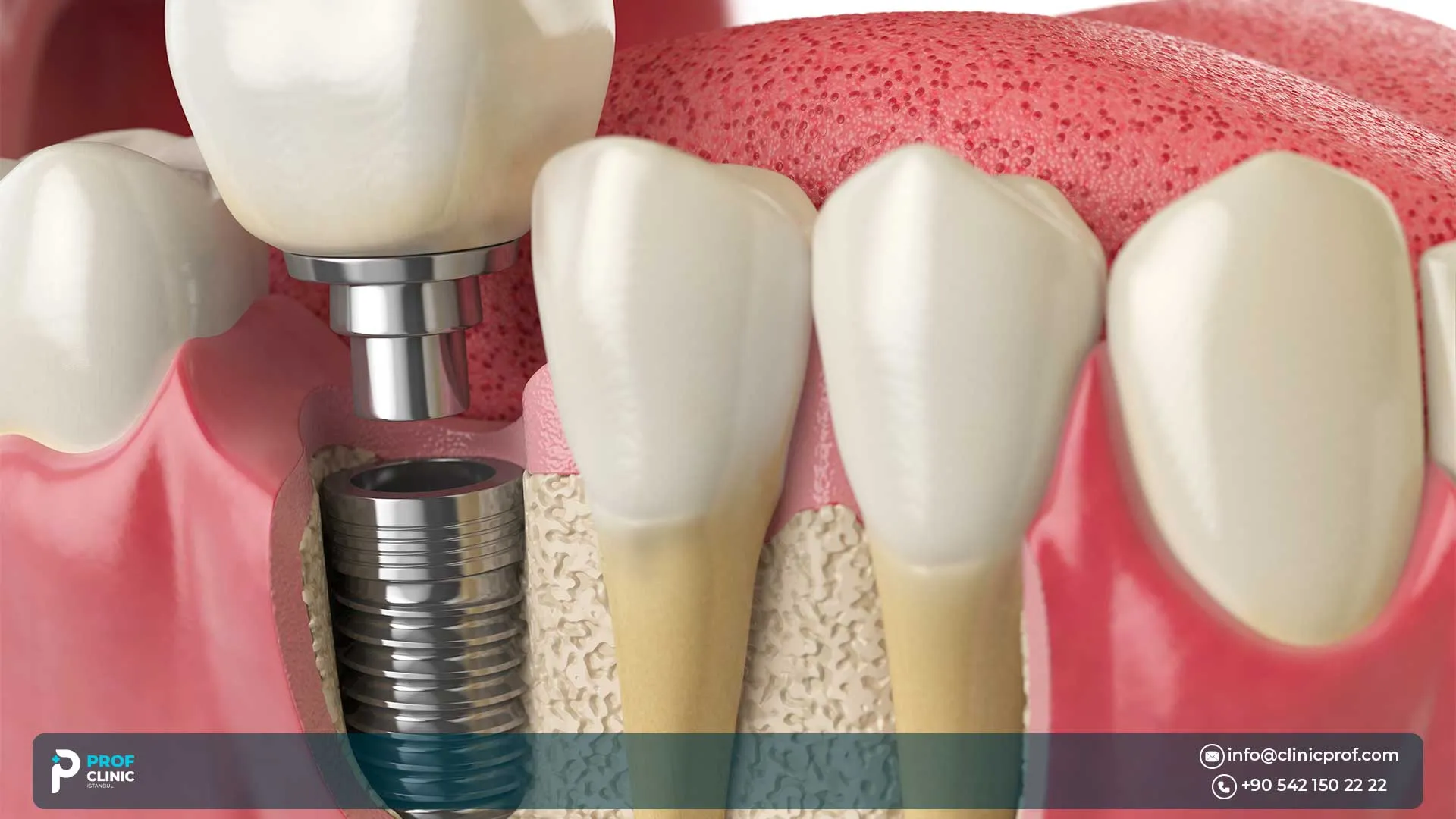
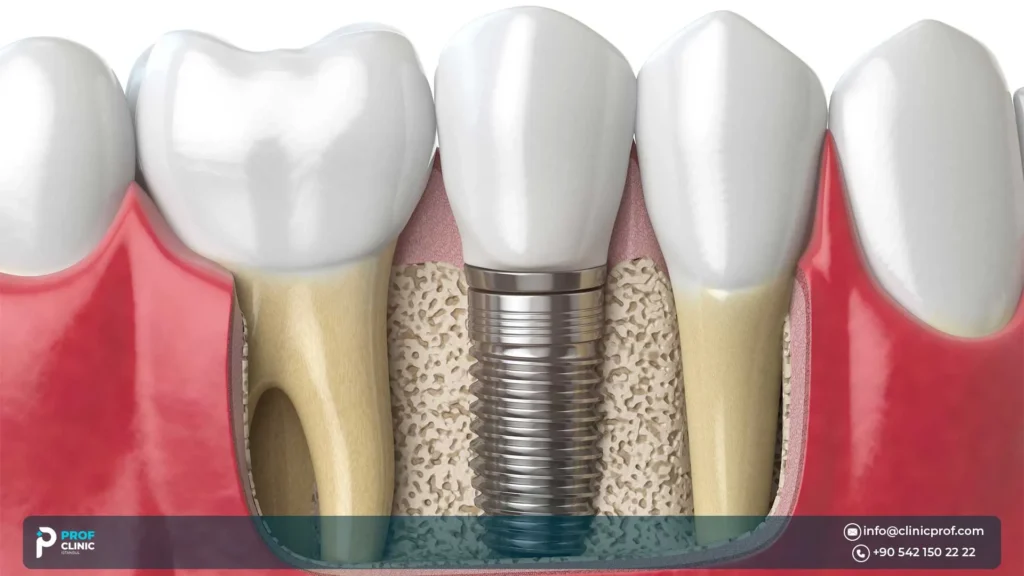
Bone grafting dental implants treatment is used when the jawbone does not have enough width, height, or density to support an implant securely. This procedure helps rebuild weak or reduced areas of bone, so the implant has a more stable foundation.
The purpose is not to add an unnecessary step, but to improve support, healing, and the long-term success of the implant.
For many patients, the main concern is whether a bone graft before implants is truly necessary. The answer depends on how much bone has been lost, where the missing tooth is located, and whether the area can hold an implant predictably. In some cases, only a small graft is needed. In others, a more advanced jaw bone graft may be recommended as part of a staged treatment plan.
It is also important to know that not every patient needs grafting. Some people already have enough healthy bone for straightforward implant placement, while others may be suitable for alternative implant approaches depending on the condition of the jaw. That is why treatment planning should always be based on clinical examination and detailed imaging rather than assumptions alone.
If you are unsure whether you need bone grafting dental implants treatment, a scan-based assessment can provide a clearer answer. At Prof Clinic in Turkey, you can share their panoramic X-ray or CBCT for a personalized review before planning treatment in Turkey.
Understanding this early helps you make better decisions about timing, cost, and treatment options. Before choosing a treatment plan, contact us to find out whether you need a minor bone graft before implants, a more advanced jaw bone graft, or a different implant solution altogether.
When Is a Bone Graft Needed Before Implants?
A bone graft before implants may be recommended when the jaw does not have enough bone volume or density to support an implant securely. This often happens after long-term tooth loss, gum disease, trauma, or years of denture use. For patients considering dental implants in Turkey or Istanbul, Turkey, this is one of the most important parts of treatment planning, because the success of the implant depends on having enough healthy bone in the right position.
In many cases, the real issue is not simply whether bone is present, but whether there is enough of the right kind of bone for the planned implant. Some patients need extra width in the jawbone to support the implant properly. Others may need more height, especially in the upper back jaw where the sinus can reduce the available space. In smaller defects, limited grafting may sometimes be done at the time of extraction or implant placement rather than as a separate stage.
At the same time, not every patient with bone loss automatically needs grafting. Some patients still have enough bone for implant placement, while others may be suitable for a different treatment approach depending on the condition of the jaw and the type of implant being considered. This is why an imaging-based evaluation is essential before planning treatment, particularly for international patients who want clarity before traveling to Istanbul for care.
If you have already been told that you “lack bone,” it is best not to assume that the same treatment plan applies in every case. A detailed review of your panoramic X-ray or CBCT can show whether you need a jaw bone graft, a minor bone graft before implants, or another implant option altogether. At Prof Clinic, book your free consultation to get a personalized assessment before arranging treatment in Turkey.
It is also important to remember that healing and treatment suitability are influenced by more than bone levels alone. Smoking, gum health, and some medical conditions can affect recovery and increase treatment risk. Understanding these factors early can help patients plan more confidently and choose the most appropriate implant pathway.
Also read: All on 4 Zygomatic Implants in Turkey: Fixed Teeth Without Bone Grafting
Types of Jaw Bone Grafts Used in Implant Dentistry in Turkey
When patients research a jaw bone graft before dental implants in Turkey, they often assume that the graft material and the surgical procedure are the same thing. They are not. A clinician may select one type of graft material, but the procedure itself can still vary depending on whether the goal is to preserve bone after extraction, widen a narrow ridge, or gain bone height in the upper jaw near the sinus.
If you are also comparing implant options in Istanbul, it helps to remember that the implant plan and the bone plan are closely linked.
Graft material options
In implant dentistry generally, graft materials are usually grouped into four main categories:
| Graft material | Description |
| Autograft | uses bone taken from your own body. It may be considered when the clinician wants your own living bone tissue, but it can involve a second donor site as well as the implant area |
| Allograft | uses processed human donor bone. It is commonly discussed when added support is needed without harvesting your own bone, although timing and suitability still depend on the case |
| Xenograft | uses animal-derived graft material. It may be used on its own or combined with other materials as part of a guided bone-healing plan, depending on anatomy and treatment goals |
| Alloplast or synthetic graft | uses a lab-made bone substitute. These materials are often used as a scaffold in regeneration, but healing and product choice still vary from one defect to another |
The right graft material is not the most talked-about one. It is the one that fits the defect, the amount of missing bone, the site that needs support, and whether the implant will be placed immediately or after healing. In implant dentistry, graft materials may include your own bone, donor bone, animal-derived material, or a synthetic substitute, but the final choice depends on the clinical goal, not on popularity.
At Prof Clinic in Istanbul, we rely on a case-specific approach to bone support before implants. Depending on the patient’s anatomy and treatment plan, our work may involve autogenous or synthetic grafting, as well as supportive procedures such as sinus lifting, ridge split, and crest augmentation when needed.
Just as importantly, our implant content shows that a bone graft before implants is not always the only path for reduced bone. We also discuss alternatives that may reduce or avoid a traditional graft-first plan, including short implants for limited bone height, pterygoid implants for posterior upper-jaw cases, zygomatic implants for severe upper-jaw bone loss, and basal or cortical-bone implant concepts in cases where minimizing grafting is part of the treatment strategy.
For patients planning treatment in Turkey or Istanbul, that distinction matters. Some cases truly benefit from grafting. Others may be better managed with a different implant design that matches bone condition, recovery expectations, and travel timing more closely. The decision should be based on anatomy and treatment planning, not on choosing a graft material in isolation.
If you are weighing your options, a more useful next step than comparing materials alone is to contact us via WhatsApp for a written treatment roadmap. That way, you can see whether your case is more suitable for grafting, sinus-related augmentation, or a graft-reducing implant approach before you commit to treatment in Istanbul.
Also read: Different Types of Dental Implants: Which is Best?
Common procedures before implant placement in Turkey
When planning bone grafting dental implants treatment in Turkey, the procedure is chosen according to the location and severity of bone loss. In some cases, only a small bone graft before implants is needed. In others, a more advanced jaw bone graft or sinus-related procedure may be recommended to prepare the site properly.
Common procedures include:
- Socket preservation graft: This is often recommended after tooth extraction to help preserve the bone in the socket and reduce collapse at that site. It is one of the most common early steps when a bone graft before implants is being considered.
- Ridge augmentation: This procedure is used when the jaw ridge is too narrow or irregular for stable implant placement. In these cases, a jaw bone graft may be used to rebuild the width or shape of the ridge before the implant is placed.
- Sinus lift or sinus augmentation: This is most commonly performed in the upper back jaw, where the sinus can limit available bone height. In bone grafting dental implants planning, a sinus lift may be recommended when there is not enough vertical bone for secure implant placement.
- Minor grafting: Some patients need only a small amount of added bone in a limited area. This type of bone graft before implants may sometimes be done as part of extraction treatment or alongside implant placement, depending on the case.
- More advanced grafting: When bone loss is more extensive, the treatment plan may involve a larger jaw bone graft and a longer healing period before implants are placed. This usually depends on how much bone is missing and where support is needed.
The key point is that not every patient needs the same approach. The type of graft depends on the implant site, bone volume, and the overall treatment plan. Once that is clear, the next step is to understand how bone grafting works, what the procedure involves, and what happens during healing.
Bone Graft Procedure and Implant Timeline at Prof Clinic in Istanbul, Turkey
At Prof Clinic in Istanbul, bone grafting dental implants treatment is usually planned as a sequence, not as a one-day promise for every case. The process normally starts with a pre-travel review, where patients share photos, recent X-rays, or CBCT imaging if available so the team can assess bone levels, missing teeth, goals, and whether the case looks immediate or staged before flights are booked.
Prof Clinic’s implant pages also state that radiographic imaging is a standard part of planning because it shows the jaw anatomy and helps guide each stage of treatment accurately.
A simplified how our pathway often looks like:
- Remote review before travel: Your case is reviewed using the records you send, together with your symptoms, missing-tooth pattern, and treatment goals. This first step helps clarify whether you may need a bone graft before implants, whether the case appears straightforward, and what still needs confirmation on arrival in Istanbul.
- Arrival assessment and final scan confirmation: Once you arrive, the clinic confirms the plan with an in-person exam and imaging. Prof Clinic’s patient guidance describes this as the stage where the likely option, visit structure, and next steps are finalized around your actual anatomy rather than assumptions made from internet averages.
- Bone support procedure if needed: If the site lacks enough support, grafting may be used to preserve a socket, rebuild a ridge, or prepare the area before implant placement. Mayo Clinic notes that implant surgery may require grafting when the jawbone is not thick enough or is too soft, and that the condition of the jawbone determines how the plan proceeds. At Prof Clinic, the broader implant content presents this as a case-selection issue: some patients need a staged plan, while others may qualify for a simpler route.
- Healing period: After grafting, the site may need time to mature before the implant is placed. Mayo Clinic explains that transplanted bone may need several months to develop enough support for an implant. This is why a jaw bone graft can change the overall timeline, even when the final goal is still a conventional implant restoration.
- Implant placement and healing protocol: Once the site is ready, the implant is placed and then managed according to the stability achieved on the day of surgery. Prof Clinic explains that one-stage treatment is more suitable when the site is straightforward and the implant has strong initial stability, while a two-stage approach is more commonly chosen when stability is borderline, the case is more complex, or bone grafting makes protected healing the safer option.
- Final restoration: After healing and integration, the final crown, bridge, or full prosthesis is completed. For international patients, Prof Clinic’s travel-planning content emphasizes that the number of visits and days in Istanbul depends on factors such as extractions, bone management, temporary teeth, swelling checks, and lab steps for the final prosthesis.
If you are comparing treatment timelines in Turkey, the most practical next step is to schedule a free consultation with our team. By reviewing your scans and dental records in advance, our doctors can outline a personalized treatment timeline and explain whether your case may involve immediate implant placement or a staged plan with bone grafting.

Can a bone graft and implant be done at the same time at Prof Clinic?
Sometimes, yes. Mayo Clinic states that if only minor grafting is needed, the graft and implant may be done during the same surgery. But that depends on whether the jaw can still provide the primary stability needed at placement.
At Prof Clinic, that same decision is reflected in the clinic’s one-stage vs two-stage guidance. If the site is stable and can be protected well, combining steps may be possible. If stability is borderline, the defect is larger, or grafting is part of the risk picture, a staged approach is often the safer choice because it protects healing before the implant is loaded.
Before you set travel dates, ask us to map which parts of your case can happen on the first Istanbul visit and which, if any, need a second stage after healing. That gives you a more useful decision framework than comparing “fast” versus “slow” treatment in general.
Also read: One-Stage vs Two-Stage Dental Implants
Healing and Recovery After Bone Grafting at Prof Clinic in Istanbul
At Prof Clinic in Istanbul, recovery after bone grafting dental implants treatment is explained to patients as two different timelines. The first is the initial recovery period, when swelling and tenderness gradually settle after the procedure. The second is the bone maturation phase, when the grafted area develops enough strength to support the implant. While most patients feel noticeably better within the first week, the graft itself often needs additional time before implant placement can safely proceed.
During the first days after a jaw bone graft, mild swelling, tenderness, or bruising can occur. At Prof Clinic, patients receive clear guidance on how to manage these early effects so healing remains predictable and comfortable. The team explains that feeling normal again does not necessarily mean the bone has fully matured, which is why follow-up checks and the planned healing period are an important part of the overall implant treatment.
Patients treated at Prof Clinic are typically advised to follow simple aftercare instructions during the early healing phase:
- use cold compresses if recommended to help control swelling
- follow a soft-food diet during the first days after surgery
- maintain gentle oral hygiene while protecting the surgical site
- take prescribed medications according to the treatment plan
- avoid smoking or vaping, which can slow bone healing
The clinic also monitors healing progress to ensure the grafted site is ready for the next stage of treatment. Once the bone has matured sufficiently, the team schedules the implant placement according to the stability and readiness of the site.
If you are planning dental implants in Istanbul and want to understand how recovery may look in your case, you can arrange a consultation with our team to review your scans and discuss the expected healing timeline before the implant stage.

Risks, Limits, and Alternatives to Jaw Bone Grafting at Prof Clinic in Istanbul
When discussing bone grafting dental implants, patients usually want to understand three practical questions before deciding on treatment: the possible risks, the anatomical limits, and whether alternatives to a bone graft before implants may exist.
At Prof Clinic in Istanbul, treatment planning addresses these three factors together rather than focusing on grafting alone.
1. Surgical risks associated with bone grafting
Like any surgical procedure, a jaw bone graft carries certain risks, even though it is generally considered safe when properly planned. Medical sources note that common post-operative effects may include swelling, bruising, mild bleeding, soreness, or infection. In some situations, graft healing may be slower than expected or the bone regeneration may not be sufficient for implant placement without additional treatment.
At Prof Clinic, these risks are addressed through detailed planning and careful case selection before performing bone grafting dental implants procedures. The team evaluates bone condition, gum health, and the patient’s medical history to reduce complications and improve healing predictability.
2. Anatomical and biological limits
Another important factor is the anatomy of the jaw itself. In the upper jaw, the sinus can reduce the available bone height, while in the lower jaw nerves and bone density must be carefully considered before implant placement.
This is why scan-based planning is essential before performing a bone graft before implants. At Prof Clinic, treatment planning relies on CBCT imaging to evaluate bone volume, nerve location, sinus anatomy, and implant positioning before the procedure is scheduled. This helps determine whether a jaw bone graft is the safest option or whether another implant approach may provide a more predictable outcome.
3. When alternatives to bone grafting may be considered
Patients often ask whether severe bone loss always means a long staged grafting process. In reality, that is not always the case. While bone grafting dental implants remains the most reliable option for many patients, certain cases may allow alternative implant strategies.
At Prof Clinic in Istanbul, the implant planning approach may also include solutions designed for reduced bone volume in selected cases, such as:
- Short implants for limited bone height
- Pterygoid implants for posterior upper-jaw support
- Zygomatic implants in cases of advanced upper-jaw bone loss
- Basal or cortical-anchored implant concepts where grafting may be minimized
These options are only considered after detailed imaging confirms that stability and long-term support can be achieved safely. For some patients, augmentation with a bone graft before implants remains the most predictable path. For others, an alternative anchorage strategy may provide a more efficient solution.
For this reason, the safest decision is not choosing between “graft” or “graft-free” in theory, but reviewing the case with an experienced implant team. At Prof Clinic, treatment planning combines imaging analysis, prosthetic goals, and anatomical factors to determine whether bone grafting dental implants, a jaw bone graft, or an alternative implant pathway is most suitable for the patient
Choosing the Right Treatment Plan with Prof Clinic in Istanbul
By the time patients reach the decision stage, the key questions are usually practical rather than theoretical. Do you actually need additional bone support? If so, what type of bone graft before implants is being proposed? Can the implant and graft be combined in one stage, or is a staged approach safer? What does recovery look like in your specific case? And if bone loss is significant, are there alternatives to a traditional jaw bone graft?
At Prof Clinic in Istanbul, treatment planning for bone grafting dental implants focuses on answering these questions using imaging and case evaluation rather than general assumptions. The clinic reviews bone height, width, density, gum condition, and prosthetic goals before recommending whether grafting, staged healing, or a different implant approach would be most appropriate.
Before agreeing to treatment, patients are usually encouraged to clarify several points with their implant team:
- What do my scans show about bone height, width, and bone quality?
- Is the procedure a socket preservation graft, ridge augmentation, sinus lift, or another type of bone preparation?
- Which graft material or technique is being considered, and why is it suitable for my case?
- Can the implant be placed at the same time as the bone graft before implants, or is staged healing safer?
- What recovery milestones should I expect during the first week, first month, and later healing phase?
- What specific risks apply to my medical history or bone condition?
- Are there any reasonable alternatives if my anatomy makes a jaw bone graft more complex?
At Prof Clinic, patients can explore several resources before making a decision. The website provides information about the medical team, implant treatment approaches, patient testimonials, and before-and-after cases so patients can understand the clinic’s approach to complex implant planning in Istanbul.
If you want to understand the most suitable treatment pathway for your case, you can schedule a consultation with the Prof Clinic team in Istanbul to review your scans and discuss whether bone grafting dental implants, staged healing, or an alternative implant approach is the best option for you.
Learn about our All-Inclusive Dental Package

FAQs about bone grafting dental implants
Do all dental implants require a bone graft?
No. Some patients already have enough healthy jawbone for implant placement, while others need grafting because the bone is too thin, too soft, or too reduced. The decision depends on examination, imaging, and the treatment plan.
How long after a bone graft can implants be placed?
It depends on the case. Guy’s and St Thomas’ NHS says many grafted cases heal for about 3 to 6 months before implant treatment, while Cleveland Clinic notes that larger grafts can take longer. Smaller grafts may sometimes be combined with implant placement.
Is a jaw bone graft painful?
It is still surgery, so swelling, bruising, tenderness, and temporary discomfort can happen. Cleveland Clinic describes most bone graft patients as reporting little to no pain overall, but short-term soreness and swelling are normal.
What materials can be used in a bone graft before implants?
Common categories include your own bone, donor bone, animal-derived material, and synthetic bone substitutes. The right choice depends on defect size, location, and treatment goals.
Can a bone graft and implant be done at the same appointment?
Sometimes. Mayo Clinic says minor grafting may in some cases be done at the same time as implant surgery, but other cases need a staged approach first.
What if I do not have enough bone for standard implants?
Depending on the anatomy and severity of bone loss, the plan may involve augmentation or, in selected severe upper-jaw cases, assessment for alternative implant strategies. These options should be discussed only after CBCT-based specialist planning.