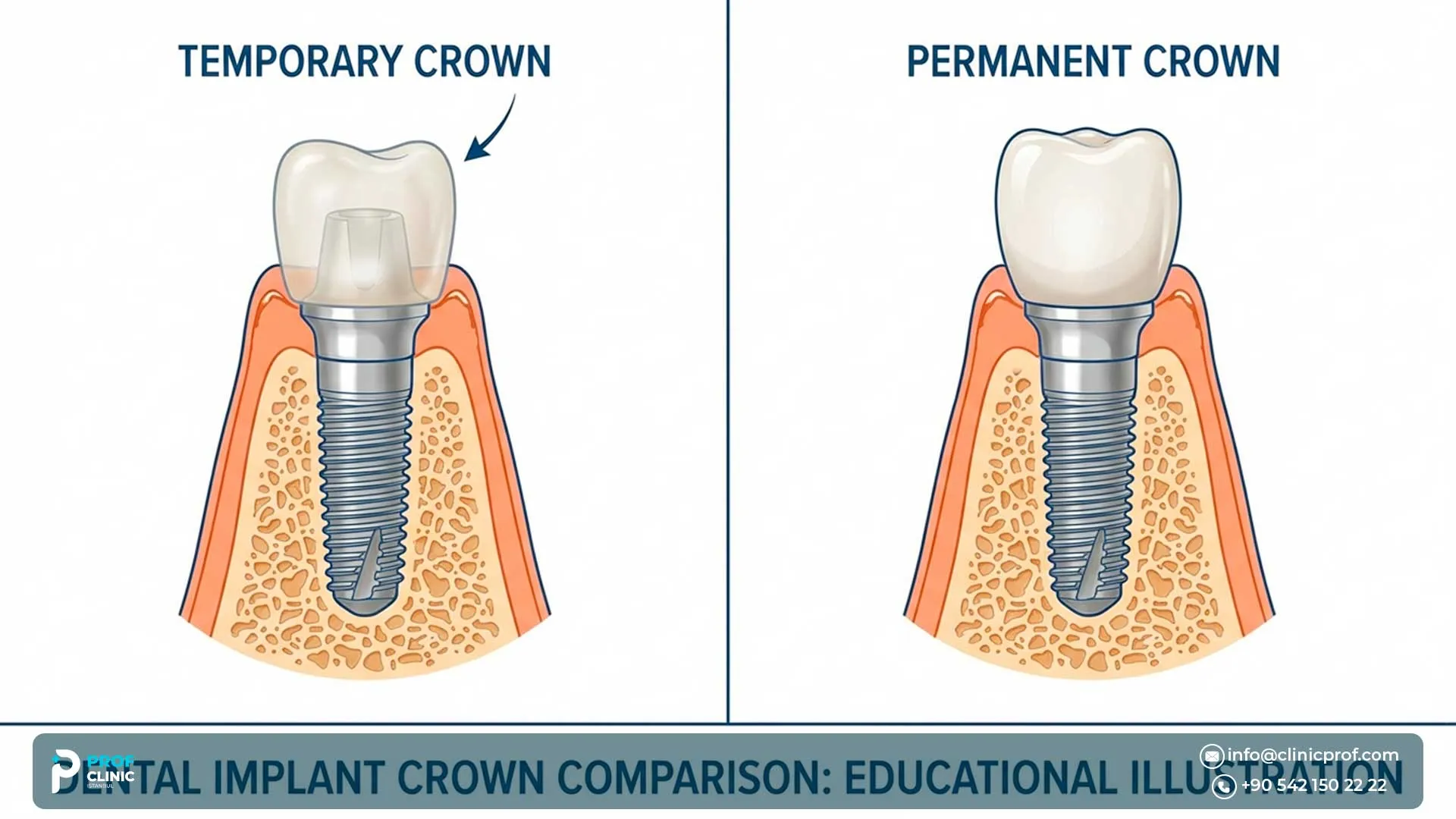
A temporary vs permanent implant crown comparison starts with one simple idea: a temporary implant crown is a short-term restoration used during healing, while a permanent implant crown is the final custom restoration made for long-term function and appearance. The exact timing and design vary by case, so not every patient follows the same implant crown journey.
This article by Prof Clinic Istanbul is written for patients considering implant crown treatment in Turkey who want to understand the difference between the temporary and permanent stages before consultation. It is written for education only and does not replace an in-person assessment by a qualified dentist or implant specialist.
What is a temporary implant crown?
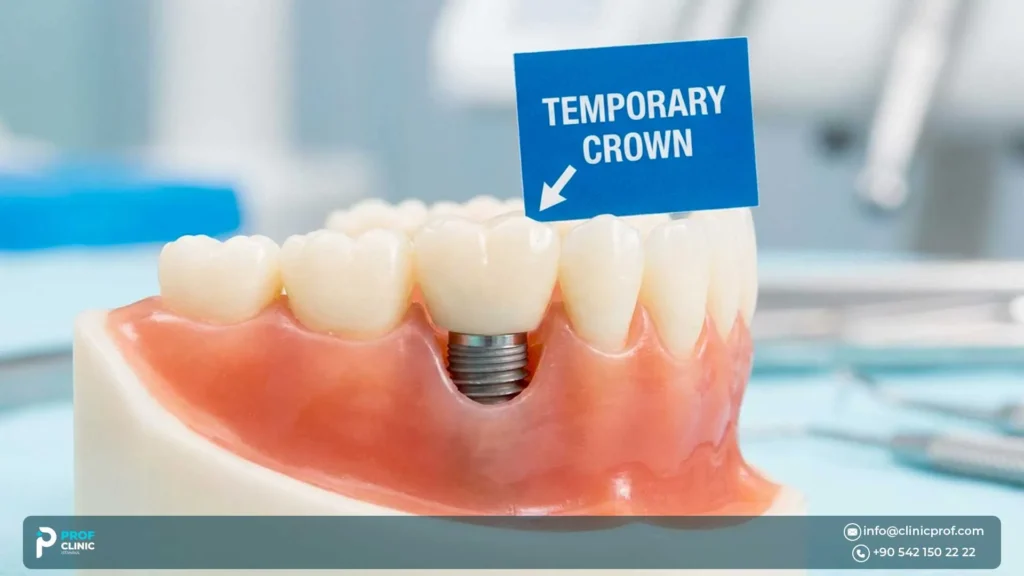
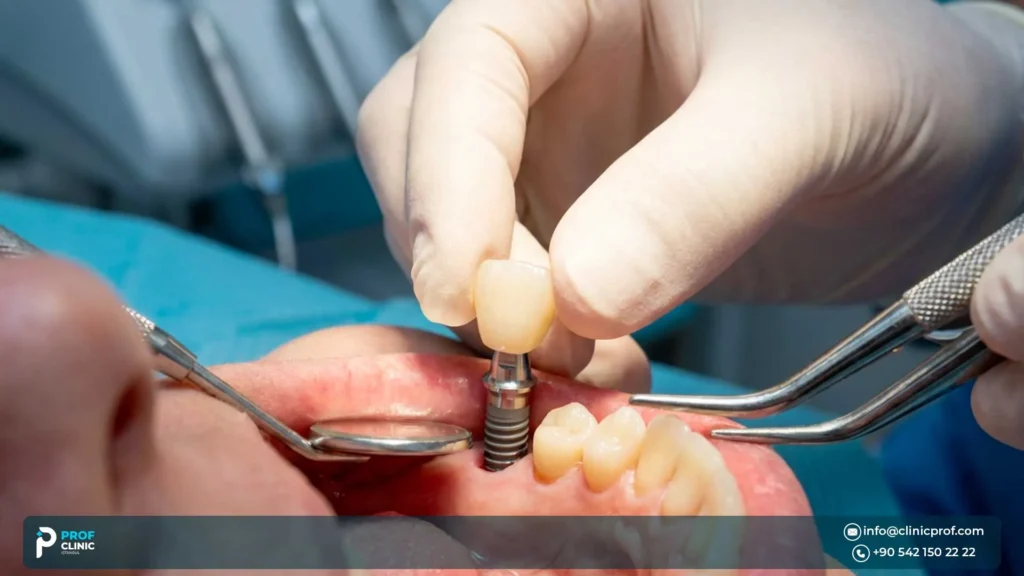
A provisional crown implant is an interim restoration placed before the definitive crown is delivered. You may also see it described as a provisional crown implant, which is the more clinical term for the same short-term stage.
Its main job is to protect the treatment pathway while healing continues. Depending on the case, it can help maintain appearance, support speech, preserve space, and allow the patient to move through the healing phase with more confidence. In selected implant cases, the temporary crown is fixed; in others, the site may heal with a different temporary solution based on bone quality, implant stability, bite forces, and the overall treatment plan.
This is why patients should not assume that every implant automatically receives an immediate visible tooth. Immediate temporization is case-dependent, not universal. If you want to understand the full implant journey first, our Dental Implants in Turkey page is the best starting point.
Why do dentists use temporary crowns after dental implants?
Dentists use provisional crown implant after implants for practical and biological reasons, not just cosmetic ones.
A temporary crown can:
- maintain the appearance of the smile during healing
- help with speech in visible or functional areas
- preserve space and guide how the bite feels
- protect the treatment sequence while the implant stabilizes
- support soft-tissue shaping in selected aesthetic cases
That last point is one of the most overlooked parts of implant care. In some patients, a provisional crown helps guide the gum contour around the implant so the final tooth looks more natural at the gumline. In immediate-load cases, the temporary may also be designed to reduce heavy chewing pressure while the implant is healing.
You can explore that pathway further on our blogs on Same Day Dental Implants Turkey and Immediate Load Dental Implants.
What is a permanent implant crown?
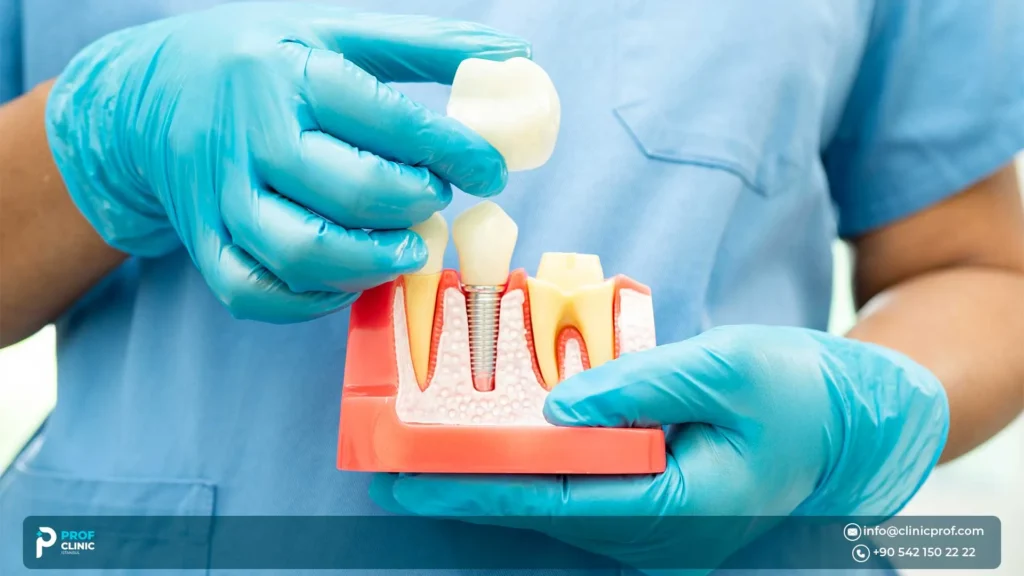
A permanent implant crown is the final custom restoration placed when the implant is considered ready for long-term loading. It is the visible, tooth-like part that patients see when treatment is complete.
Unlike a temporary crown, the permanent implant crown is designed as the long-term restoration. It is custom-made to fit the implant position, the surrounding gums, the bite, and the neighboring teeth. The goal is not only to replace the missing tooth, but to do so in a way that feels stable, looks natural, and functions well over time.
This final stage is usually more precise than the temporary stage because the dentist can work from healed tissues and more accurate records. If you want to see how crown placement fits into the wider treatment sequence,
ِAlso read: Dental Implant Procedure Time
When Is the Permanent Crown Placed After a Dental Implant in Turkey?
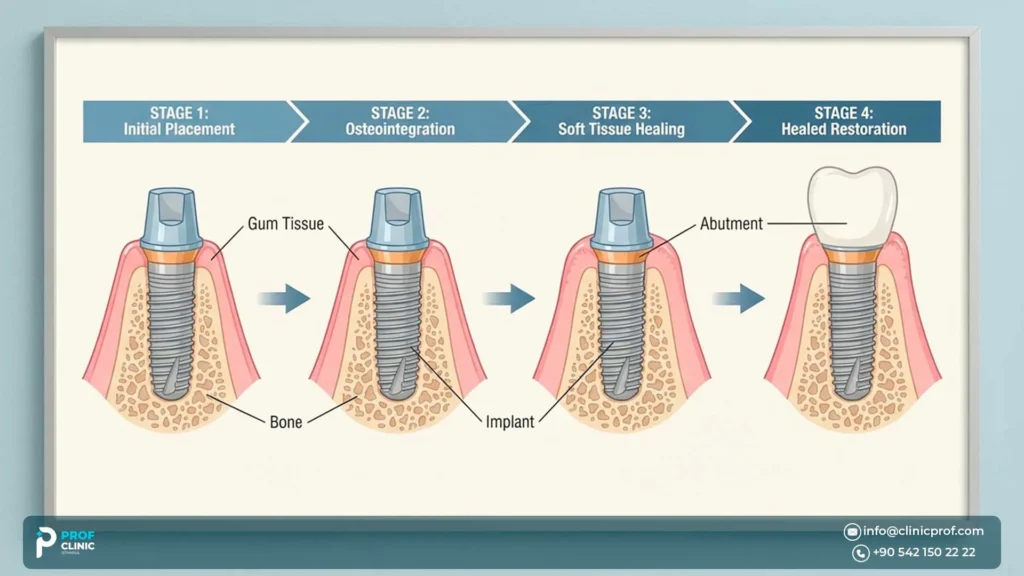
The permanent crown is placed after healing and implant stability have been confirmed. That usually means waiting until osseointegration and soft-tissue healing have progressed enough for the final restoration to be made and fitted properly.
There is no single timeline that suits every patient. Timing depends on factors such as:
- implant stability at placement
- the location of the implant
- bone and gum condition
- whether bone grafting or additional procedures were needed
- whether the case involved an immediate temporary crown
Some patients receive an immediate temporary crown on the same day or shortly after implant placement, but that does not mean the final crown is ready yet. The definitive crown still comes later, after healing has been assessed. The key point is that your dentist confirms readiness based on stability, healing, and the treatment plan, not by following a rigid calendar.
For a clearer sense of the staging involved, read Dental Implant Procedure Time.
Temporary vs permanent implant crown
The difference between temporary and permanent implant crowns is not just how long they last. It is also about purpose, timing, design, strength, and what each stage is meant to achieve for the patient
| Feature | Temporary implant crown | Permanent implant crown |
| Purpose | Supports the healing stage | Provides the final long-term restoration |
| When used | Before treatment is fully finished | After healing and stability are confirmed |
| Materials | Usually provisional materials such as acrylic, resin, or PMMA-type materials | Commonly zirconia or ceramic-based final restorations, depending on the case |
| Strength | Designed for short-term use and controlled function | Designed for long-term chewing forces and durability |
| Appearance | Can look natural, especially in visible areas, but is not always the final aesthetic design | More refined, custom-shaped, and matched to the final smile plan |
| Comfort | Can feel good, but may be more limited during healing | Usually more comfortable long term because of the final fit and bite refinement |
| Attachment | May be temporarily fixed depending on the case | Usually screw-retained or cement-retained depending on restorative design |
| Care | Requires caution during healing and careful aftercare | Requires ongoing hygiene and routine maintenance |
| Typical next step | Monitoring, healing, and transition to final records | Long-term review, maintenance, and bite checks when needed |
A helpful way to think about it is this: the temporary crown belongs to the healing stage, while the permanent crown belongs to the final stage.
Need help knowing whether your case may need a provisional stage first? Start withDental Implants in Turkey or request a personalized treatment path through Prof Clinic in Turkey.
Are permanent implant crowns stronger, more comfortable, and more natural-looking?
In most cases, yes. Permanent implant crowns are usually the stronger and more precisely fitted long-term option.
They are generally designed to handle function better than temporary crowns, and they are typically refined more carefully for bite, contour, and appearance. That does not mean temporary crowns look poor. A well-made temporary crown can still look very natural, especially in the front of the mouth. But it is usually not the final precision result.
Comfort also often improves with the permanent crown because it is based on healed tissues and more accurate records. Even so, minor bite adjustments may still be needed at the delivery visit. When patients are especially focused on the final look, it can help to review examples on our Before & After page.
How temporary crowns support healing, gums, and daily function
This is where a generic crown article often falls short. A temporary implant crown is not only a placeholder. In selected cases, it can influence how the gums heal around the future tooth and how natural the final emergence profile looks.
Some patients search for the phrase healing crown implant. In plain English, that usually refers to the crown used during the healing stage rather than the final permanent restoration. It is not always a separate prosthesis category, but a patient-friendly way of describing the provisional phase.
When a temporary crown is used strategically, it may help:
- support a more natural gum contour
- guide the soft tissue in visible areas
- keep the smile looking more complete during treatment
- maintain basic function while avoiding overload
These benefits depend on case selection, implant position, gum condition, and how carefully the temporary crown is designed. That is one reason why implant planning matters so much in immediate and aesthetic cases.
For more on that treatment pathway, see Same Day Dental Implants Turkey.
Are temporary implant crowns safe?
Temporary implant crowns are commonly used and are generally safe when they are properly planned, correctly fitted, and carefully monitored.
The main concern is not the idea of a temporary crown itself, but how much force it receives during early healing. Heavy pressure, poor fit, or ignoring aftercare can create problems. That is why dentists control the bite, shape, and functional load during this phase.
Patients should contact the clinic promptly if the temporary crown feels loose, unusually high when biting, cracked, or uncomfortable in a way that seems to be worsening. Safe treatment is about design, follow-up, and patient cooperation, not about promising zero risk.
Can I eat normally, and what should I avoid with a temporary implant crown?
Most patients need to be more careful with eating during the temporary stage, especially if the crown was placed early in treatment or as part of an immediate-load plan.
The reason is simple: the implant is still healing, and the temporary crown is not meant to take the same forces as the final restoration. Foods that place twisting, pulling, or heavy biting stress on the area are usually the main problem.
Temporary implant crown checklist
Better choices
- softer foods
- smaller bites
- chewing on the opposite side when advised
- gradual return to normal eating only after professional guidance
Usually best to avoid
- very hard foods
- sticky foods
- foods that require tearing with the front teeth
- habits that put leverage on the crown, such as biting nails or opening packaging
If your case involves same-day or immediate temporization, the aftercare plan matters even more. ClinicProf explains this approach in more detail on its Immediate Load Dental Implants page.
Can you brush and floss with a temporary crown?
Yes, oral hygiene still matters during the temporary stage. In fact, keeping the surrounding gums clean is important for healthy healing.
What usually changes is not whether you clean the area, but how gently and carefully you do it. Patients should follow their dentist’s instructions for brushing around the implant site and cleaning between teeth or restorations. The goal is to reduce plaque and support gum health without traumatizing a newly healing area.
Avoid the common mistake of thinking that “temporary” means “leave it alone.” Good hygiene remains part of successful implant care throughout the process.
How permanent implant crowns are designed, fitted, and attached
Once healing is confirmed, the process moves into the final restorative stage. This usually follows a sequence such as assessment, records or scans, design, fabrication, try-in where needed, and final fitting.
At this point, the dentist looks at more than just the implant itself. The surrounding gums, the neighboring teeth, the bite, and the smile line all influence how the permanent crown is designed. If a provisional crown has been used to shape the soft tissue, that information can help transfer the desired contours into the final crown design.
The aim is not to promise a perfect result on the first attempt, but to create a custom restoration that can be fine-tuned if needed for comfort, bite harmony, and appearance.
If you want expert support on treatment planning and restorative decisions, you can review our Medical Team and explore the broader Dental Implants in Turkey pathway.
How are permanent implant crowns attached?
Permanent implant crowns are usually attached in one of two ways: screw-retained or cement-retained.
A screw-retained crown is fixed to the implant or abutment with a screw, which allows the dentist to retrieve it more easily if maintenance is needed. A cement-retained crown is fixed with dental cement over an abutment, which may offer advantages in some restorative designs.
From the patient’s point of view, both are fixed restorations. They are not meant to be removed at home. The right attachment method depends on clinical access, maintenance considerations, implant angle, restorative design, and the judgment of the treating dentist. No single method is automatically best for every case.
What materials are used for permanent implant crowns, and what types are available?
Permanent implant crowns are often made from materials such as zirconia or other ceramic-based restorations, depending on the location in the mouth, the bite forces involved, the aesthetic demands of the case, and the clinician’s recommendation.
From a patient perspective, the practical questions are usually:
- How natural will it look?
- How well will it handle chewing?
- Is it suitable for the front or back teeth?
- How does it match the rest of the smile?
That is why material choice should be individualized. A front-tooth case with high aesthetic demands may not be planned in exactly the same way as a back-tooth case where bite forces are stronger. If you want a deeper material-focused overview, our Zirconia Implant Crown page is the natural next step.
Ask ClinicProf for a personalized implant crown timeline and restorative plan through Prof Clinic in Istanbul if you want to know which final material may fit your case best.
Also read: Zirconia Implant Crown A Durable and Aesthetic Solution for Your Dental Needs
Can the shape of the permanent crown be adjusted?
Yes, small adjustments can often be made when the permanent crown is delivered, especially to refine the bite or improve comfort.
That said, this should not be understood as unlimited reshaping after the crown is finished. The goal is to fine-tune the restoration so it sits comfortably in the bite, supports function, and looks balanced with the surrounding teeth. If something feels high, awkward, or slightly off when chewing, the dentist can usually evaluate whether a small adjustment is appropriate.
Longevity, maintenance, and what can go wrong
The temporary stage is short-term by design, while the permanent stage is built for long-term use. But “long-term” does not mean maintenance-free.
Implant crowns still need daily hygiene, regular professional review, and attention to warning signs such as looseness, fracture, discomfort on biting, or a change in fit. Good long-term outcomes depend not only on the crown itself, but also on the health of the surrounding gums and the patient’s habits.
How long do temporary implant crowns last?
Temporary implant crowns are meant to last for the healing phase described in the treatment plan. Their role is to bridge the patient from surgery or early healing to the final restorative stage.
That means the answer is case-dependent rather than fixed. Some patients move through the temporary stage more quickly than others, while some need the provisional stage longer because healing, gum shaping, or treatment sequencing requires it. The important point is that a temporary crown is not intended to act as the final restoration indefinitely.
How Long Does a Permanent Implant Crown Last?
A permanent implant crown is designed for long-term use and can last many years with good care, but it is still subject to real-world factors such as bite forces, wear habits, grinding, hygiene, and maintenance.
It also helps to separate the implant from the crown in your expectations. The implant is one part of treatment; the crown is another. A patient may keep the implant stable but still need crown maintenance or repair over the years, depending on use and clinical circumstances.
What materials are used for temporary implant crowns?
Temporary implant crowns are commonly made from provisional materials such as acrylic, resin, or PMMA-type materials.
These materials are suitable for short-term use because they are practical for the provisional stage and can support appearance and controlled function during healing. They are not usually chosen for the same long-term demands expected of a permanent implant crown.
Do permanent implant crowns stain over time, and do they need special care?
Many final ceramic crown materials are relatively stain-resistant, but appearance can still change over time because of surface wear, habits, and the quality of daily hygiene.
The crown itself is only part of the picture. The surrounding gums also need care to keep the result looking healthy and natural. In that sense, permanent implant crowns do not usually require a completely exotic care routine, but they do require consistent brushing, appropriate cleaning between teeth or restorations, and regular follow-up appointments.
For patients thinking ahead about appearance and confidence, our Before & After and Testimonials pages can help show what the final stage means in real treatment journeys.
What Happens If I Delay Getting the Permanent Crown After Treatment in Istanbul?
Delaying the permanent crown is not ideal because a temporary crown is not intended to function as the final restoration for the long term.
A prolonged delay may lead to extra wear on the provisional, changes in fit, functional limitations, or the need for reassessment before the final crown is made. That does not mean every delay becomes a major problem, but it does mean patients should follow the treatment timeline recommended by their dentist rather than assuming the temporary stage can continue indefinitely.
If your treatment has been interrupted or you are unsure what stage you are in, it is sensible to arrange a review sooner rather than later.
FAQs about temporary vs permanent implant crown
Can a temporary crown fall off?
Yes. A temporary crown can loosen or detach because it is designed for short-term use, not indefinite wear. If that happens, the patient should contact the dentist promptly so the fit, bite, and replacement plan can be checked.
What happens if a temporary crown breaks?
A broken temporary crown should be reviewed rather than ignored. The dentist may repair or replace it to protect the implant site, the surrounding soft tissue, and the overall treatment plan.
Are permanent implant crowns removable?
From the patient’s perspective, permanent implant crowns are fixed. However, some are designed so the dentist can retrieve them for maintenance, especially in screw-retained systems.
Is there pain when replacing a temporary crown with a permanent one?
Usually, replacing a temporary crown with a permanent one is a restorative visit rather than a surgical one, so discomfort is often limited. Mild soreness or bite-related sensitivity can still happen, especially if small adjustments are needed after placement.
Can a temporary implant crown be replaced easily?
In many cases, yes, but the dentist still needs to assess why it loosened, fractured, or failed. The aim is not only to replace it, but to confirm that the implant, gums, and bite are still progressing as planned.
Can temporary crowns look as natural as permanent crowns?
They can look very natural, especially in visible areas, but they are usually not intended to be the final precision aesthetic result. The permanent crown is typically the more refined and custom-fit version once healing is complete and the final records are taken.
Sources
- Lost a tooth? What to know about dental implants
- Comparative Analysis of the Color Stability of Different Ceramic Materials after Exposure to Staining Solutions
- Screw-retained crown restorations of single implants: A step-by-step clinical guide
- A systematic review of screw- versus cement-retained implant-supported fixed restorations
- Accurate transfer of peri-implant soft tissue emergence profile from the provisional crown to the final prosthesis using an emergence profile cast
- Peri-implant soft tissue conditioning with provisional restorations in the esthetic zone: the dynamic compression technique
- https://ashforddentalcentre.com.sg/temporary-vs-permanent-dental-crowns-key-differences/
- https://westcliffdental.co.uk/what-is-the-difference-between-a-temporary-and-permanent-dental-crown/
- https://pineridgedentalonwiles.com/implant-crowns-the-finishing-touch-for-a-natural-looking-new-tooth/