For many patients suffering from severe bone loss, the journey to a new smile often hits a wall when they are told that traditional implants are impossible. However, pterygoid implants have emerged as a groundbreaking, graftless solution for those with extreme atrophy in the upper jaw. By bypassing the need for complex sinus lifts, these specialized back jaw implants anchor into the dense, stable bone of the pterygoid pillar, providing a rock-solid foundation for a permanent smile.
If you have been rejected for dental surgery due to a lack of bone, pterygoid dental implants offer a faster and more predictable alternative.
In this guide, we will explore how choosing pterygoid implants in Turkey at specialized centers like Prof Clinic in Istanbul can transform your dental health in a single trip, allowing you to regain full chewing function without the long waiting periods of traditional bone grafting
What Are Pterygoid Dental Implants?
When patients suffer from extreme bone loss in the upper posterior region, they are often told they need a “Sinus Lift” or a bone graft before getting a smile.
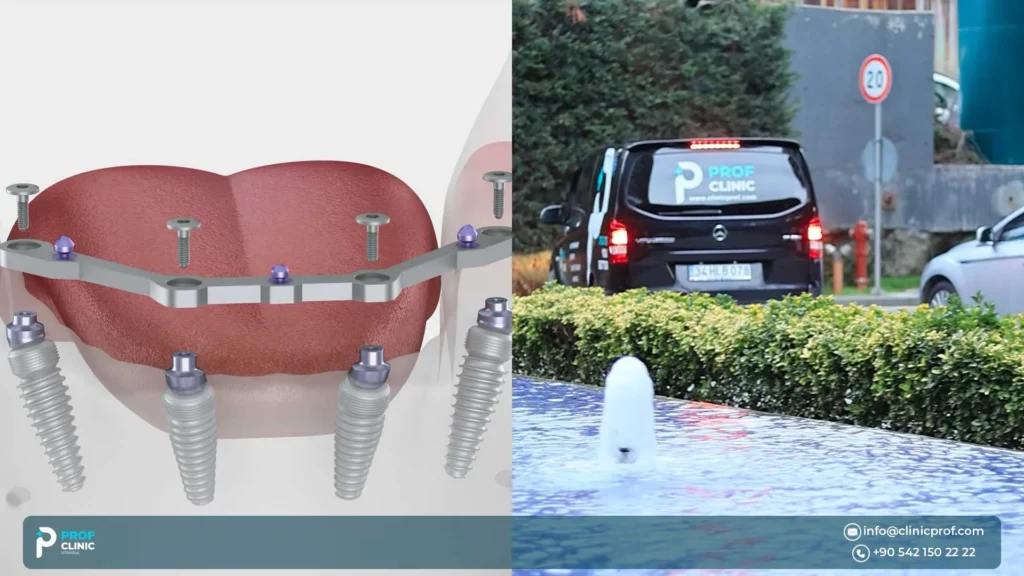
Pterygoid implants represent a sophisticated surgical alternative that bypasses these requirements. Unlike standard implants that rely on the alveolar bone (which shrinks over time), these specialized back jaw implants are anchored into the pterygoid pillar — a dense, cortical bone structure located behind the wisdom tooth area.
Technically, these implants are placed at an angle into the pterygoid process of the sphenoid bone. Because this specific area is biologically programmed to remain stable and does not resorb like the rest of the jaw, it provides a “rock-solid” foundation for prosthetic teeth.
At Prof Clinic, we utilize this advanced solution to provide immediate stability for full-arch restorations, ensuring that even patients with the most challenging anatomy can achieve a fixed, non-removable bridge without the need for invasive grafting procedures.
Also read: Zygomatic Implants Turkey: Solution for Severe Bone Loss
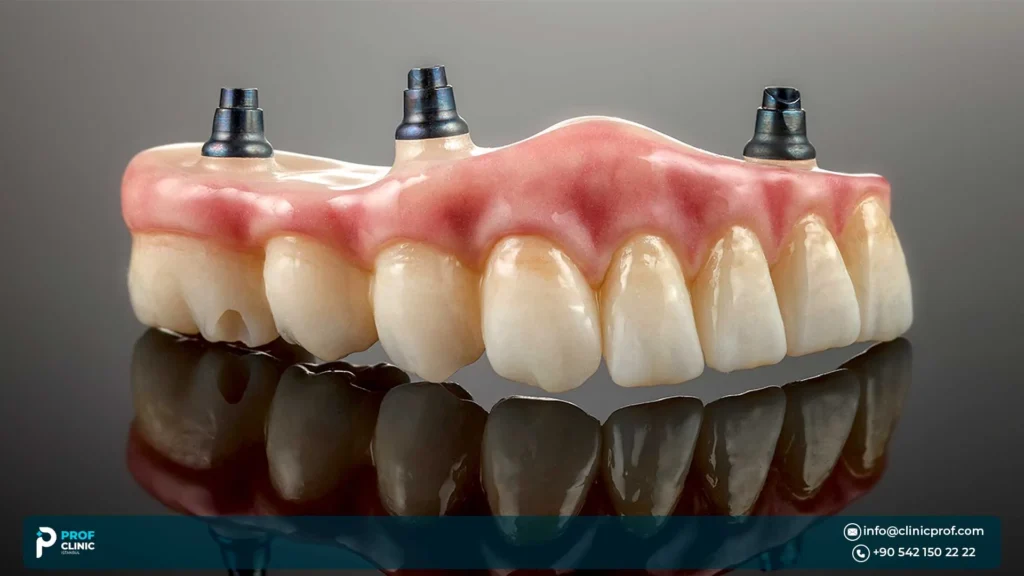
Why Choose Pterygoid Implants Over Sinus Lifts?
For many patients, the biggest hurdle to a new smile is being told they need a Sinus Lift. This traditional procedure involves “lifting” the sinus membrane and packing it with bone graft material—a process that can add 6 to 9 months of healing time before implants can even be placed. Pterygoid dental implants eliminate this entire waiting period.
By choosing these specialized back jaw implants, we utilize the existing, ultra-stable bone of the pterygoid process. Here is why this approach is often the superior clinical choice:
- Immediate Results: Since we don’t have to wait for a bone graft to “take,” we can often provide immediate loading, meaning you get your fixed teeth much faster.
- Reduced Surgical Trauma: A sinus lift is an additional, invasive surgery. By using the pterygoid region, we perform a single, streamlined procedure that focuses on the natural anatomy you already have.
- Superior Stability: The bone used for back jaw implants is cortical (the hardest type of bone), which offers much higher primary stability compared to the soft, grafted bone used in traditional sinus lifts.
- Lower Risk of Complications: Bypassing the sinus cavity entirely reduces the risk of chronic sinusitis or graft infections, making the long-term prognosis much more predictable.
At Prof Clinic, our goal is to minimize your time in the dental chair while maximizing the longevity of your smile. Pterygoid implants allow us to do exactly that by working with your body’s natural strength rather than trying to rebuild it from scratch.
Are you tired of waiting months for bone grafts to heal? Click here to book a Free Digital Consultation and find out if you can skip the sinus lift entirely.
Who Is a Good Candidate for Pterygoid Dental Implants?
Identifying the right candidate for pterygoid dental implants requires a deep understanding of facial anatomy. This procedure is not for everyone, but for a specific group of patients, it is a life-changing alternative. At Prof Clinic, we primarily recommend this path for those who have been told that traditional implants are “impossible.”
You are likely an ideal candidate if you fit the following criteria:
- Severe Posterior Atrophy: If you have lost your back teeth years ago, the bone in that area has likely shrunk (resorbed). Pterygoid implants are designed specifically to anchor into the stable bone behind these depleted areas.
- Enlarged Sinus Cavities: Some patients naturally have large sinuses that leave very little vertical bone height in the upper jaw. This technique bypasses the sinus entirely.
- Failed Previous Bone Grafts: If you have already attempted a sinus lift or bone grafting and the body rejected the graft, these back jaw implants provide a fresh start using your body’s natural, permanent bone structures.
- Looking for Teeth in a Day: If you are a candidate for a full-arch restoration (like All-on-4 or All-on-6) but lack bone in the back, adding pterygoid anchors allows us to provide a fixed bridge immediately without waiting months for healing.
- Desire to Avoid Dentures: Many patients who have worn removable dentures for years have significant bone loss. This advanced solution offers them the last chance to have fixed, non-removable teeth again.
Also read: Immediate Load Dental Implants: Pros, Cons & Candidacy
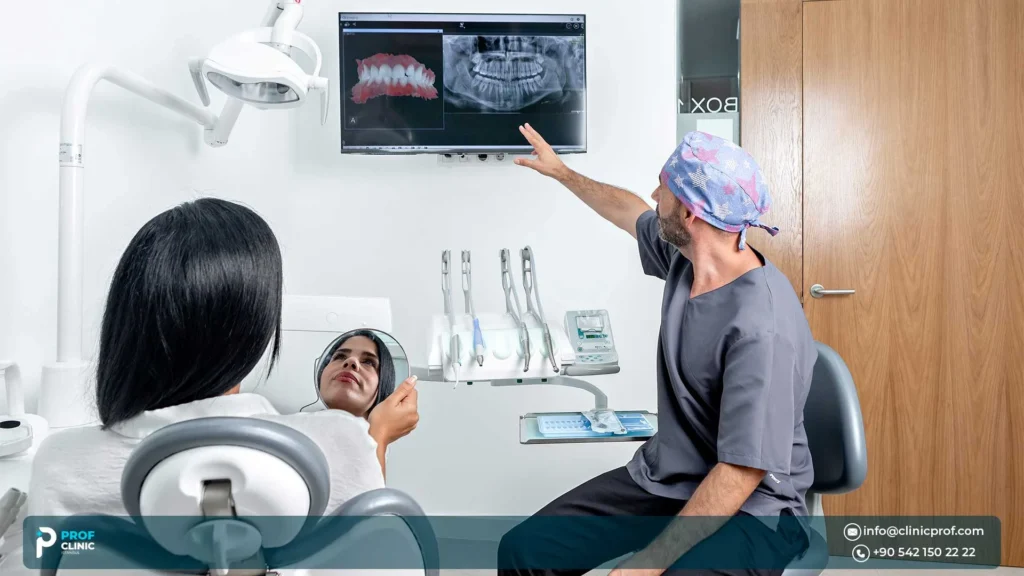
At Prof Clinic, we use high-definition 3D CBCT scans to evaluate the density of your pterygoid pillar. If your scans show that this “golden zone” of bone is intact, we can often proceed with surgery even if your jawbone is virtually non-existent.
Pterygoid vs. Zygomatic Implants: Which One Do You Need?
Both pterygoid dental implants and zygomatic implants are “rescue” solutions designed to solve severe bone loss without grafting. While they share the same goal—providing fixed teeth—the key difference lies in the anatomical anchor point used to support the bridge.
| Feature | Pterygoid Implants | Zygomatic Implants |
| Anchor Point | The Pterygoid Process (behind the back molars). | The Zygoma (cheekbone). |
| Target Area | Focuses on providing support for the back jaw implants region. | Provides support for the entire upper arch (front to back). |
| Clinical Indication | Used when there is no bone in the molar area but some bone in the front. | Used when there is extreme bone loss throughout the entire upper jaw. |
| Surgical Angle | Placed at a 45-degree angle towards the back of the skull. | Placed at an angle into the dense bone of the cheek. |
Which is Right for You?
- Choose Pterygoid Implants if: You have enough bone in the front part of your jaw but lack the height needed in the molar area due to the sinus. These back jaw implants act as the perfect “rear pillars” to stabilize a bridge.
- Choose Zygomatic Implants if: Your entire upper jawbone has receded significantly, leaving no support anywhere from front to back.
- The Hybrid Approach: In many complex cases at Prof Clinic, our surgeons combine both. We may use two Zygomatic implants in the front and two Pterygoid implants in the back to create the most stable, “rock-solid” foundation possible for a full-arch restoration.
You don’t have to choose for yourself. Through our 3D digital planning, we determine the exact combination of pterygoid implants and other anchors needed to ensure your new smile is both functional and permanent.
Still unsure which implant type fits your case? Request your Personalized Treatment Plan and our surgeons will evaluate your 3D scans within 24 hours.
The pterygoid implant procedure: what to expect at Prof Clinic
Prof Clinic, we have standardized the pterygoid dental implants procedure into a high-tech, patient-centric experience. Because this surgery involves a delicate anatomical area, our protocol is designed to maximize precision and minimize recovery time.
Step 1: Digital Assessment & 3D Mapping
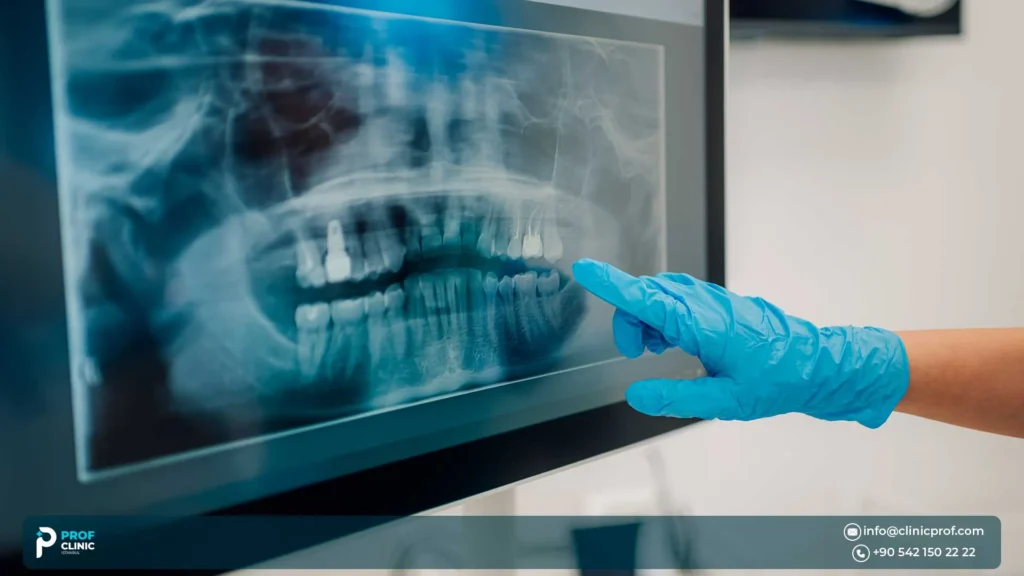
Your journey begins with a high-resolution CBCT scan. Unlike traditional dental clinics, we use this data to create a “digital twin” of your skull. This allows our surgeons to virtually place your pterygoid implants before the surgery even starts, ensuring we avoid vital structures and hit the densest part of the bone with millimeter accuracy.
Step 2: The Surgical Day (Comfort First)
The placement of back jaw implants is typically performed under conscious sedation or general anesthesia .
- The Technique: Our surgeons use a flapless or minimally invasive approach whenever possible.
- The Anchoring: The implant is carefully angled into the pterygoid pillar. This provides “Primary Stability,” which is a fancy way of saying the implant is so secure it can often support teeth immediately.
Step 3: Immediate Loading (Teeth in 24-48 Hours)
While you rest, our on-site laboratory at Prof Clinic crafts your custom provisional bridge. Within a day or two, your new teeth are securely fixed to the implants. You don’t have to leave our clinic with gaps in your smile or uncomfortable removable dentures.
Step 4: Recovery in Istanbul
We recommend staying in Istanbul for 5 to 7 days. Most patients are pleasantly surprised that the recovery from pterygoid dental implants is similar to a standard extraction. You will have some mild swelling, but you’ll be able to enjoy the sights of the city and soft Turkish cuisine within a few days.
Why choose Prof Clinic for this procedure?
Many clinics avoid the pterygoid region because it requires advanced maxillofacial expertise. We perform these cases weekly, combining surgical mastery with a luxury concierge experience that handles everything from your VIP transfers to your recovery stay in Istanbul.
Also read: Endosteal Implants: Most Common Type Explained (2026 Guide)
Are Pterygoid Dental Implants Painful?
It is perfectly natural to feel hesitant about a procedure that involves the “back of the jaw.” However, the reality of the pterygoid dental implants experience is far less intimidating than most patients imagine. Thanks to modern anesthesia and minimally invasive techniques at Prof Clinic, the process is designed to be as comfortable as a standard dental treatment.
During the Procedure: Zero Pain
At Prof Clinic, we prioritize your comfort. The placement of back jaw implants is performed under:
- Local Anesthesia: To completely numb the surgical area.
- Conscious Sedation or General Anesthesia: Most of our international patients choose this option to “sleep” through the procedure, waking up with no memory of the surgery and zero discomfort.
The Recovery Phase: What to Expect?
The word “advanced” doesn’t mean “more painful.” In fact, because pterygoid implants often require less bone manipulation than traditional bone grafting or sinus lifts, the recovery is often smoother.
- Days 1-3: You may experience mild swelling and a sensation of “fullness” at the back of the jaw. This is easily managed with standard over-the-counter painkillers prescribed by our team.
- Days 4-7: Any minor discomfort typically fades quickly. Since the implants are anchored into deep, stable bone, there is very little “pressure” on the sensitive gum tissue.
- The “Teeth in a Day” Advantage: Because you receive a fixed bridge almost immediately, the prosthetic actually protects the surgical sites, acting like a “bandage” that allows you to speak and eat soft foods comfortably during healing.
Most of our patients at Prof Clinic report that the anticipation was much worse than the actual surgery. By following our post-operative care instructions, you’ll find that the journey to a new smile with pterygoid implants in Turkey is surprisingly straightforward and manageable.
Also read: Dental Implant Pain: Causes, Period, & Solutions
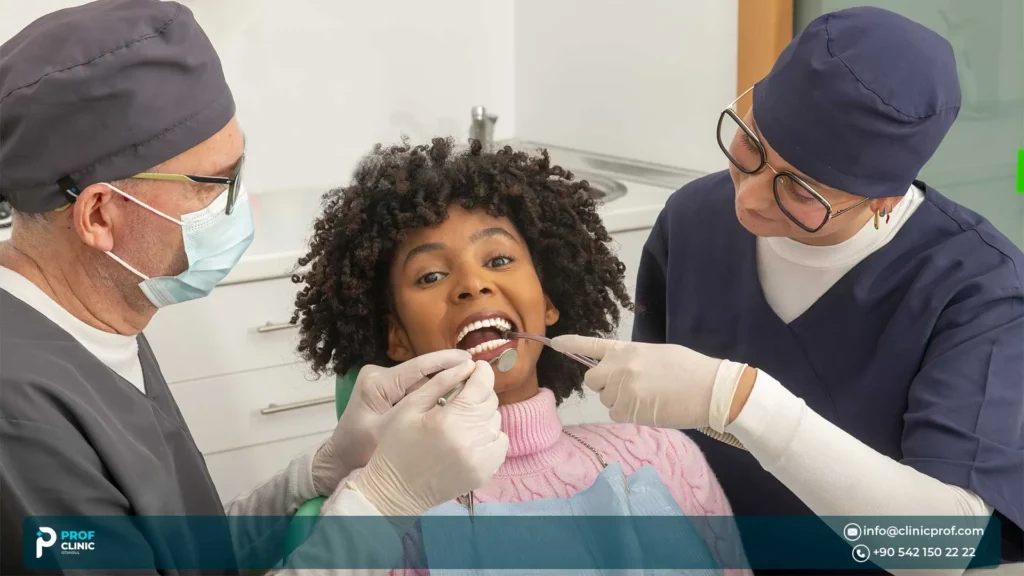
Understanding the Advantages and Disadvantages.
At Prof Clinic, we believe that an informed patient is a confident patient. While pterygoid dental implants are a revolutionary solution for those with severe bone loss, like any advanced medical procedure, they come with specific pros and cons.
Below is a transparent comparison to help you weigh your options
| Feature | Advantages (The Pros) | Disadvantages (The Cons) |
| Surgical Speed | Eliminates the need for 6-9 months of bone grafting or sinus lifts. | Requires a highly skilled maxillofacial surgeon; not all dentists can do it. |
| Bone Stability | Anchors into cortical bone which is dense and does not shrink (resorb). | The surgical site is at the very back of the mouth, requiring high precision. |
| Recovery | Faster healing time; often allows for “Teeth in a Day. | Initial swelling in the back of the jaw for 3-5 days is common. |
| Success Rate | Extremely high (95-98%) even in the most “hopeless” cases. | Requires sophisticated 3D digital planning and CBCT imaging. |
| Long-term Health | Bypasses the sinus cavity, reducing the risk of chronic sinus issues. | Slightly higher initial cost compared to a single standard implant (but cheaper than bone grafts). |
For the majority of our patients at Prof Clinic, the disadvantages are purely technical—meaning they are challenges for the surgeon, not the patient. By choosing a clinic that specializes in pterygoid implants in Turkey, you mitigate the “risks” associated with the procedure’s complexity.
The primary “con” is that it is a specialized surgery, but the “pro” is that it provides a fixed smile to people who were told they could never have one again. When compared to the alternative—wearing uncomfortable, loose dentures for the rest of your life—the choice becomes clear.
Don’t let complexity scare you. At Prof Clinic, we perform these cases weekly. WhatsApp us now for an instant quote and start your transformation.
How to care for your new pterygoid implants for long‑term results
The success of your surgery at Prof Clinic is just the beginning. While pterygoid dental implants are designed to be permanent, their longevity depends heavily on how you maintain them. To ensure your new smile lasts a lifetime, follow these essential care guidelines:
- Maintain a meticulous oral hygiene routine by brushing at least twice a day with a soft-bristled toothbrush to protect the gum tissue around the implant sites.
- Use an interdental brush or a water flosser (Waterpik) daily to reach the areas underneath your fixed bridge where food particles can collect.
- Rinse with an alcohol-free antibacterial mouthwash to keep the bacterial load in your mouth low, especially during the first few months of healing.
- Attend regular professional cleanings and check-ups at least twice a year. Even though your new teeth cannot get cavities, your gums still need professional monitoring.
- Avoid smoking or using tobacco products, as smoking restricts blood flow to the gums and can jeopardize the long-term integration of your back jaw implants.
- Protect your investment if you suffer from teeth grinding (bruxism) by wearing a custom-made nightguard to prevent excessive pressure on the implants.
- Monitor your overall health, particularly conditions like diabetes, as maintaining stable health directly impacts the health of the bone supporting your implants.
Think of your pterygoid implants Turkey as a high-performance vehicle. The surgical team at Prof Clinic provides the engine, but consistent “maintenance” at home is what ensures it runs perfectly for decades.
Why Consider Pterygoid dental Implants at Prof Clinic in Turkey?
Choosing where to have complex oral surgery is a decision that impacts your quality of life for years to come. Pterygoid implants Turkey have become the gold standard for international patients, not just for the financial savings, but for the unparalleled surgical expertise available in Istanbul. At Prof Clinic in Istanbul, we combine these two factors to offer a world-class experience.
1. Exceptional Cost Savings (Up to 70%)
One of the primary reasons patients seek pterygoid dental implants abroad is the significant price difference. In the UK, USA, or Northern Europe, this procedure is often priced as a “premium specialty,” making it inaccessible for many.
- The Turkey Advantage: At Prof Clinic, you can save up to 70% compared to Western prices.
- High-Volume Expertise: Our surgeons’ familiarity with the pterygoid region can translate into smoother workflows, shorter surgery times, and high procedural predictability. As with any advanced implant surgery, outcomes still vary by case and require individualized planning.
2. Mastery of Complex “No Bone Graft” Cases
Our maxillofacial surgeons at Prof Clinic perform back jaw implants surgery weekly. In many Western countries, a general dentist might only see a handful of pterygoid cases in their entire career.
- High-Volume Expertise: Our surgeons’ familiarity with the pterygoid anatomy means shorter surgery times, higher precision, and a 98% success rate.
- Advanced Technology: We utilize 2026-standard digital guided surgery. This allows us to map the “Pterygoid Pillar” with sub-millimeter accuracy, ensuring the safest possible placement.
3. A Seamless “Dental Vacation” Experience
Beyond the surgery, we provide a concierge service that makes your journey to Istanbul stress-free. From the moment you land, you are guided by a multilingual coordinator who ensures you understand every step of your pterygoid dental implants journey. You can recover while enjoying the historical beauty of Turkey, turning a medical necessity into a life-changing holiday.
While the lower cost is attractive, the true value at Prof Clinic lies in our surgical mastery. We don’t just provide “cheaper” implants; We provide the same premium materials and medical standards found in London or New York, delivered by specialists who are world leaders in graftless solutions.
FAQs about Pterygoid Implants
What is all on 4 pterygoid implants?
pterygoid dental implants in the back to create a “fixed tripod” effect. This is the ultimate solution for patients who have zero bone in the posterior upper jaw but want a full-arch bridge that feels 100% secure.
What is the biggest problem with dental implants?
The most common challenge is severe bone loss . When the jawbone shrinks, traditional implants have nothing to hold onto. However, pterygoid implants Turkey solve this “impossible” problem by bypassing the weak jawbone entirely and anchoring into the dense, permanent bone of the skull base.
How long will a tooth implant last?
With proper maintenance, back jaw implants are designed to last 25 years to a lifetime . Because they are anchored in cortical bone (which doesn’t resorb like the jawbone), they often prove to be even more durable than traditional implants over the long term.
How many days do I need to stay in Turkey for Pterygoid implants?
We recommend a stay of 5 to 7 days . This timeframe allows us to perform the surgery, conduct post-operative check-ups, and—in most cases—fit your initial fixed temporary teeth so you can fly home with a functional smile.
Can I eat normally after getting Pterygoid implants?
Yes! In fact, many patients find they can eat more confidently than they did with dentures. Since these implants are anchored into the sturdy pterygoid pillar, they provide superior bite force. We suggest a soft-food diet for the first few weeks while the gums heal, after which you can enjoy a full range of foods.
Do I need general anesthesia for this procedure?
Not necessarily. While we often use General Anesthesia for the total comfort of our international patients, the procedure can also be performed under Conscious Sedation (twilight sleep) combined with local anesthesia. We tailor the sedation level to your personal comfort and anxiety levels.
Are Pterygoid implants visible when I smile?
Not at all. These implants are placed in the far posterior region of the mouth. The only thing people will see is your beautiful, custom-crafted prosthetic bridge that looks and functions exactly like natural teeth.