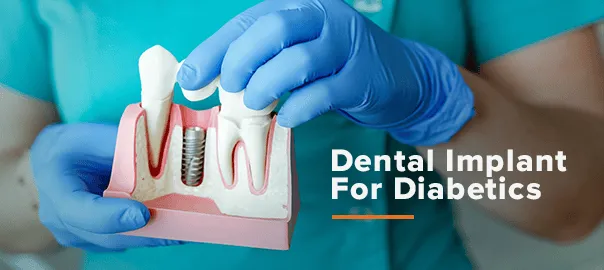
If you have diabetes and missing teeth, you are probably not looking for a generic yes-or-no answer. You want to know whether implants are safe for you, whether healing may take longer, and whether traveling to Turkey for treatment makes sense. The reassuring answer is that diabetes does not automatically rule out implant treatment. The more important question is whether your blood sugar control, gum health, bone support, and healing conditions make the timing right for safe treatment.
In this guide, we explain how dental implants for diabetics are usually assessed, how diabetes and dental implants can affect healing, what makes someone a stronger candidate, when treatment may need to be delayed, and how we at Prof Clinic in Istanbul plan implants for diabetic patients with a careful, case-by-case approach.
Can people with diabetes get dental implants?
In many cases, yes. Diabetes by itself does not automatically exclude you from dental implant treatment. What matters more is how well your condition is managed, whether your gums are healthy, whether there is any active infection, and whether the bone can support the implant.
At Prof Clinic in Istanbul, we do not reduce candidacy to the word “diabetes” alone. We look at the full clinical picture: your medical history, oral condition, imaging, smoking status, healing history, and how ready you are to follow aftercare and review appointments. That is why a patient with diabetes may still be a good candidate for treatment, while another patient may benefit from stabilization first.
If you want to understand the basics of dental implants in Turkey, our service page explains how treatment is planned, what the procedure involves, and when immediate or delayed loading may be considered.
How diabetes and dental implants interact during healing
The main reason clinicians plan implant treatment more carefully for diabetic patients is healing. Diabetes can affect wound healing, inflammation control, and the body’s response to infection. It can also increase the likelihood of gum problems when blood sugar is not well controlled.
Another important concept is osseointegration, which is the process where bone heals around the implant surface and anchors it in place. When diabetes is poorly controlled, this process may be less predictable. When diabetes is reasonably controlled and the mouth is healthy, outcomes can be much more favorable than many patients expect.
This is why diabetes and dental implants should never be discussed as separate topics. Gum health, plaque control, smoking habits, dry mouth, and the patient’s overall healing environment are all part of the same decision.
Who may be a stronger candidate for implants for diabetic patients?
In general, stronger candidates for dental implants for diabetics tend to have several factors working in their favor at the same time:
- Diabetes management that is reasonably stable and reviewed before treatment
- No untreated gum disease, abscess, or active oral infection
- Good daily oral hygiene and willingness to follow aftercare instructions
- Adequate bone support on imaging such as panoramic X-rays or CBCT
- A realistic understanding that healing may require staged treatment and follow-up
- A willingness to pause smoking or other habits that may interfere with healing
At Prof Clinic, we prefer to think in practical categories: ready now, ready after stabilization, or in need of deeper assessment first. That approach is more helpful than a simplistic approved-or-rejected answer.
Practical candidacy overview
| More favorable for planning now | May suggest delay or closer review |
| Stable diabetes routine and recent control reviewed | Unstable blood sugar or recent difficulty managing levels |
| Healthy gums or gum disease already treated | Bleeding gums, active periodontitis, or unresolved infection |
| Good oral hygiene and follow-up readiness | Smoking, poor hygiene, or likely missed reviews |
| Adequate bone support on imaging | Bone loss or need for additional preparatory planning |
This table is a decision aid, not a diagnosis. Final planning should always come from examination, imaging, and a clinician-led review.
When treatment may need to be delayed
Sometimes the safest answer is not “no,” but “not yet.” Treatment may need to be delayed if blood sugar control has recently been unstable, if there is active periodontal disease, if an extraction site has not healed properly, or if smoking and oral hygiene issues are creating an avoidable risk.
This matters because delay should be seen as protective planning, not rejection. A short stabilization period can improve safety, healing, and long-term confidence in the result.
At Prof Clinic in Istanbul, we would rather recommend the right timing than rush a case that needs preparation first. That helps patients make decisions based on long-term success rather than short-term pressure.
How we plan dental implants for diabetic patients at Prof Clinic in Istanbul
When we assess implants for diabetic patients, we focus on structured planning rather than assumptions. A careful work-up usually includes the following steps:
- Reviewing your medical history, diabetes type, current medication, and any healing concerns you have noticed before.
- Checking the gums, looking for infection, and making sure the mouth is not entering surgery with untreated inflammation.
- Studying imaging carefully to evaluate bone volume, anatomy, and whether added planning is needed before placement.
- Choosing the safest treatment sequence, including whether immediate loading is realistic or whether a more staged approach is better.
- Explaining recovery, aftercare, and travel timing clearly so you know what to expect before committing to treatment in Istanbul.
We also help patients understand material and planning choices through related resources on titanium dental implants, our medical team, and before and after results, so they can compare information with real treatment pathways.
CTA: If you want a personalized answer instead of a generic article, send us your case details and recent imaging through our contact page. We can review whether your current condition looks suitable for treatment now or whether some preparation should happen first.
What does the procedure and healing timeline usually look like?
For many patients, the surgery itself is only one part of the process. The appointment may be measured in hours, but full healing and integration are usually measured in weeks or months. This distinction is especially important for diabetic patients, because a calm healing environment is just as important as the placement day itself.
Some patients may qualify for immediate or same-day provisional solutions, but that is not the right choice for every diabetic patient. The decision depends on stability, infection risk, bone quality, and how predictable healing looks in your case.
To help patients understand this difference, we recommend reading our guides on dental implant surgery duration and dental implant aftercare, especially if you are comparing timelines before traveling to Turkey.
Aftercare habits that matter most
Good aftercare is not complicated, but it must be consistent. For implants for diabetic patients, the basics matter even more because small problems can become bigger if they are ignored.
- Keep your diabetes routine as stable as possible before and after treatment
- Take medications exactly as directed by your dentist and physician
- Protect the surgical site and keep food soft during the early healing phase
- Maintain careful oral hygiene without traumatizing the treated area
- Avoid smoking, unnecessary pressure, and anything that interferes with recovery
- Attend reviews and report symptoms that worsen instead of improve
What if you are not ready for implants yet?
Not being ready now does not mean you will never be ready. In some cases, it is safer to treat infection first, improve gum health, stabilize diabetes management, or use a temporary alternative while the mouth becomes a better implant environment.
That is another reason this topic fits the consideration stage so well. Patients are not only asking whether implants are possible; they are comparing timing, safety, and whether they should move forward now or after preparation.
Why do Turkey and Istanbul matter in this decision?
When international patients look at dental implants for diabetics in Turkey, they are usually balancing more than price. They want clear medical planning, realistic timelines, experienced implant teams, and a treatment path that makes sense for travel.
At Prof Clinic in Istanbul, we frame the decision around suitability first. That means explaining whether the safest route is treatment now, staged treatment, or preparation before treatment. For diabetic patients, that clarity is often more valuable than a rushed promise.
When to request a personalized implant assessment
You should request a consultation when you already know you want a case-specific answer rather than another generic article. That is especially true if you have diabetes plus missing teeth that affect chewing, gum symptoms, previous delayed healing, or recent X-rays or scans that could make the assessment more precise.
At Prof Clinic, we encourage you to review our dental implant service, explore before and after cases, and then contact us for a personalized discussion if you want to know whether your diabetes, oral health, and travel plans fit implant treatment in Istanbul.
FAQs about Dental Implants for Diabetics
Can people with type 2 diabetes get dental implants?
Yes, many people with type 2 diabetes may still qualify. The key issue is not the label alone, but whether diabetes is reasonably controlled and the mouth is healthy enough for safe healing.
Do I need a specific HbA1c before implant treatment?
Your dental team may review recent diabetes control, but implant planning should not depend on one isolated number alone. The full decision also depends on gum health, infection status, bone support, and healing risk.
Does diabetes make implant healing slower?
It can. Poorly controlled diabetes may delay healing and increase infection-related risk, which is why timing, aftercare, and follow-up matter so much.
Are implants more likely to fail in diabetic patients?
Risk may be higher when diabetes is poorly controlled over time. Under better-controlled conditions and with careful planning, outcomes can be much more favorable.
Can I travel to Istanbul for implant treatment if I have diabetes?
Often yes, but travel planning should match your case. You need a realistic review of treatment stages, healing expectations, and whether a single trip or staged visits make more sense.
What should I prepare before a consultation?
Bring your medical history, medication list, any recent glucose or HbA1c information you already have, and any X-rays or scans available. That makes the assessment more accurate and practical.