Dental implant procedure steps in Istanbul, Turkey are one of the first things patients search when they want to understand what happens before, during, and after treatment. At this stage, most people are not ready to choose a clinic yet. They simply want a clear picture of the implant surgery process, how long each stage may take, and how implants are placed in a way that feels predictable rather than overwhelming.
In this guide, you will learn the main dental implant procedure steps in Istanbul, Turkey, from assessment and scans to implant placement, healing, and the final crown. We will also explain what can affect the timeline, what recovery usually involves, and how treatment planning may differ from one patient to another so you can approach your consultation with clearer expectations.
Dental Implant Procedure Steps in Turkey
Understanding the dental implant procedure steps helps patients know what to expect before traveling for treatment in Turkey. In most cases, dental implants are not completed in a single visit. Instead, the implant surgery process is planned in stages so the jawbone and surrounding tissues have time to heal and support the final restoration properly.
While treatment timelines can vary between clinics in Istanbul, the overall sequence usually follows the same clinical structure: examination and imaging, preparation of the site if needed, surgical implant placement, a healing phase where the bone bonds to the implant, placement of the abutment, and finally the restoration with a crown or bridge.
| Stage | What happens | Why it matters | Typical next step |
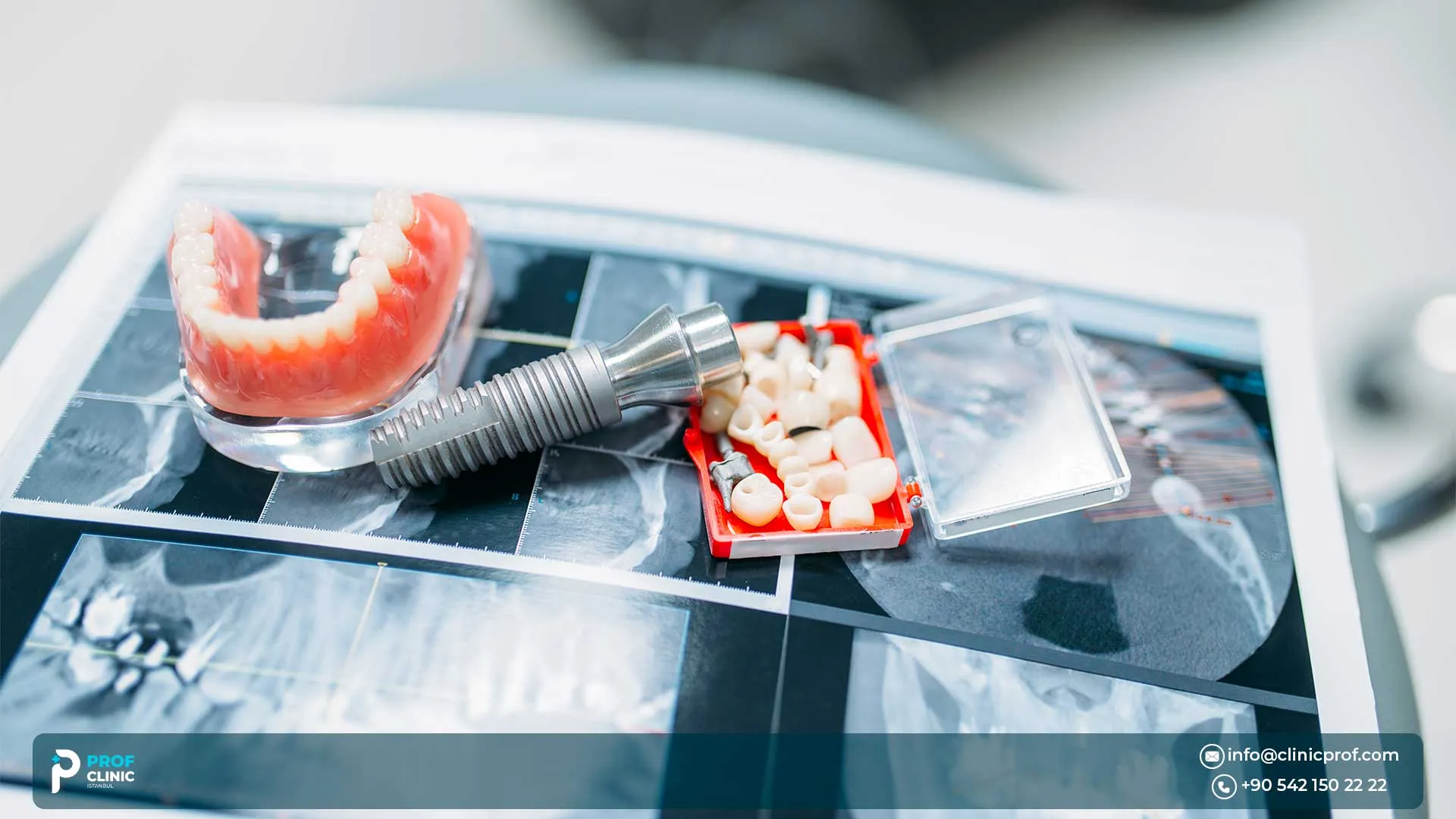
| Assessment | Clinical exam, medical history review, X-rays or CBCT scans | Confirms bone condition and treatment safety | Planning visit |
| Preparation (if needed) | Tooth extraction, infection treatment, or bone grafting | Prepares the jaw for stable implant placement | Healing or surgery scheduling |
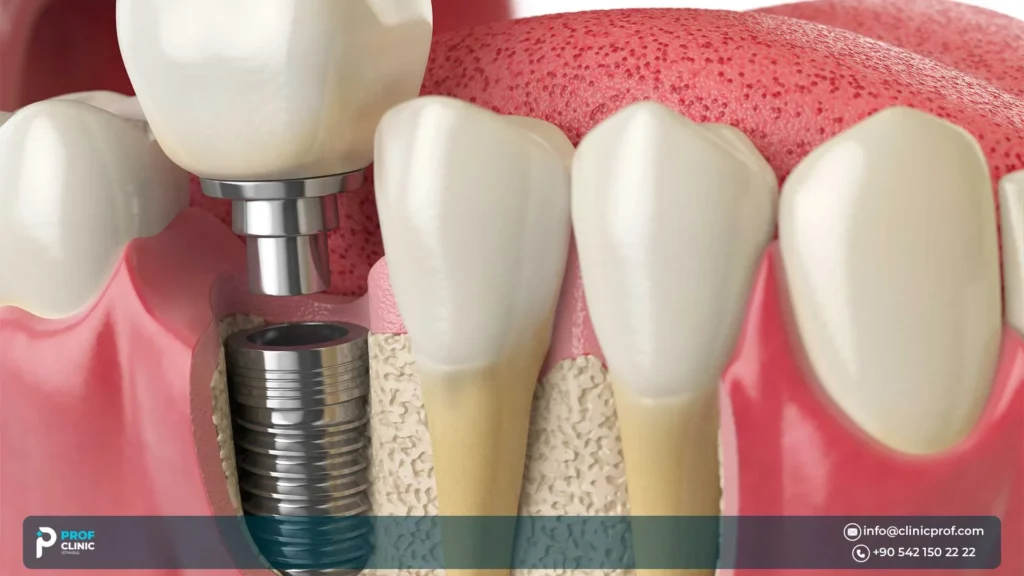
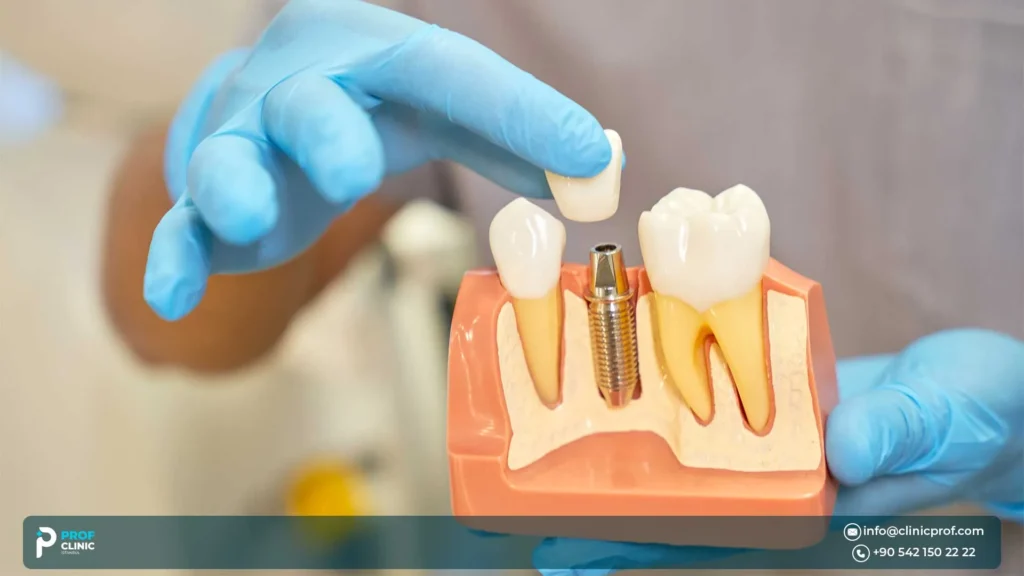
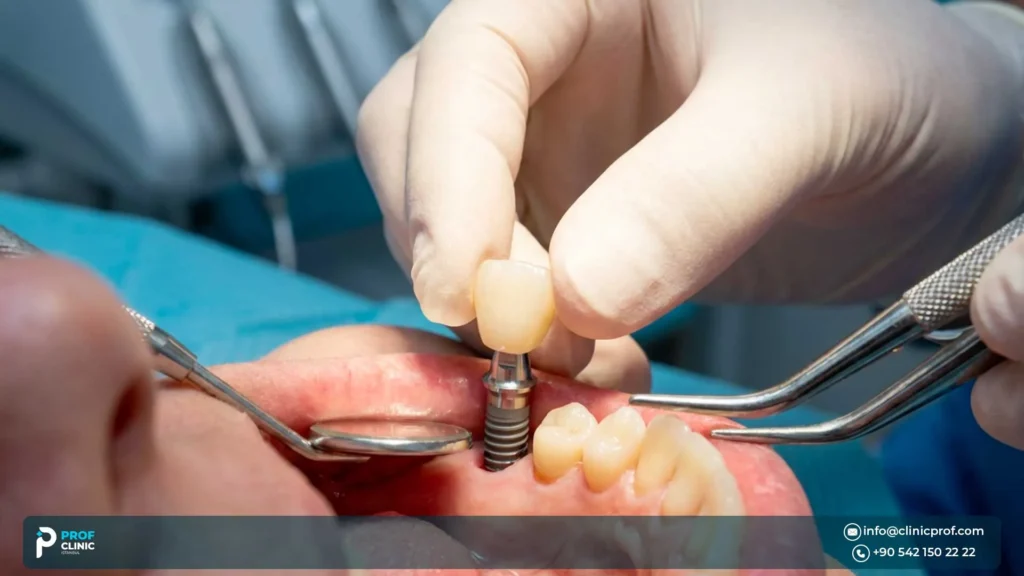
| Implant placement | The titanium implant post is placed into the jawbone | Replaces the natural tooth root | Surgical visit |
| Healing phase | Bone gradually bonds to the implant (osseointegration) | Creates long-term stability | Often several months |
| Abutment placement | A connector piece is attached to the implant | Prepares for the final tooth | Follow-up visit |
| Final restoration | Crown, bridge, or denture is placed | Restores appearance and chewing function | Final restorative visit |
For patients researching how implants are placed, it is important to understand that the timeline depends on bone condition, healing response, and whether any preparatory procedures are needed before implant placement.
If you want to understand how these dental implant procedure steps may apply in real clinical situations, the next section explains how the implant treatment pathway is organized at Prof Clinic in Istanbul and how international patients typically move through each stage of care.
Dental implant procedure at Prof Clinic in Istanbul, Turkey
At Prof Clinic in Istanbul, dental implant treatment is planned as a structured journey rather than a single procedure. Each stage is designed to support safe placement, proper healing, and a final result that fits both function and appearance.
Assessment, Scans, and Treatment Planning
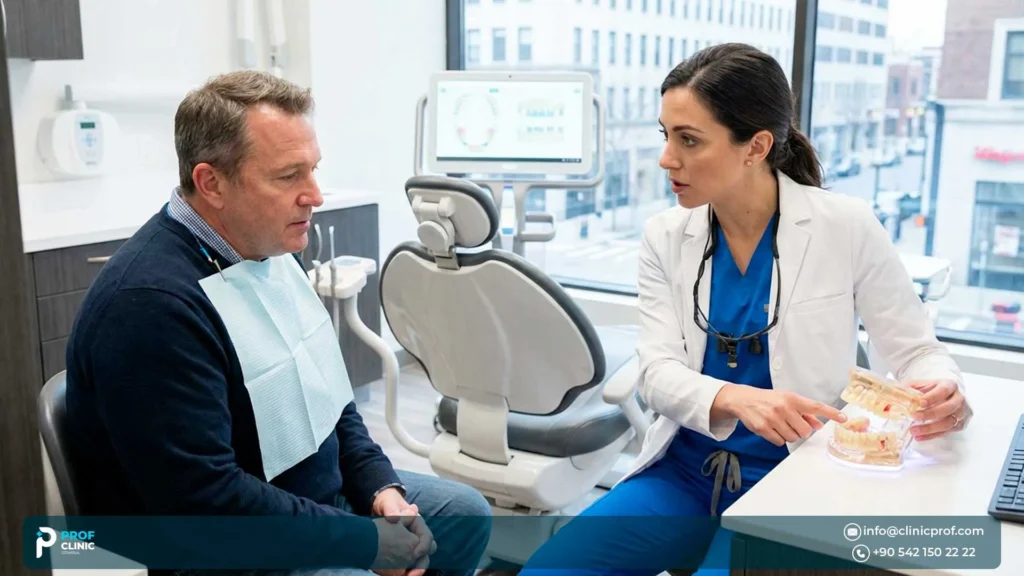
At Prof Clinic in Istanbul, the first step in the dental implant procedure steps is not surgery. It is assessment and planning. Our dental pathway starts with an online consultation and personalized plan, where patients can share photos or X-rays so the team can review the case before travel. We also explain that digital planning is a core part of implant treatment, and in more detailed cases it uses 3D CBCT imaging and intraoral scanning to build a virtual model of the jaw before surgery.
This stage matters because implant treatment is not just about replacing a missing tooth. At Prof Clinic, planning is built around the condition of the bone, the number and position of missing teeth, and whether the case looks straightforward or may need extra preparation first. Some patients follow a two-visit implant journey, while selected cases may qualify for immediate dental implant placement in Istanbul.
To understand how implants placed decisions are made in real practice, this is the step where our treatment team identifies whether the patient can move directly to surgery or may first need extraction, bone support, or a more protective protocol. In other words, the first stage of the implant surgery process is choosing the safest route, not rushing into treatment.
How the Implant Surgery Process Works
Once the planning stage is complete, the implant surgery process at Prof Clinic moves into the surgical phase. In the clinic’s own immediate-load workflow, the pre-op digital scan is used to plan implant positioning in advance and identify the densest available bone. That helps guide placement and supports more accurate surgical decision-making, especially in cases where speed must still be balanced with stability.
In practical terms, this is the stage where the implant is placed into the jawbone to act as an artificial root for the future tooth. However, the exact surgical route is not the same for every patient. Our one-stage vs two-stage blog explains that a single-stage plan is more likely when the site is straightforward and the implant has strong initial stability. A two-stage approach is more often chosen when stability is borderline, the case is more complex, or the site needs more protected healing under the gum.
That distinction is especially useful for readers learning the dental implant procedure steps for the first time. Surgery day is important, but it is only one part of the full treatment journey. The surgical visit starts the healing phase; it does not automatically mean the final tooth is delivered immediately in every case. Prof Clinic’s broader dental journey also presents treatment as a sequence that includes consultation, travel and arrival, treatment, and continued aftercare rather than a one-day promise for everyone.
Healing, Abutment, and Final Crown
After implant placement, the next stage is healing. At Prof Clinic, treatment content consistently shows that implant work is planned around stability and healing rather than around a fixed shortcut. In two-stage cases, the implant may be left covered under the gum during healing, and a later second-stage procedure is used to uncover it and attach a healing abutment before the final crown is made.
From the restoration side, our guidance on temporary vs permanent implant crown explains the next step clearly: a temporary crown may be used during healing, while the permanent crown is the final custom restoration placed after healing and stability are confirmed. The permanent restoration is designed to fit the implant position, surrounding gums, bite, and neighboring teeth for long-term function and appearance.
For international patients, this stage also connects to our aftercare model. The clinic states that it stays connected even after patients return home so treatment and recovery continue to be supported beyond the surgical visit. If readers want to see what the final restorative outcome can look like after implant treatment in Istanbul, our Before & After section is the most relevant next step because it shows verified smile transformations across dental cases.
To see how these dental implant procedure steps come together in real smile cases, explore our Before & After gallery. If you already have X-rays or scans and want to understand the next step more clearly, you can also schedule a free consultation with our team in Istanbul.
How Long does Each Step Usually Take in Turkey?
For patients researching dental implant procedure steps in Turkey, it helps to separate surgery day from the full treatment timeline.
The surgical visit itself may take place in one appointment, but the overall implant surgery process often extends over multiple visits because healing, stability checks, and final crown work all take time.
Authoritative medical guidance describes implant treatment as a staged process that can take several months from start to finish, and Prof Clinic’s Turkey-focused implant content makes the same point: many cases involve two visits with healing in between, while selected cases may qualify for immediate treatment pathways.
A simplified timeline in Turkey often looks like this:
| Step | Usual pace | What may add time |
| Assessment and scans | One or more visits | Need for CBCT, extra records, or specialist review |
| Preparation if needed | Case-dependent | Extraction healing, infection control, or bone support |
| Implant placement | Surgical visit | Multiple implants or a staged protocol |
| Healing | Often 3 to 6 months | Bone grafting, slower healing, smoking, or gum issues |
| Abutment and impressions | Follow-up visit or visits | Two-stage uncovering or restorative adjustments |
| Final crown delivery | Final restorative visit or visits | Lab work, bite refinement, and cosmetic finishing |
This is why patients who ask how implants placed and “how long it takes” may receive two different answers: one for the day of surgery, and another for the full journey until the final tooth is fitted. Prof Clinic’s dental implant pages note that initial healing often takes around 1 to 2 weeks, while full osseointegration typically takes 3 to 6 months, depending on the case.
The biggest timing variables are whether the tooth needs to be extracted first, whether bone support is required, whether the case is planned as one-stage or two-stage, and whether a temporary tooth can be used during healing. Prof Clinic’s guidance on one-stage vs two-stage implants explains that one-stage treatment may move faster when the site is straightforward and initial stability is strong, while two-stage treatment is often chosen when the case is more complex or needs protected healing.
This also connects directly to the pathway explained in the previous section about Prof Clinic in Istanbul. In other words, once you understand the clinic’s step-by-step approach, the next question is not “How fast can implants be done in Turkey?” but “Which timeline fits my bone condition, healing pattern, and restoration plan?” Prof Clinic’s own procedure-time guide frames treatment this way and notes that overall treatment may range from some weeks to many months, with immediate or same-day concepts reserved for selected cases rather than offered as a universal shortcut.
If you want to explore the timing side in more detail, the most relevant next step is to read our dental implant procedure time guide and compare whether your case is more likely to follow a two-visit healing plan or a faster immediate-load pathway.
Recovery, Aftercare, and When to Call Your Dentist in Turkey
For patients learning the dental implant procedure steps in Turkey, recovery is usually manageable, but it is still an important part of the full implant surgery process. Mild soreness, swelling, bruising, and tenderness are common in the early phase after implant placement, and standard aftercare usually includes rest, softer foods, careful cleaning, and follow-up checks to make sure healing is moving in the right direction.
A simple aftercare routine often includes:
- Choosing soft foods at the start of healing
- Keeping the mouth clean exactly as instructed
- Attending follow-up appointments
- Avoiding habits that may irritate healing tissues, especially smoking or vaping
- Continuing long-term brushing, interdental cleaning, and professional reviews after the final restoration is placed.
Patients should also know when recovery may need review rather than patience alone. Mayo Clinic advises contacting the surgeon if swelling, soreness, or other problems get worse in the days after surgery, and Cleveland Clinic notes that a loose implant, bleeding gums, fever, pus, or swollen gums are warning signs that deserve prompt attention.
This is also where the previous section about Prof Clinic in Istanbul connects naturally. The clinic’s dental treatment page presents care as a full pathway that includes treatment and aftercare, and it states that support continues even after patients return home. For international patients, that matters because recovery is not just about surgery day in Istanbul, but also about what happens after travel, during healing, and before the final restoration is completed.
What Can Change the Treatment Plan?
Behind most implant research is a simple question: Will my case be straightforward? In Turkey, the answer usually depends on bone quantity, gum health, the position of the missing tooth, whether infection is present, smoking status, and medical factors that may slow healing. These details can change both the surgical approach and the overall timeline, which is why two patients searching the same dental implant procedure steps may still receive very different treatment plans.
That is also why one patient may move directly to implant placement while another needs extraction healing, bone support, or a staged protocol first. our own one-stage vs two-stage guide makes this clear: single-stage treatment may suit more straightforward cases with strong initial stability, while two-stage treatment is often preferred when healing needs more protection or the case is more complex.
For readers comparing Istanbul clinics, general research is most useful when it helps you ask better questions. Prof Clinic’s implant education now includes guides on procedure time, questions to ask an implant dentist, and the main implant service pathway in Turkey, which makes it easier to compare timing, recovery expectations, and candidacy before moving into a case review.
Before you move on from general research, review our Dental Implants in Turkey page and FAQ section, then make a short list of your recovery and timeline questions. That gives you a better foundation for comparing how the same implant surgery process may differ from one case to another in Istanbul.

FAQs about dental implant procedure steps
Does getting a dental implant hurt?
Dental implant surgery is commonly done with local anesthesia, so the area is usually numb during the procedure. Many patients describe pressure or vibration more than sharp pain, while mild soreness or swelling afterward can be part of normal healing.
How long do the dental implant procedure steps take from start to finish?
It depends on the case. Implant treatment is usually spread across several appointments and often takes months because healing and bone bonding need time. Extra procedures such as grafting can make the process longer.
Will I need a bone graft before getting an implant?
Not always. Bone grafting is only recommended when the jaw does not have enough healthy bone to support the implant properly. Your dentist confirms that through examination and imaging.
Can implants be placed in one day?
In some cases, yes. Immediate-load or same-day approaches are possible for selected patients, but they are not right for everyone and still require careful planning and healing follow-up.
What can I eat after implant surgery?
Patients are often advised to begin with softer foods in the early healing phase and follow their surgeon’s instructions carefully to avoid stressing the surgical area.
How do I take care of a dental implant after it heals?
Care for it with consistent brushing, cleaning between teeth, and regular dental reviews. Long-term implant health depends heavily on maintenance and early attention to gum inflammation or hygiene problems.